
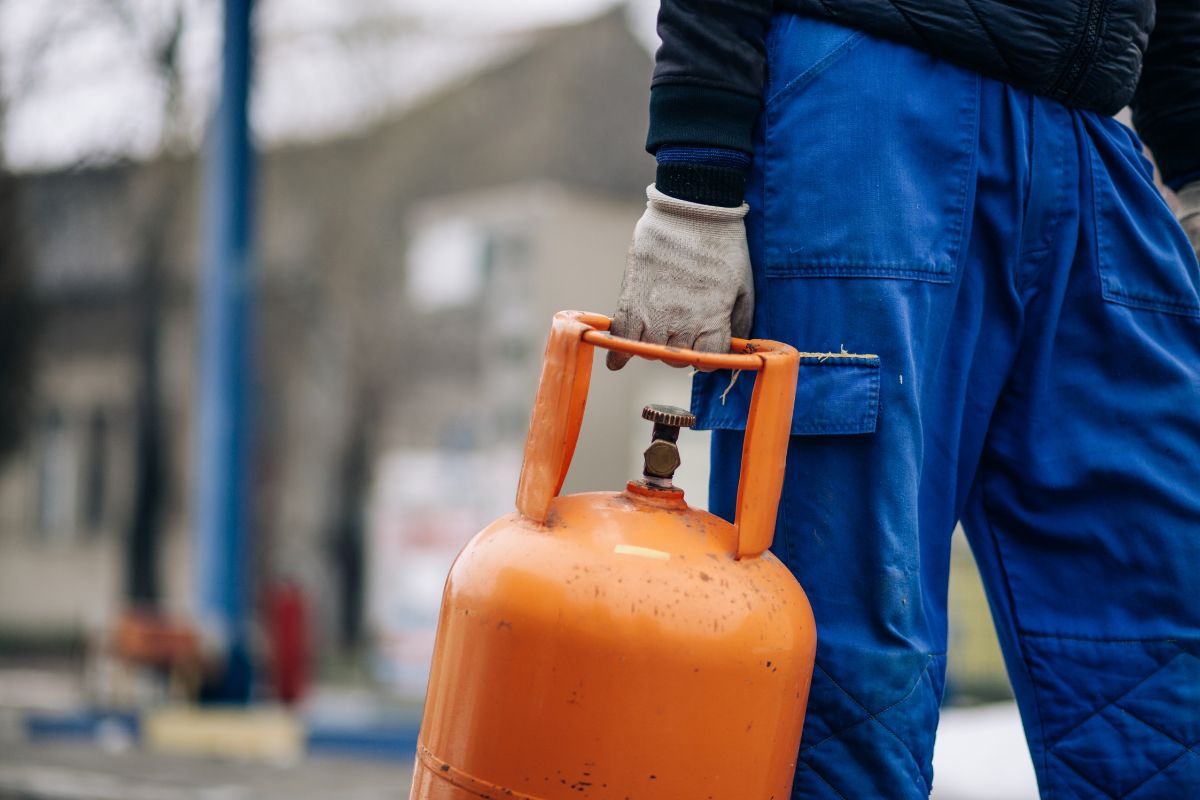
Running a business in India right now means keeping one eye on the kitchen and the other on the global fuel market. As of 29 March 2026, those big 19kg blue cylinders are costing a lot more than they did just a few weeks ago. The tension between the US, Israel, and Iran isn’t just a headline anymore; it’s hitting the local gas distributor and changing the price tag on every delivery.
This latest commercial LPG update comes at a time when the government is trying to make sure there’s enough gas to go around while the ships moving through the Strait of Hormuz face constant delays. It’s a messy situation for anyone running a restaurant or a factory, and the rules of the game are changing fast.
The 70% Allocation Rule and Industrial Priority
Recent weeks saw a significant squeeze on industrial fuel as the government prioritised domestic kitchens. However, a major directive issued on 27 March 2026 by the Ministry of Petroleum and Natural Gas (MoPNG) has offered some breathing room. The allocation for commercial cylinders is now set at 70% of pre-conflict levels. This is a 20% jump from the rationing seen earlier in the month.
The focus isn’t just on quantity but on where that gas goes. Labour-intensive sectors like steel, automobiles, and textiles are at the front of the queue. Why? Because these industries can’t just flip a switch and use electricity or piped gas overnight. According to a recent report by The Hindu, maintaining production continuity in these zones is vital to keeping national inflation in check. If a glass factory or a chemical plant runs dry, the ripple effect on the economy is massive.
Also Read: Easy Kitchen Tips To Master How To Cook Poha On Induction Without Drying It Out
City-Wise Pricing as of 29 March 2026
The wallet-draining reality for restaurant owners and caterers is that prices are at a seasonal high. International propane and butane benchmarks have been erratic. In cities like Hyderabad, the price has breached the ₹2,100 mark, making it one of the most expensive metros for fuel.
| City | 19kg Commercial Rate (₹) |
| New Delhi | 1,884.50 |
| Mumbai | 1,836.00 |
| Kolkata | 1,988.50 |
| Chennai | 2,043.50 |
| Hyderabad | 2,105.50 |
These rates reflect the cumulative hikes of nearly ₹175 seen throughout March. While the central government maintains that there is no “shortage” at the distributorship level, the price point certainly suggests a tight global market.
The Push Toward Piped Natural Gas (PNG)
Perhaps the most significant long-term change in this commercial LPG update is the notification of the Natural Gas and Petroleum Products Distribution Order, 2026. This isn’t just a suggestion; it’s a policy hammer. The rule states that businesses operating in areas with existing PNG infrastructure must transition away from cylinders. If they refuse, the LPG supply could eventually be discontinued.
This move aims to reduce the massive logistical burden of moving millions of steel cylinders across the country. It also insulates the local economy from the volatility of sea routes. When tensions flare up in the West Asia region, LPG prices at the Indian border jump instantly because of shipping and insurance costs. Piped gas, largely sourced through long-term contracts and domestic production, offers a more stable “cushion” for a small hotel or a medium-sized factory.
Domestic Production and Energy Security
Despite the increase of naval activity in the Strait of Hormuz, the Press Information Bureau (PIB) remains cautiously confident. India is not quite as helpless as before. Local refineries have increased output by nearly 40% this year. Domestic production now meets approximately 50 TMT (thousand metric tonnes) per day out of the required 80 TMT.
Also, Indian-flagged tankers such as the Jag Vasant are transiting under monitored passage to guarantee that the 30% import obligation is not hampered. It’s a juggling act of sorts. The government is keen to project that the world order has fallen into disarray but the local supply chain is under control.
Impact on the Hospitality and Small Business Sector
For a small cafe in Bengaluru or a dhaba on the outskirts of Delhi, these numbers aren’t just statistics; they are profit killers. A ₹175 hike per cylinder adds up quickly when you’re burning through five or six 19kg bottles a week. Many businesses are starting to look at induction cooking or solar-thermal water heating to offset the costs. The “PNG Reform” condition mentioned in the latest government updates is a clear signal.
If a business is sitting on a gas grid, the time for “thinking about it” is over. Transitioning to a pipeline is becoming the only way to avoid the 70% quota restrictions and the erratic pricing of the cylinder market.
Also Read: How Dhurandhar 2 Records Are Rewriting Box Office History In 2026
Frequently Asked Questions (FAQ)
Why has the commercial LPG allocation been limited to 70%?
The government is balancing a supply disruption in West Asia. They set a ceiling on commercial use at 70%, ensuring that there is a sufficient amount of stock for the 14.2 kg domestic cylinders used in household kitchens.
How much did the price of a 19kg cylinder increase in March 2026?
Prices went up by as much as ₹144.50 in some cities and ₹175 in others, depending on the local taxes levied by state governments.
Can a restaurant still get LPG cylinders if PNG is available in the area?
The new 2026 mandate is now heavily pushing businesses in PNG-mapped areas to transition. Eventually, LPG retailers may be directed not to provide supplies to these types of installations to focus on areas lacking pipelines.
Is there a genuine shortage of LPG in India right now?
The Ministry of Petroleum states there is no shortage, only a “rationalisation of supply.” Domestic production has been boosted to cover 60% of the daily requirement, reducing the impact of import delays.
Which city has the highest commercial LPG rate currently?
Among the major metros, Hyderabad holds the highest rate at ₹2,105.50 for a 19kg cylinder as of 29 March 2026.
What are priority industries for LPG allocation?
Steel, automobiles, textiles, and food processing are considered “priority” because they are labour-intensive and critical for controlling broader economic inflation. The current situation is a sharp reminder that the kitchen flame is tied directly to global politics. While the 70% quota is a step up from earlier rationing, the high prices remain a bitter pill for the commercial sector. Moving forward, the focus will likely remain on reducing import dependency and forcing a faster migration to piped infrastructure. Anyway, it’s a tough time to be a chef, but at least the supply lines are moving again.
Sources & References
- Ministry of Petroleum and Natural Gas (MoPNG): Detailed guidelines on the 70% allocation strategy for commercial LPG and priority sectors for March 2026.
- Press Information Bureau (PIB): Official briefing on India’s energy security and domestic production ramp-up to 60% of daily requirements.
- Natural Gas Distribution Order 2026: The legislative framework for the mandatory transition from LPG cylinders to PNG infrastructure.
- The Economic Times: Live tracking of metro-wise 19kg commercial cylinder rates as of 29 March 2026.
- Business Standard: Analysis of supply chain logistics in the Strait of Hormuz and the safety of Indian-flagged vessels.