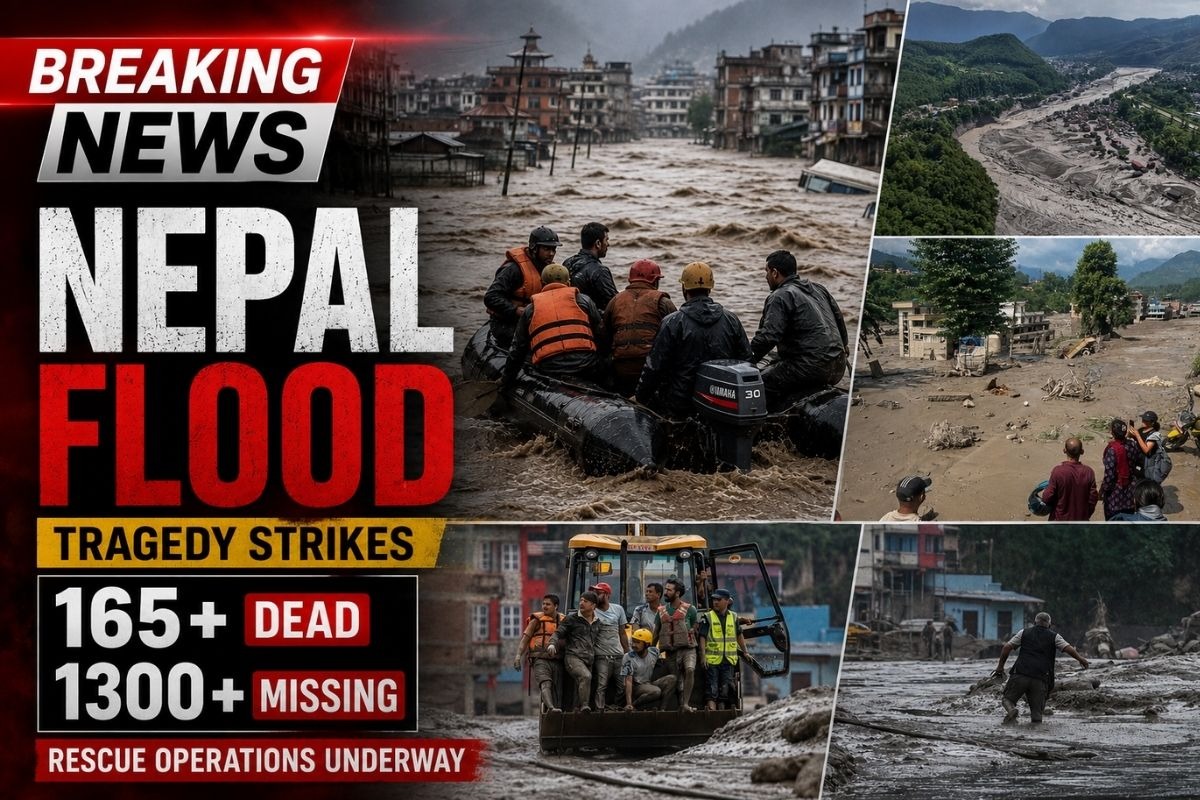
One shocking flash flood struck the central part of Nepal Wednesday morning, killing at least 165 people and causing more than 1,300 to disappear, including 133 Indians, officials said. As search teams try to dig through thick layers of mud and rubble in a race against time, fear is growing that there will be additional victims of this tragedy.
How This Disaster Was Caused
The disaster struck Wednesday morning around 8:30 a.m. local time in Rasuwa district, located 125 km northeast of Kathmandu, bordering China’s Tibet region.
Officials say that this is not an ordinary monsoon flood. Based on information from the US Geological Survey (USGS), seismic activity detected Wednesday morning was not an earthquake, but a collapse of the glacier and debris flow that resulted in downstream catastrophes.
According to scientists from the International Centre for Integrated Mountain Development (ICIMOD), the cause of the tragedy was the collapse of an ice-rock avalanche originating in a high-altitude area. Scientist Vikram Gupta explains, “A substantial portion of that glacier snout collapsed to initiate the event – probably including or entraining a fair amount of rock and sediment.”
The western disturbance bringing rains to north India was moving eastwards towards the Himalayas. These conditions resulted in accelerated snowmelt.
Where Does The Water Come From?
“This triggering occurred in the upper reaches of the Lhende River basin on Tibet side of the Nepal-Tibet border, which surged downstream into Nepal’s Bhotekoshi River system.”
The flood started from the Lhende River, located in Tibet’s Gyirong county, a tributary of Nepal’s Bhotekoshi River. An avalanche of glaciers with boulders, mud, and rainwater created a debris flow that increased in size during descent.
Then the debris surge rushed down the Bhote Koshi River, devastating the villages in Rasuwa, Dhading, and Nuwakot districts, as well as washing away the crucial Nepal-Tibet border crossing point of Gyirong-Rasuwagadhi.
Death Toll: How Many People Lost Their Lives
The tragedy has already claimed lives.
- Deaths: At least 157 deaths are confirmed in Nepal, with some live updates indicating nearly 160-162 deaths as of Thursday morning.
- Missing: According to the latest Nepal-side reports, more than 750 people are missing or unidentified, including 133 Indian nationals. The total number of victims in Nepal and Tibet was substantially bigger and kept changing as the authorities tried to reconcile the lists.
- Foreign Tourists: The latest reports give different figures. Times of India mentions 466 foreign tourists among 579 untraced people according to Nepal Police accounting, while other reports have produced different figures.
As Prime Minister Balendra Shah expressed in his post on social media, he has a “heavy heart,” and that “the entire nation has been shocked and deeply saddened by the tragedy.”
How Many Areas Are Damaged And How Many Houses Are Destroyed?
The Prime Minister’s Office (PMO) of Nepal provided the first damage assessment:
- Infrastructure: 19 motorable bridges washed away, 40 kilometers of roads damaged.
- Energy: At least 13 hydropower projects are reported damaged, both operational and under construction.
- Homes: Hundreds of houses along the Bhotekoshi corridor have been washed away or buried under 10-15 feet of mud. In Trishuli, Nuwakot, drone footage shows entire properties buried in mud. The exact number of houses destroyed will take days to assess as many areas are still inaccessible.
Officials say that several security personnel, government officials, and employees of hydropower projects are also unreachable.
India Has Sent Aid To Nepal
India was the first country to come to help Nepal.
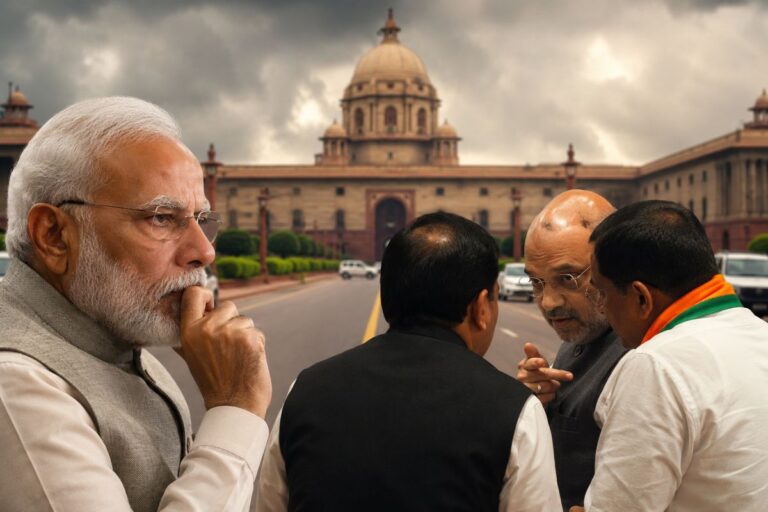
Prime Minister Narendra Modi talked to the Nepalese counterpart, Balendra Shah, offered his condolences, and assured all possible humanitarian aid.
India sent the first tranche of relief materials. The Embassy of India in Kathmandu issued emergency numbers for Indian nationals: +977 985 131 6807, +977 970 910 7500.
The Indian Ministry of Home Affairs monitors the rising level of water in the Gandak River that can affect Bihar and Uttar Pradesh. The states of Sikkim, Karnataka, and Maharashtra established separate helpline desks for stranded tourists. A toll-free number 1234 and Tourist Police number 9851289445 have been introduced by Nepal Tourism Board.
More Destruction Is Expected: What Can Happen Next
The authorities have put on high alert for secondary disasters a number of districts:
- Further Floods in India: Bihar is on alert for the rise in the Gandak River.
- Glacial Lake Outburst Floods (GLOF): Loose debris forming temporary dams in the narrow gorges can burst again.
- Landslides: Continuous rains and unstable slopes are expected to cause more landslides, making rescue operations difficult.
- Power Crisis: Damage to hydropower plants will result in prolonged power cuts in central Nepal.
According to Police spokesperson Abi Narayan Kafle, “This will go up, as we have resumed the search and more bodies are expected to be recovered.”
Rescue operations are being carried out using helicopters and heavy machinery.
Sources and References
- The Hindu – Nepal flash floods LIVE: Nearly 160 killed, over 750 missing; rescuers search for survivors – Glacier collapse confirmed by USGS
- The New Indian Express – LIVE: 157 killed, over 750 missing in Nepal flash floods; flood surged through Bhote Koshi River in Rasuwa
- GMA News – Rescuers search for survivors after devastating Nepal flood – Aug 27, 2026
Disclaimer: The information in this article is based on reports available at the time of publication. Death tolls, missing-person figures, damage assessments, and details about the disaster may change as authorities continue rescue and verification efforts. Readers should refer to official authorities and reputable news sources for the latest updates.