If you want to capture that unmistakable old-school photo look, a solid 80s photo prompt can help you generate images full of vintage colours, film grain, retro fashion, and genuine 1980s atmosphere. Whether it’s neon-lit streets or classic family portraits, the right prompt can make a modern AI image feel like it was actually shot decades ago.
The 1980s had a visual style all its own. Flash photography, soft focus, analogue film, bold clothing colours, big hairstyles, and slightly imperfect shots all gave the decade its charm. These days, that look is coming back into fashion as people use AI image generators to recreate nostalgic-feeling photos.
What Makes an 80s Photo Look Authentic?
Before you write your prompt, it helps to know what actually defines an authentic 80s photograph.
A convincing retro image usually has analogue film grain, faded colours, warm skin tones, a touch of light leak, flash photography, and that vintage camera look. It shouldn’t come across as too polished or clean.
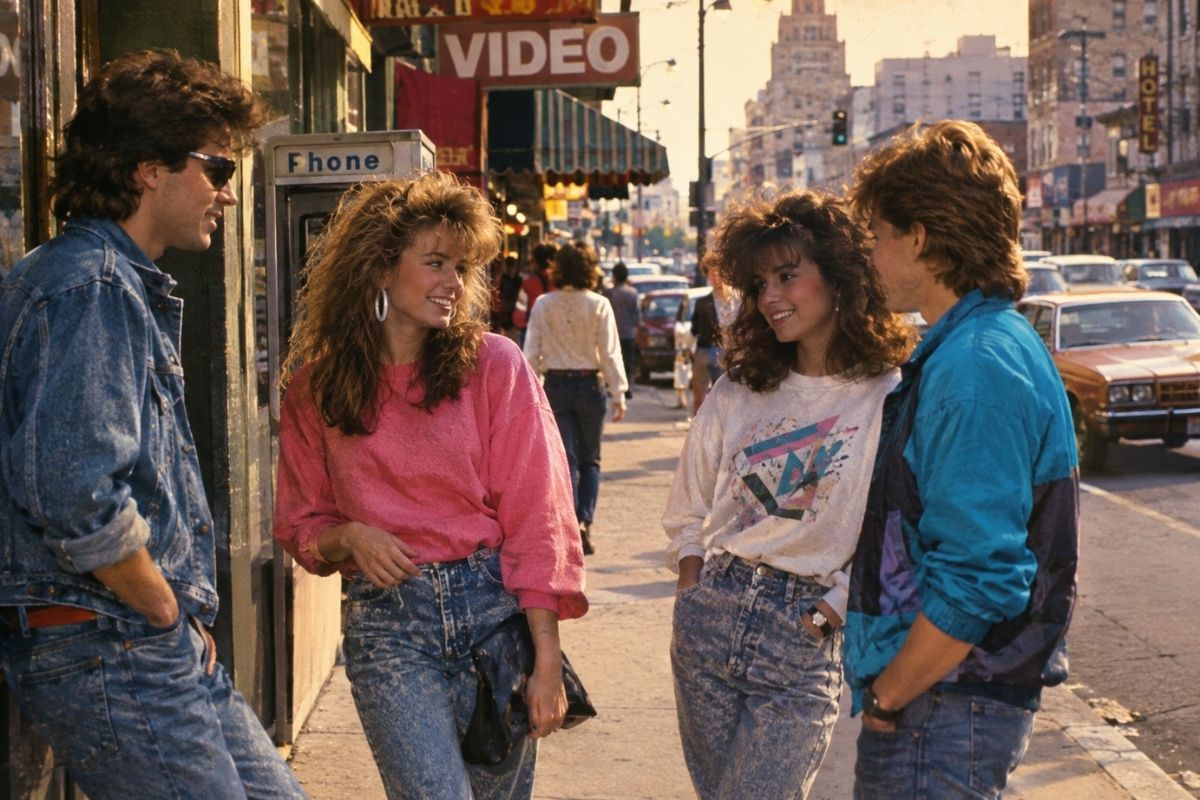
Fashion matters too — it’s one of the biggest giveaways of the era. Denim jackets, leather jackets, colourful sweaters, high-waisted jeans, tracksuits, and oversized shirts can immediately create an 80s feeling.
Hairstyles also matter. Big curls, teased hair, side parts, and voluminous styles can make the image look more representative of the decade.
The background can complete the effect. Shopping centres, arcades, bedrooms, roller rinks, suburban streets, old cars, and neon-lit city locations are excellent choices.
Best Prompt for 80s Photo
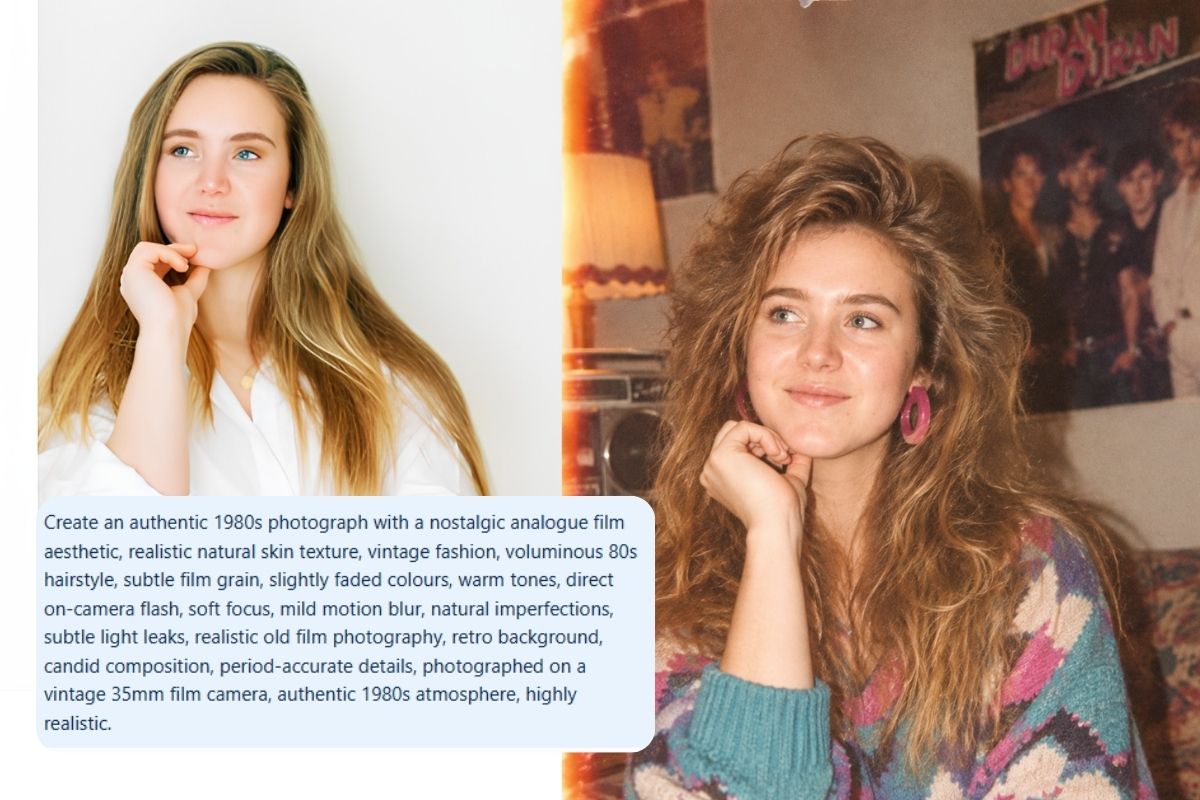
Here is a versatile prompt you can use with an AI image generator:
“Create an authentic 1980s photograph with a nostalgic analogue film aesthetic, realistic natural skin texture, vintage fashion, voluminous 80s hairstyle, subtle film grain, slightly faded colours, warm tones, direct on-camera flash, soft focus, mild motion blur, natural imperfections, subtle light leaks, realistic old film photography, retro background, candid composition, period-accurate details, photographed on a vintage 35mm film camera, authentic 1980s atmosphere, highly realistic.”
This works as a general starting point, but adding a specific location, outfit, or situation can make the result much more interesting.
Prompt for an 80s Family Photo
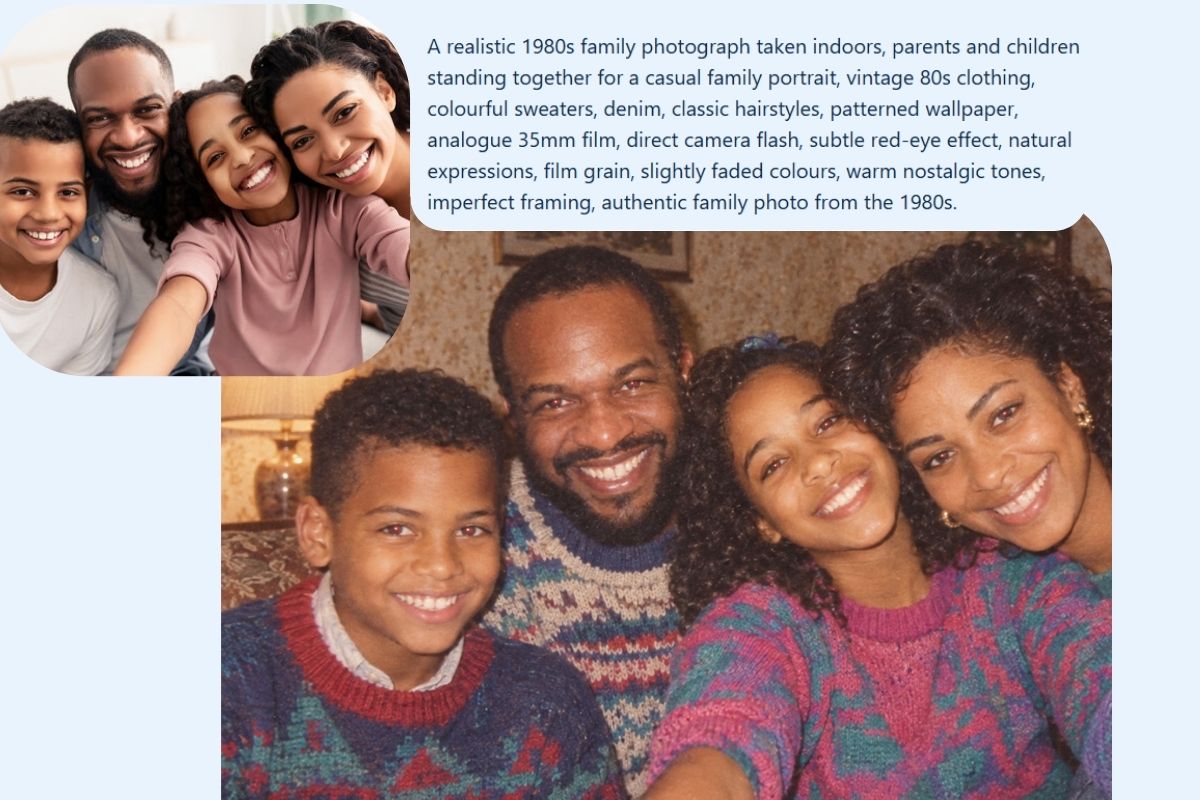
Family photographs from the 1980s often had a very recognisable appearance. Try:
“A realistic 1980s family photograph taken indoors, parents and children standing together for a casual family portrait, vintage 80s clothing, colourful sweaters, denim, classic hairstyles, patterned wallpaper, analogue 35mm film, direct camera flash, subtle red-eye effect, natural expressions, film grain, slightly faded colours, warm nostalgic tones, imperfect framing, authentic family photo from the 1980s.”
The small imperfections are important because they help the image avoid looking like a modern digital photograph with a simple retro filter.
Prompt for an 80s Street Photo
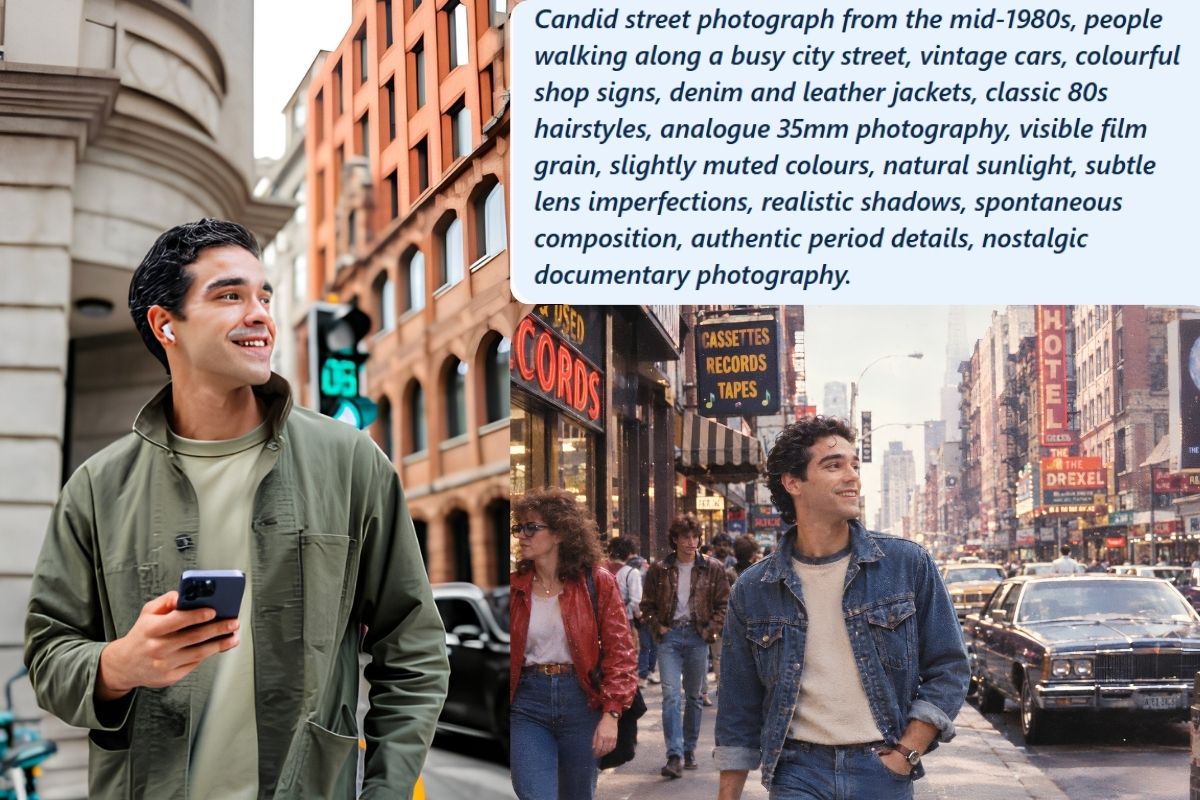
For a more cinematic look, use an urban setting:
“Candid street photograph from the mid-1980s, people walking along a busy city street, vintage cars, colourful shop signs, denim and leather jackets, classic 80s hairstyles, analogue 35mm photography, visible film grain, slightly muted colours, natural sunlight, subtle lens imperfections, realistic shadows, spontaneous composition, authentic period details, nostalgic documentary photography.”
This type of prompt is particularly useful when you want the image to resemble an old photograph discovered in a family album or magazine archive.
Prompt for an 80s Couple Photo
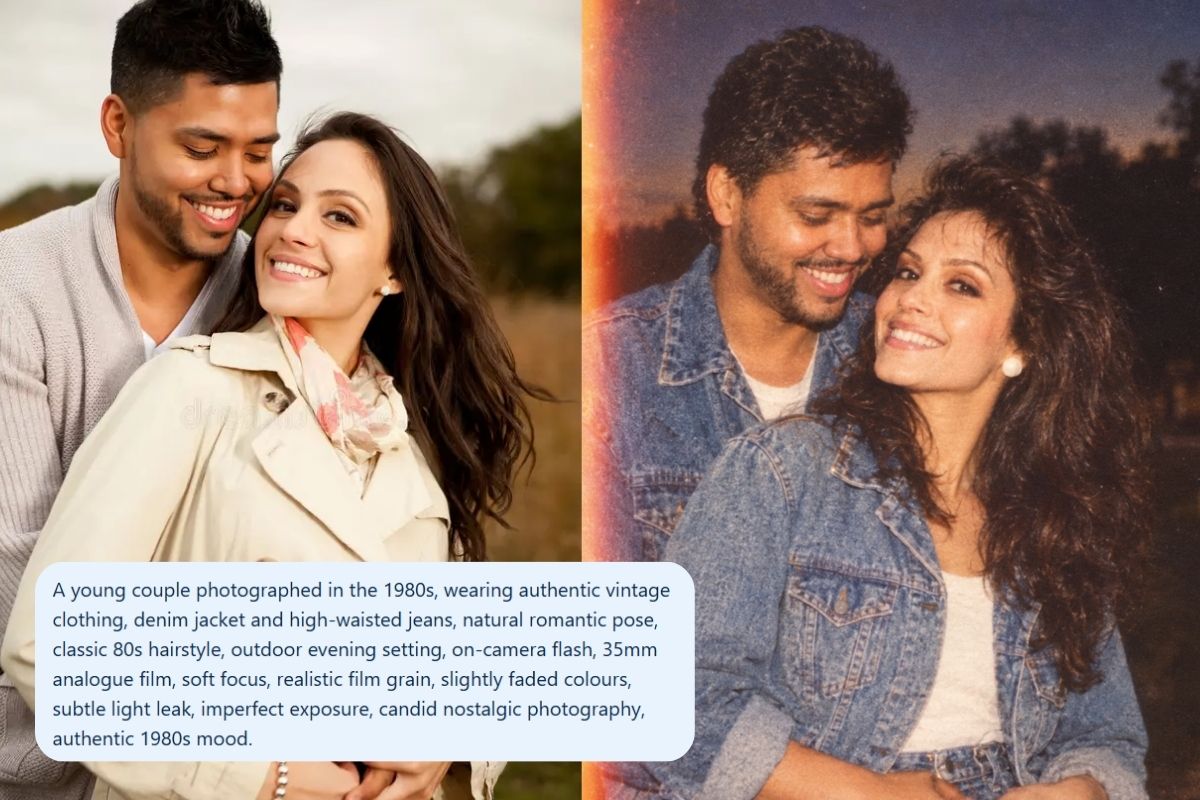
Romantic photographs can also work beautifully with the retro aesthetic:
“A young couple photographed in the 1980s, wearing authentic vintage clothing, denim jacket and high-waisted jeans, natural romantic pose, classic 80s hairstyle, outdoor evening setting, on-camera flash, 35mm analogue film, soft focus, realistic film grain, slightly faded colours, subtle light leak, imperfect exposure, candid nostalgic photography, authentic 1980s mood.”
How to Make an AI 80s Photo More Realistic
One of the biggest mistakes people make is adding too many retro effects. An image covered in heavy grain, extreme scratches, and exaggerated colours may look like a modern imitation rather than a genuine photograph.
Instead, describe subtle imperfections.
Useful terms include:
- 35mm analogue film
- natural film grain
- slight colour fading
- vintage flash
- soft focus
- imperfect exposure
- light leaks
- mild motion blur
- realistic skin texture
- candid composition
- period-accurate clothing
- authentic 1980s setting
You can also specify whether you want the photograph to look like it was taken in the early 80s, mid-80s, or late 80s, because fashion and photography changed throughout the decade.
Early 80s vs Late 80s Photo Prompts
For an early-1980s appearance, focus on muted colours, classic clothing and analogue photography.
For example:
“Early 1980s candid photograph, muted analogue colours, vintage clothing, natural hairstyles, 35mm film grain, direct flash, realistic imperfections and authentic period atmosphere.”
For a late-1980s appearance, you can introduce brighter colours, bigger hairstyles and more dramatic fashion:
“Late 1980s fashion photograph, colourful clothing, voluminous hairstyle, bold accessories, neon background, direct flash, 35mm analogue film, realistic grain, subtle colour fading and authentic late-80s photography.”
Why Are 80s Photo Prompts Popular?
The renewed interest in 80s-style photographs comes down largely to nostalgia and the ongoing love for retro aesthetics. People enjoy recreating the look of an era that feels worlds away from today’s overly polished smartphone photography.
A well-crafted 80s photo prompt can turn an ordinary idea into something that feels personal, nostalgic, and visually striking.
Whether you are creating a fictional family album, retro fashion shoot, vintage social media content, or a cinematic scene, the key is to combine period-accurate details with realistic analogue imperfections.
Final Thoughts
A good prompt for an 80s photo should do more than simply mention the word “vintage.” It should describe the camera style, lighting, clothing, environment, colours, and imperfections that make an image feel genuinely connected to the 1980s.
Start with 35mm film, analogue grain, direct flash, and slightly faded colours, then add a specific setting and period-appropriate fashion. You can experiment with family portraits, street photography, school pictures, couples, parties, cars, or retro fashion shoots.
The best results usually come from keeping the image realistic rather than overly stylised. A little grain, imperfect exposure, and natural lighting can often create a more convincing 80s photograph than dozens of exaggerated effects.