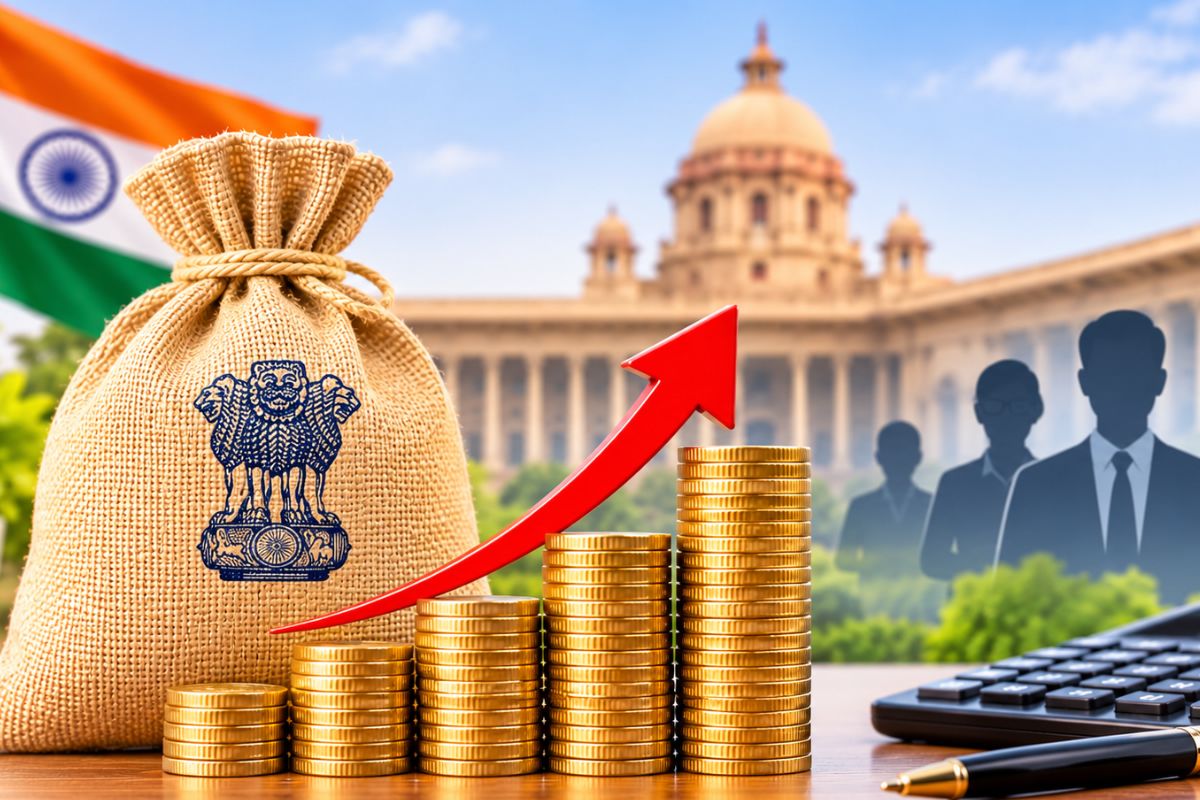
The Revised Dearness Allowance (DA) increase determines the amount by which the salary increases. basic pay and the rate of allowance. For instance, a 2% hike in DA translates to an additional ₹360 per month on a basic salary of ₹18,000.
Dearness Allowance (DA) is an important part of the salary structure for Central Government employees in India. It is provided by the government to assist employees in dealing with rising living costs and inflation. The DA rate is revised from time to time, generally twice a year in January and July.
When the government announces a hike in DA, the employees naturally want to know how much their monthly salary will increase. But the actual increase is not the same for everyone. It is contingent upon basic pay, pay level and the percentage point increase in DA.
Employees will be able to calculate their new monthly salary, additional annual income and how much money they will get out of the recent announcement by knowing the DA calculation.
- DA is calculated as a percentage of an employee’s basic pay.
- A DA hike increases the monthly salary without changing basic pay.
- Employees with higher basic pay receive a larger DA increase in rupee terms.
- The DA increase is generally announced twice a year.
- The actual salary benefit depends on the approved DA rate and applicable effective date.
How Much Will Salary Increase After the Latest DA Hike in 2026?
The Union Cabinet on October 28, 2026, approved a 3 percentage points DA hike, which will take the Dearness Allowance to 63% of basic pay from 60%. “The revised rate shall be effective from 1 July 2026.
This means employees will get an additional 3% of their basic pay on a monthly basis compared to the previous DA rate.
Example of the salary increase
Suppose an employee receives a basic salary of ₹30,000 per month.
- Previous DA at 60%: ₹18,000
- Revised DA at 63%: ₹18,900
- Additional monthly DA: ₹900
- Additional annual DA: ₹10,800
As a result, an employee with a basic pay of ₹30,000 will get an additional ₹900 each month from the latest DA revision, before deductions and other salary adjustments are applied.
Also Read – GST Law Set for Major Change
DA Hike Salary Calculation: Previous vs Revised Rates
The following table shows how the 3% DA increase affects employees across different basic pay amounts.
| Basic pay | Previous DA (60%) | New DA (63%) | Monthly increase |
|---|---|---|---|
| ₹18,000 | ₹10,800 | ₹11,340 | ₹540 |
| ₹25,000 | ₹15,000 | ₹15,750 | ₹750 |
| ₹30,000 | ₹18,000 | ₹18,900 | ₹900 |
| ₹35,000 | ₹21,000 | ₹22,050 | ₹1,050 |
| ₹44,900 | ₹26,940 | ₹28,287 | ₹1,347 |
| ₹56,100 | ₹33,660 | ₹35,343 | ₹1,683 |
| ₹78,800 | ₹47,280 | ₹49,644 | ₹2,364 |
| ₹1,00,000 | ₹60,000 | ₹63,000 | ₹3,000 |
Note: These calculations are illustrative and based on basic pay under the 7th Pay Commission. The actual amounts payable will depend on the rounding rules that apply.
How to Calculate the DA Hike?
Central Government employees can work out their additional DA by applying a straightforward mathematical formula.
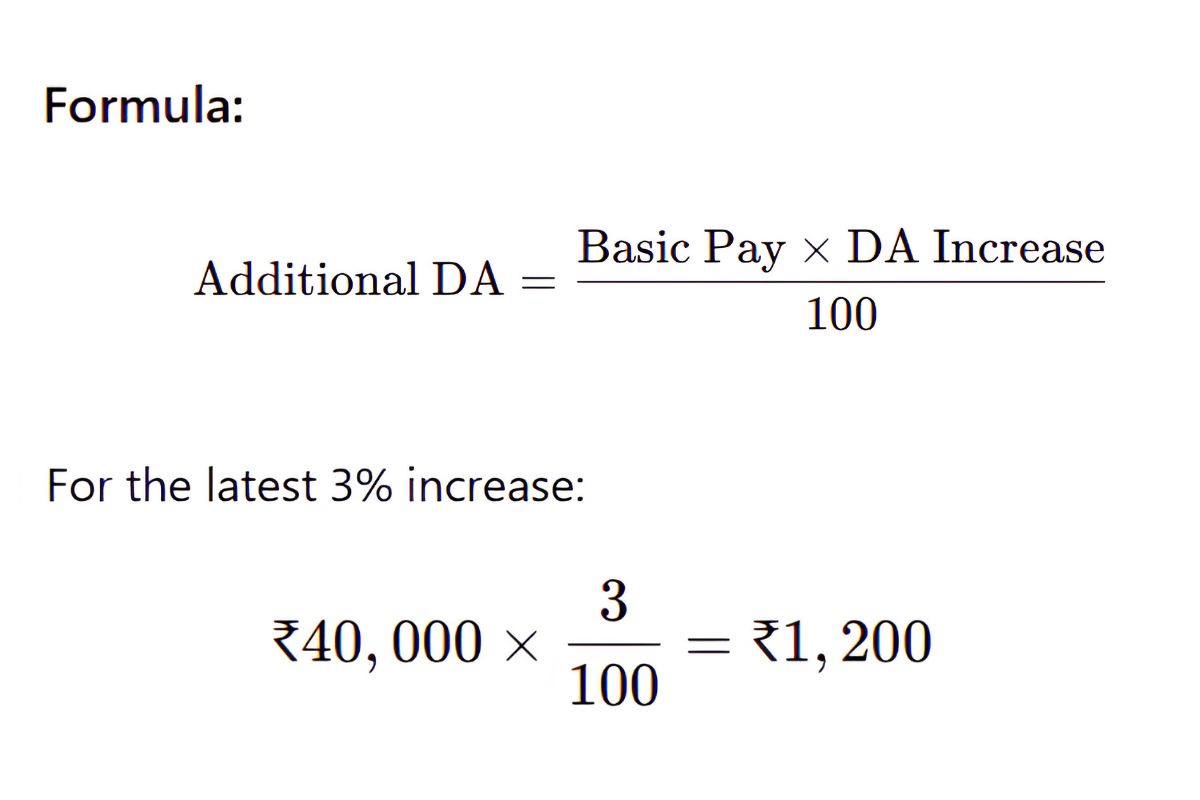
This means an employee with a basic salary of ₹40,000 will receive ₹1,200 more every month.
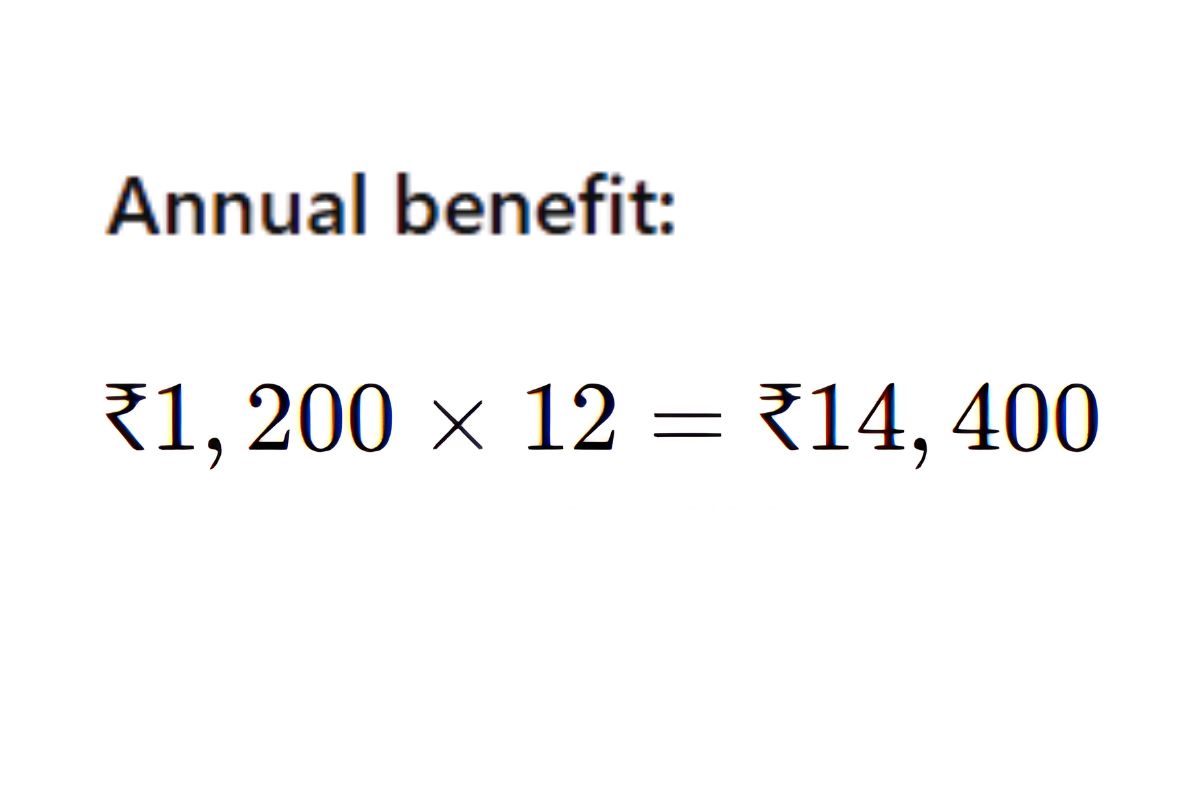
As a result, the yearly rise in DA comes to ₹14,400, provided the basic pay stays the same for the whole year.
Why Has the Government Increased DA from 60% to 63%?
Dearness Allowance is adjusted to shield government employees from the impact of inflation. As prices of essential commodities, transport, food and other household expenses rise, a fixed salary buys less.
To tackle this problem, the Central Government reviews DA rates at regular intervals.
The calculation is tied to the All India Consumer Price Index for Industrial Workers (AICPI-IW), which monitors retail price changes that affect industrial workers.
The most recent 3-percentage-point increase follows the formula derived from the recommendations of the 7th Central Pay Commission. The government cleared the revision to offer financial relief against the rising cost of living.
Also Read – Atal Pension Yojana (APY)
When Will Employees Receive the Increased DA?
The revised DA rate of 63% takes effect from 1 July 2026, even though the Cabinet approval was announced on 28 October 2026.
Because the revised rate applies with retrospective effect, eligible employees are entitled to the difference between the previous and revised DA rates for the relevant period.
For example, an employee with basic pay of ₹40,000 gets an additional ₹1,200 per month.
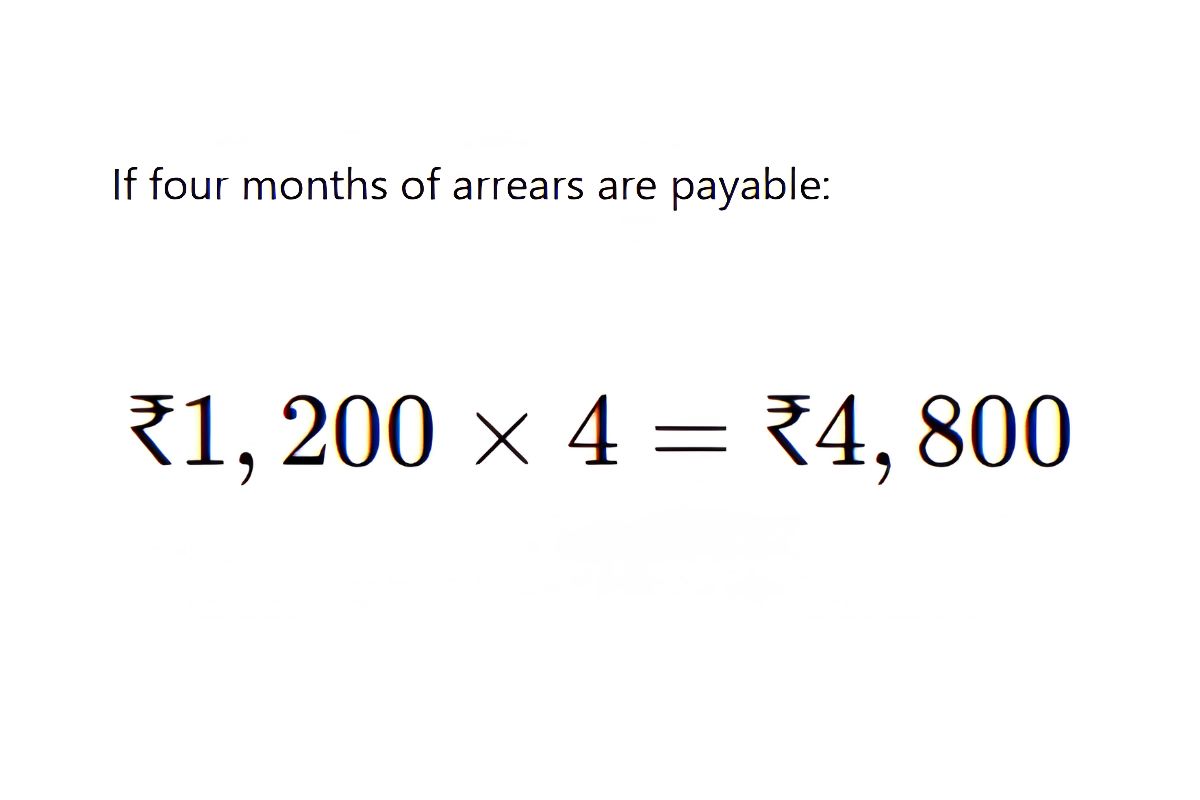
So, for example, the arrears would be Rs 4,800 for four months, subject to actual eligibility and payroll calculations of the employee.
The payment schedule and adjustment of arrears will be governed by the applicable government and departmental instructions.
Will the DA Hike Also Increase HRA and Other Allowances?
A hike in DA does not mean every component of an employee’s salary will move up. Different government regulations apply to different allowances.
Here is how the revision affects different salary components:
| Salary component | Impact of DA hike |
|---|---|
| Basic Pay | No direct change |
| Dearness Allowance | Increases from 60% to 63% |
| House Rent Allowance (HRA) | No automatic increase |
| Transport Allowance | No automatic increase |
| Medical Allowance | No automatic increase |
| Gross Salary | Increases because of higher DA |
Employees should keep in mind that DA is calculated on basic pay rather than on the total gross salary. The actual take-home salary may also differ owing to deductions such as NPS contributions, income tax and other applicable recoveries.
Also Read – India Price Hike From October 1, 2026
What Does the DA Hike Mean for Pensioners?
The government has also approved a commensurate hike in Dearness Relief (DR) for pensioners of the central government.
Whereas serving employees get DA on their basic pay, pensioners get DR on their basic pension.
The latest revision raises DR from 60% to 63%, with effect from 1 July 2026.
For instance, if a pensioner gets a basic pension of ₹30,000:
- Previous DR at 60%: ₹18,000
- Revised DR at 63%: ₹18,900
- Additional monthly relief: ₹900
The revision benefits approximately 48.54 lakh central government employees and 68.71 lakh pensioners.
What Could Be the Next DA Hike in 2027?
Central Government employees may get another DA revision in January 2027, since the government usually reviews DA twice a year.
However, the next increase will hinge on inflation figures and the applicable calculation formula. Until the government makes an official announcement, no particular percentage should be regarded as confirmed.
For government employees, the 8th Central Pay Commission is another significant development. In the years ahead, its recommendations may lead to changes in the salary structure, allowances and pension calculations.
Employees should therefore separate projected DA rates from officially approved revisions.
Conclusion
The most recent DA hike offers Central Government employees additional financial support by raising the Dearness Allowance from 60% to 63%, effective from 1 July 2026.
As a result of this revision, employees get an extra 3% of their basic pay each month. For an employee with a basic pay of ₹30,000, that works out to an additional ₹900 per month, or ₹10,800 per year.
The actual benefit differs depending on basic pay, applicable deductions and eligibility for arrears. To understand their final payable amount, employees should review their revised salary slips and the official notifications from the Department of Expenditure.
Frequently Asked Questions (FAQs)
1. What is the current DA rate for Central Government employees in 2026?
The most recently approved DA rate is 63% of basic pay, up from 60%, with effect from 1 July 2026.
2. By how much will salary rise after a 3% DA hike?
The monthly increase is based on basic pay. For instance, an employee whose basic pay is ₹25,000 will get an additional ₹750 each month.
3. Does the latest DA hike take effect from July 2026?
Yes. The revised DA rate of 63% takes effect on 1 July 2026, even though the Cabinet gave its approval on 28 October 2026.
4. What amount of DA will an employee get on a basic pay of ₹40,000?
Under the revised rate of 63%, the employee will get ₹25,200 per month as DA, compared with ₹24,000 at the earlier rate of 60%.
5. Will pensioners also gain from the latest DA increase?
Yes. Pensioners get a matching 3-percentage-point rise in Dearness Relief (DR), which lifts the rate from 60% to 63% of basic pension.
6. How many times a year is DA revised?
The Central Government usually revises DA twice a year, in January and July, on the basis of inflation-related calculations.
Official Sources and References
- Business Standard – 63% DA announcement and salary impact
- The Indian Express – How DA is calculated and its impact
- Department of Expenditure – DA revision order effective July 2026
- Press Information Bureau – Cabinet approves 3% DA hike