Chhath Puja runs from November 13 to November 16 this year. It opens with Nahay Khay on Friday and ends with Usha Arghya on Monday morning. The festival is for Surya Dev and Chhathi Maiya, and over these four days devotees bathe and purify themselves, fast, make traditional offerings, and pray to the setting and rising Sun.
Bihar, Jharkhand, eastern Uttar Pradesh and parts of Nepal are its heartland. But wherever people from these regions have settled, including Delhi, Mumbai and Kolkata, the festival follows them.
Chhath Puja 2026: Complete Four-Day Calendar
Chhath falls in the Shukla Paksha of the Hindu month of Kartik. The evening offering to the setting Sun on November 15 is the centrepiece, but the observance isn’t complete until the morning prayers on November 16. The main festival day falls on Kartik Shukla Shashthi, the sixth day of the bright fortnight.
The 2026 festival schedule is:
| Day | Date | Ritual |
|---|---|---|
| Day 1 | Friday, November 13 | Nahay Khay |
| Day 2 | Saturday, November 14 | Kharna (Lohanda) |
| Day 3 | Sunday, November 15 | Sandhya Arghya |
| Day 4 | Monday, November 16 | Usha Arghya and Parana |
What Happens on Each Day
Day 1, Nahay Khay (November 13)
The festival begins with cleaning. Devotees get up early, bathe (traditionally in a river where possible) and scrub their homes before cooking anything. The first meal is simple and strictly vegetarian, and most households make kaddu (bottle gourd), chana dal and rice. Onion and garlic stay out of the kitchen, and the utensils used are clean and set aside for the occasion.
Day 2, Kharna (November 14)
Devotees fast through the day without food or water and break it only after sunset. The evening prasad is usually kheer made with jaggery and rice, along with roti and fruit. Many families cook it without regular salt.
The prasad is first offered to Chhathi Maiya and Surya Dev. Then the devotee eats, and it is shared with family and neighbours. Once Kharna is done, the long nirjala fast starts. It lasts roughly 36 hours with no food and no water. Fasting for this long is hard on the body, so see our guide to immunity-boosting drinks for ideas on staying nourished before and after the vrat.
Day 3, Sandhya Arghya (November 15)
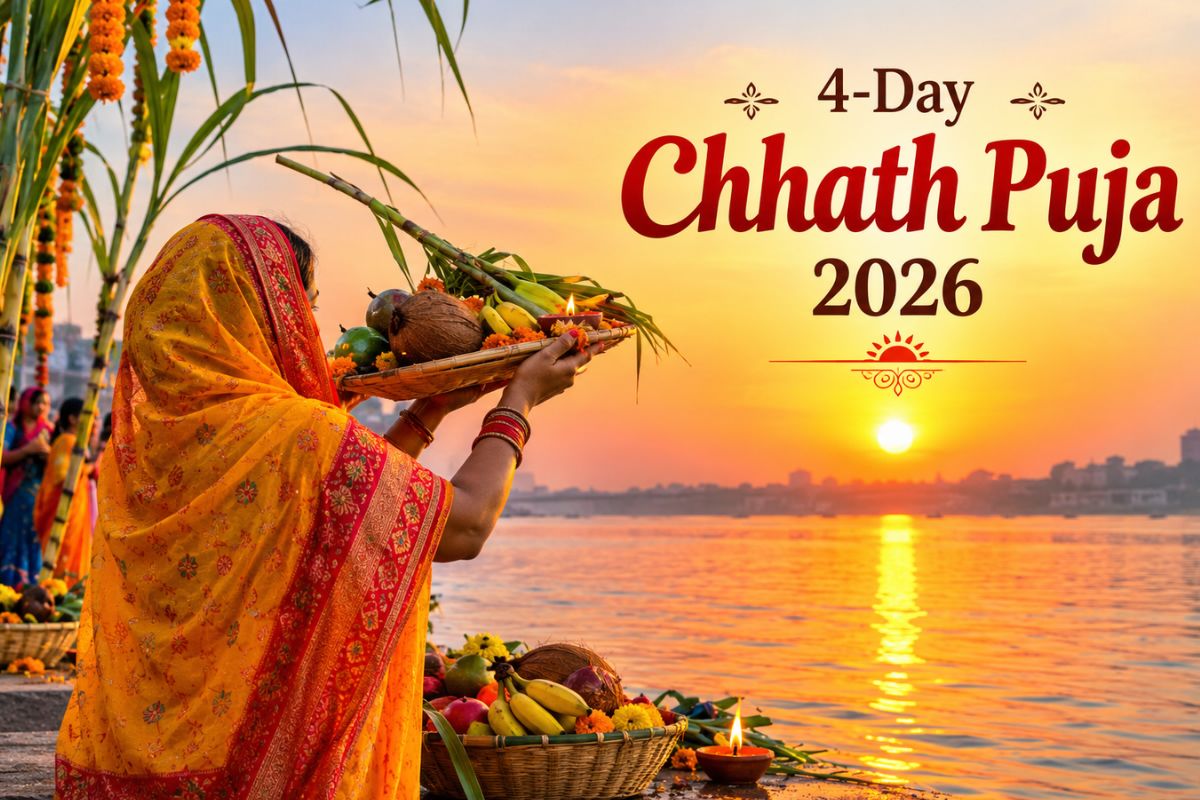
This is the day most people picture when they think of Chhath. By late afternoon, families head to riverbanks, ponds, lakes, and decorated ghats. They carry bamboo baskets (the daura and soop) loaded with fruit, thekua, sugarcane, and coconuts.
Devotees wade into the water and offer Arghya to the Sun as it sets, praying to Chhathi Maiya for their children’s health and the family’s well-being. Folk songs, lamps, and lit-up ghats give the evening its atmosphere.
Day 4, Usha Arghya and Parana (November 16)
The last day starts in the dark. Devotees return to the ghats before dawn and stand in the water until the Sun rises, then offer the final Arghya. The prayer is one of thanks for a new day and for the energy that sustains life.
Afterwards, they break the fast with prasad and water, a step called Parana, and hand out prasad to relatives and neighbours.
Chhath Puja 2026: Arghya Timings in Bihar and Uttar Pradesh
Chhath Puja 2026 Sandhya Arghya will be performed on November 15, while Usha Arghya will take place on November 16. The timings below are based on local sunset and sunrise.
| State / City | Sandhya Arghya (Nov 15) | Usha Arghya (Nov 16) |
|---|---|---|
| Bihar (district-wise range) | 4:49–5:08 PM | 5:57–6:13 AM |
| Patna, Bihar | 5:01 PM | 6:07 AM |
| Gaya, Bihar | 5:03 PM | 6:07 AM |
| Muzaffarpur, Bihar | 4:59 PM | 6:07 AM |
| Bhagalpur, Bihar | 4:54 PM | 6:00 AM |
| Uttar Pradesh (selected cities) | ||
| Varanasi | 5:10 PM | 6:16 AM |
| Lucknow | 5:16 PM | 6:26 AM |
| Gorakhpur | 5:06 PM | 6:17 AM |
| Prayagraj | 5:14 PM | 6:20 AM |
| Kanpur | 5:18 PM | 6:28 AM |
| Ballia | 5:04 PM | 6:12 AM |
| Ghazipur | 5:06 PM | 6:13 AM |
Puja Samagri: What Families Gather
Preparations start days in advance. A typical list includes:
- Bamboo daura and soop
- Thekua and other homemade prasad
- Sugarcane and coconuts
- Bananas, apples and other seasonal fruit
- Rice, wheat flour and jaggery
- Milk and water for Arghya
- Flowers, diyas and incense
- Turmeric, ginger and other traditional items
Lists differ from one family to the next, so follow whatever your household has always done.
Why Chhath Is Celebrated
Chhath is mainly a festival of gratitude to Surya Dev, the Sun God, for light, warmth, and life itself. Chhathi Maiya, who is linked to the protection of children and the family, is worshipped alongside him. Devotees pray for good health, prosperity and a happy home.
Few festivals worship both the setting and the rising Sun, and that is one of Chhath’s distinctive features. It marks the end of a day and the start of the next with equal respect. For another festival rooted in family bonds and tradition, see Raksha Bandhan history, traditions and facts.
Chhath is also deeply tied to the culture of Bihar, Jharkhand and eastern Uttar Pradesh. Folk songs, community effort, and shared time at the river keep the traditions going from one generation to the next. Pilgrimage and festival gatherings also shape local livelihoods, as we explain in India’s temple economy.
How Chhath Is Observed Across India
Bihar is still the festival’s centre. In Patna, huge crowds gather along the Ganga for both Arghyas. Jharkhand and eastern Uttar Pradesh follow much the same pattern at rivers, ponds and community ghats.
In big cities like Delhi, Mumbai and Kolkata, migrant communities set up temporary ghats and use designated water bodies. The setting changes, but the core of the festival doesn’t: fasting, prasad, and prayers to the Sun at dusk and dawn.
Before You Take Up the Vrat
The nirjala fast is demanding. Prepare ahead, keep things clean and stick to your family’s customs. If you have a medical condition, take regular medication or are pregnant, talk to a doctor before attempting a long fast.
Please keep the ghats clean as well. Don’t throw plastic or other waste into the water, and use the spaces set aside for the rituals.
In Short
Chhath Puja 2026 runs from November 13 to 16, from Nahay Khay and Kharna through Sandhya and Usha Arghya. Across rivers and ghats all over the country, families will gather to thank the Sun and pray for their children’s well-being.
FAQs
When is Chhath Puja 2026?
From November 13 to 16. The main Sandhya Arghya is on November 15.
What are the four days called?
Nahay Khay (November 13), Kharna (November 14), Sandhya Arghya (November 15), and Usha Arghya with Parana (November 16).
When is Sandhya Arghya in 2026?
On Sunday, November 15, when devotees offer Arghya to the setting Sun.
When does the fast end?
The nirjala fast ends on the morning of November 16, after Usha Arghya. Devotees then perform Parana and eat the prasad.
Who is worshipped during Chhath?
Surya Dev, the Sun God, and Chhathi Maiya. The prayers are for gratitude, good health, prosperity and the family’s well-being.