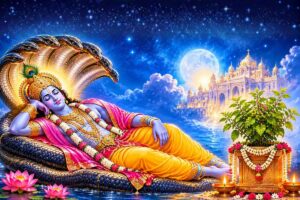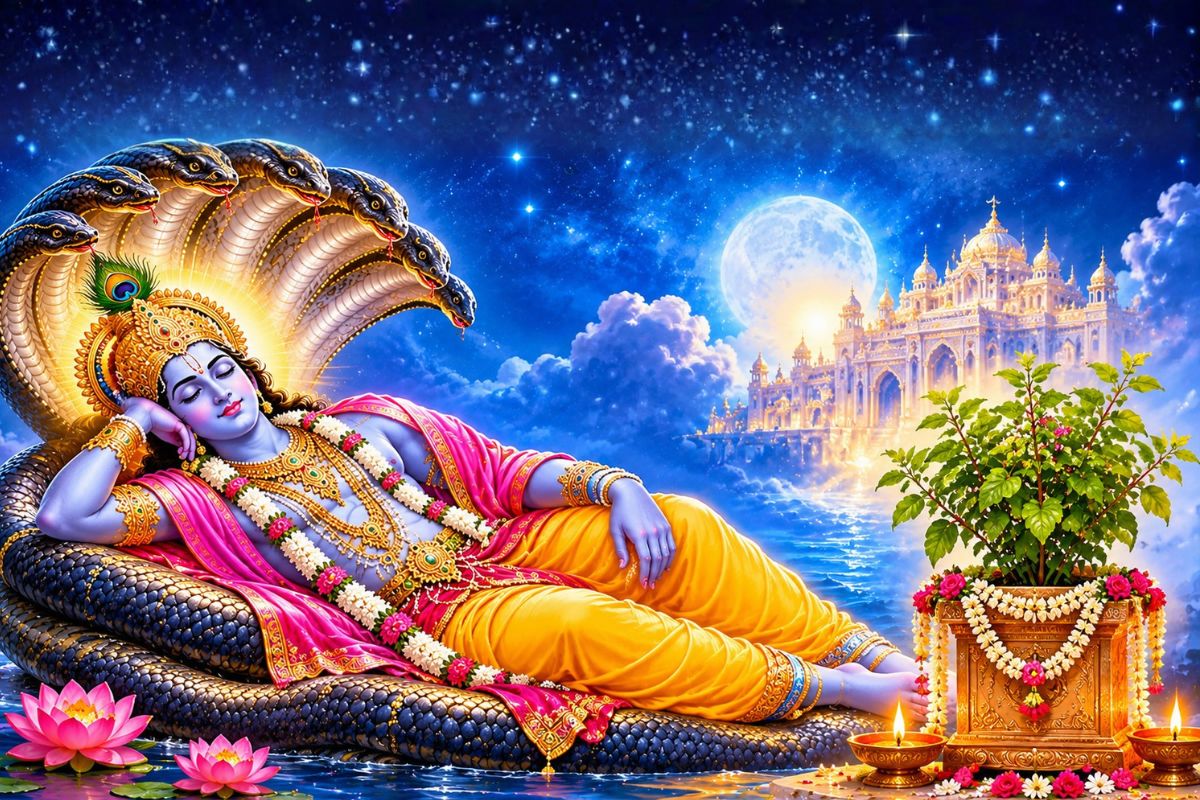
Devuthani Ekadashi or Prabodhini Ekadashi, is the day when Lord Vishnu wakes up from his four-month cosmic slumber. Celebrated on Kartik Shukla Ekadashi, the festival is associated with spiritual renewal, devotion and the beginning of the auspicious Hindu wedding season. Its mythology is closely connected to Yoga Nidra, Chaturmas and the story of Lord Vishnu’s promise to King Bali.
Devuthani Ekadashi is not just a day of fasting and prayers. In Hinduism, this means a movement from spiritual quiet to renewed action. This festival is celebrated on the 11th day of the bright half of the month of Kartik. It is believed that Lord Vishnu sleeps during the four months of Chaturmas, and this festival is celebrated to mark his awakening.
But have you ever thought about why Lord Vishnu sleeps for four months? What is happening in this period, and why does he wake up on the Devuthani Ekadashi?
In Hindu mythology, the tradition has an interesting association with divine promises, Lord Vishnu’s cosmic duty as the preserver of the cosmos and the demon king Bali.
The festival also has a special place in Hindu households as it links religious faith with daily traditions, such as Tulsi Vivah, the commencement of wedding celebrations and the preparation of homes for auspicious ceremonies.
Devuthani Ekadashi is interesting not only in terms of its religious aspects but also from the point of view of its symbolism. The awakening of Vishnu is also seen as a reminder to restart the postponed responsibilities, to renew the commitments and to bring discipline back into daily life.
Devuthani Ekadashi 2026: Date and Tithi Timings
In 2026, Devuthani Ekadashi falls on Friday, 20 November. It is observed during Kartik Shukla Ekadashi, but some Vaishnava traditions have a separate observance based on their religious calendar.
According to the New Delhi Panchang, the important timings are:
| Event | Date and time |
|---|---|
| Ekadashi Tithi begins | 20 November, 7:15 AM |
| Ekadashi Tithi ends | 21 November, 6:31 AM |
| Devuthani Ekadashi | 20 November 2026 |
| Dwadashi Parana | 21 November, 1:11 PM–3:18 PM |
Note: These are the Panchang timings supplied for New Delhi. Tithi and Parana timings can vary by location and religious tradition.
5 Key Things to Know About Devuthani Ekadashi
- Lord Vishnu’s awakening: The festival marks the end of his four-month-long cosmic rest.
- End of Chaturmas: It signals the conclusion of a spiritually significant period of restraint and religious observance.
- Tulsi Vivah: The occasion is closely associated with the ceremonial marriage of Tulsi and Lord Vishnu.
- Return of auspicious ceremonies: Weddings and traditional celebrations resume according to Hindu calendars and auspicious timings.
- A day of devotion: Fasting, prayers, charity, devotional songs and night vigils are among the common observances.
Why Does Lord Vishnu Sleep for Four Months? The Story Behind Chaturmas
One of the most interesting beliefs associated with Devuthani Ekadashi is that on this day Lord Vishnu goes into Yoga Nidra, a divine state of cosmic sleep, for approximately four months.
The period begins with Devshayani Ekadashi of the Shukla Paksha of Ashadha and ends with Devuthani Ekadashi in Kartik.
But why must the preserver of the universe slumber?
In Hindu mythology, there are various explanations of this tradition. One story in particular, which has been quite popular, connects Lord Vishnu’s absence for four months from his heavenly abode to the devotion of King Bali.
Also Read – 4-Day Chhath Puja 2026: Dates, Calendar, Rituals and Significance
The Story of Lord Vishnu, Vamana Avatar and King Bali
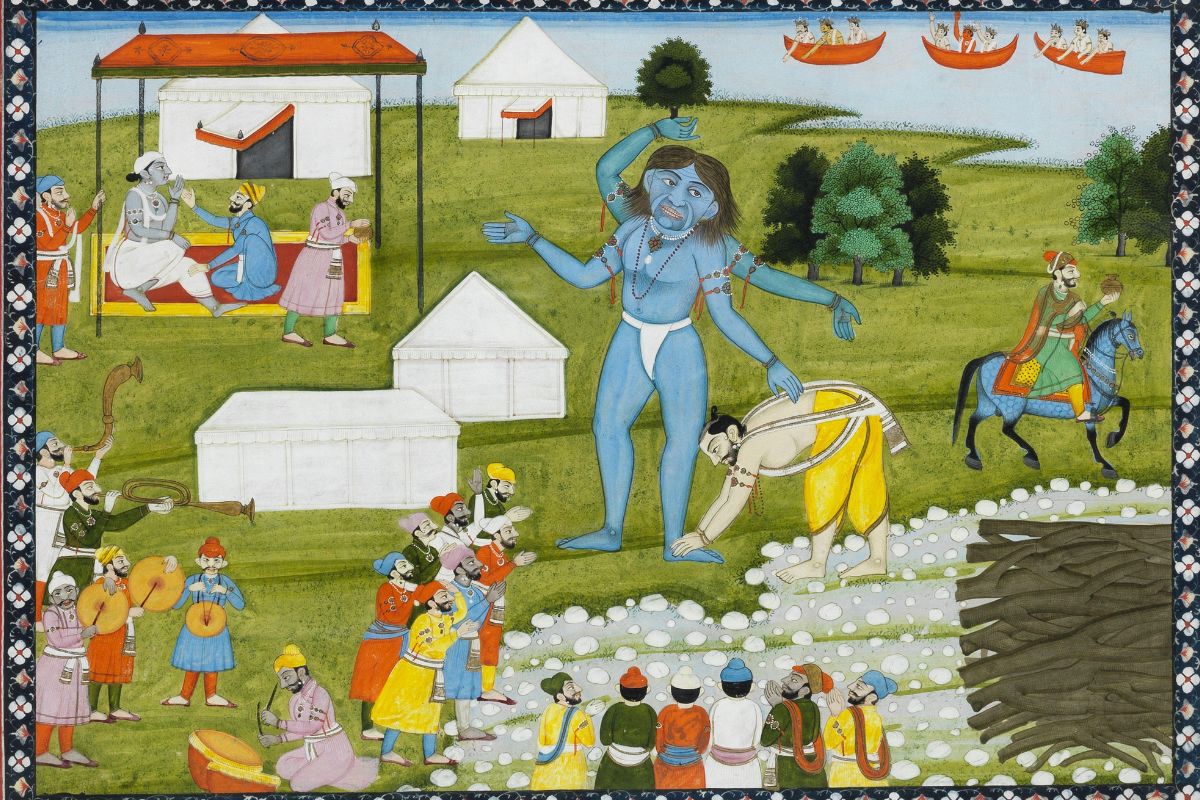
According to a popular Hindu legend, King Mahabali was a powerful and benevolent Asura king. Although he said he was of the Asura lineage, he was known for his charity, devotion and commitment to keeping his promises.
Eventually, the gods became concerned with his rising power. They were afraid he could take over the three worlds.
Lord Vishnu decided to take the form of Vamana, a young Brahmin dwarf, to restore the balance.
One day, King Bali was in the midst of a grand religious sacrifice when Vamana came to him. Charity was never refused, and Bali received the young visitor and asked him what he wanted.
Vamana wanted a strange thing. He asked for only three steps of land, measured by his own feet.
King Bali considered this a very small request and immediately agreed.
However, Vamana then revealed his divine form. He grew so enormous that his first step covered the entire Earth, while his second step covered the heavens. There was no place left for the third step.
Realising that he had promised something he could not physically provide, King Bali offered his own head for the final step.
Impressed by Bali’s honesty and devotion, Lord Vishnu granted him a special blessing. In many versions of the story, Bali was allowed to rule the netherworld, known as Patala.
Why Did Lord Vishnu Promise to Stay With King Bali?
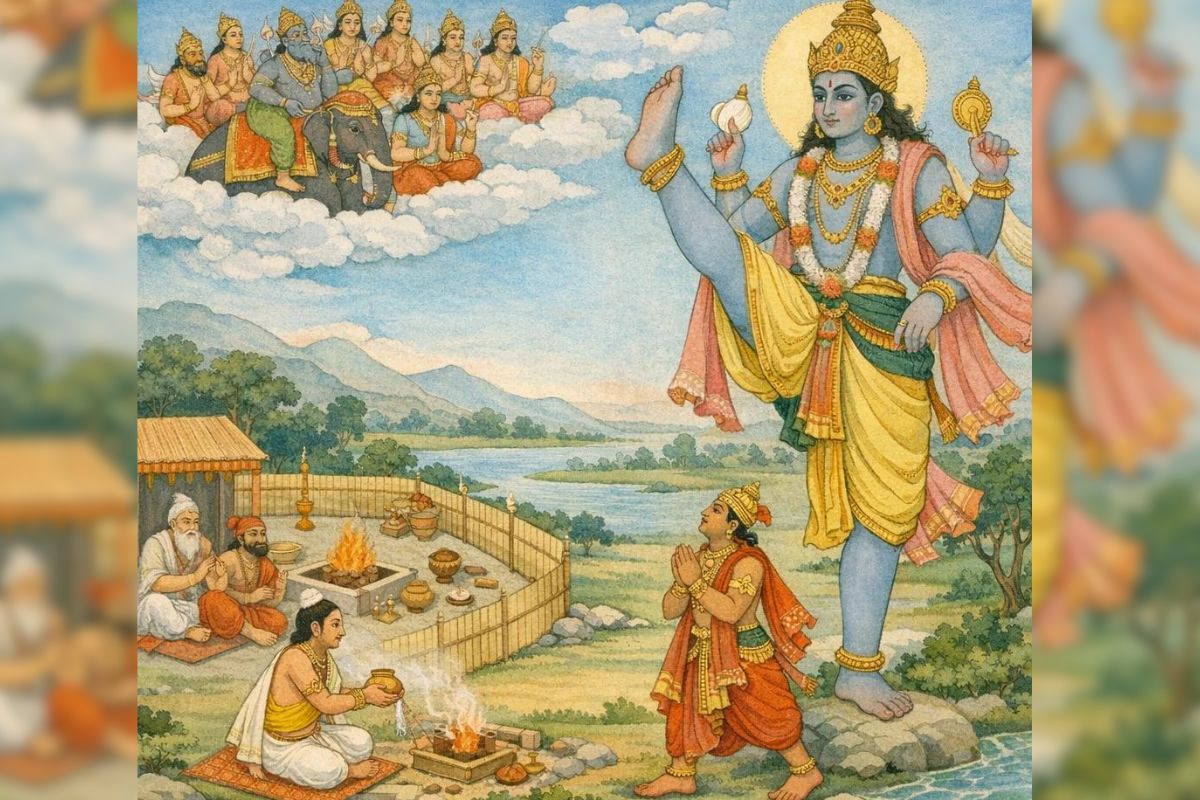
The story does not end with Vamana’s three steps.
According to a popular devotional tradition, King Bali requested Lord Vishnu to remain with him in Patala as his protector. Vishnu accepted the request, honouring the king’s devotion and generosity.
However, Goddess Lakshmi wanted Lord Vishnu to return to Vaikuntha.
She eventually approached King Bali and sought a way to bring Vishnu back. In a popular version of the legend, she tied a sacred thread around Bali’s wrist, symbolically accepting him as her brother. Bali, touched by her gesture, granted her wish.
A divine arrangement was then made under which Lord Vishnu would spend part of the year with King Bali before returning to his heavenly abode.
Some regional retellings connect this arrangement with Vishnu’s four-month cosmic rest during Chaturmas.
This is one of the popular explanations associated with the tradition of Lord Vishnu’s sleep and awakening. The details differ across Puranic and regional narratives, so it should be understood as a devotional account rather than the only explanation of Chaturmas.
What Is the Meaning of Lord Vishnu’s Four-Month Sleep?
In Hindu philosophy, Lord Vishnu’s Yoga Nidra is not ordinary human sleep. It represents a divine state of rest and cosmic stillness.
During Chaturmas, devotees traditionally focus on:
- Spiritual discipline and self-control.
- Prayer, meditation and religious study.
- Charity and helping people in need.
- Avoiding certain celebrations and ceremonial activities.
- Maintaining simplicity in food and daily routines.
Devuthani Ekadashi is the day when Vishnu wakes up and starts working again; it is the start of a new auspicious period.
Also Read – Shankaracharya Temple: History, Significance, Architecture and Visitor Guide
Why Is Devuthani Ekadashi Celebrated?
The core belief behind Devuthani Ekadashi is that Lord Vishnu goes into Yoga Nidra on Devshayani Ekadashi in the month of Ashadha. He stays in this divine consciousness for about four months and then wakes up on Kartik Shukla Ekadashi.
This period is called Chaturmas, which literally means four months.
In many Hindu communities, these months are traditionally avoided for weddings, housewarming and certain other auspicious functions. This is because the time is thought to be more appropriate for spiritual activities, prayer and self-discipline.
The awakening of Vishnu is therefore considered to be a turning point in the Hindu religious calendar. It represents the restoration of divine activity and the return of a favourable time for important family events.
Tulsi Vivah: The Beautiful Tradition Associated With Devuthani Ekadashi
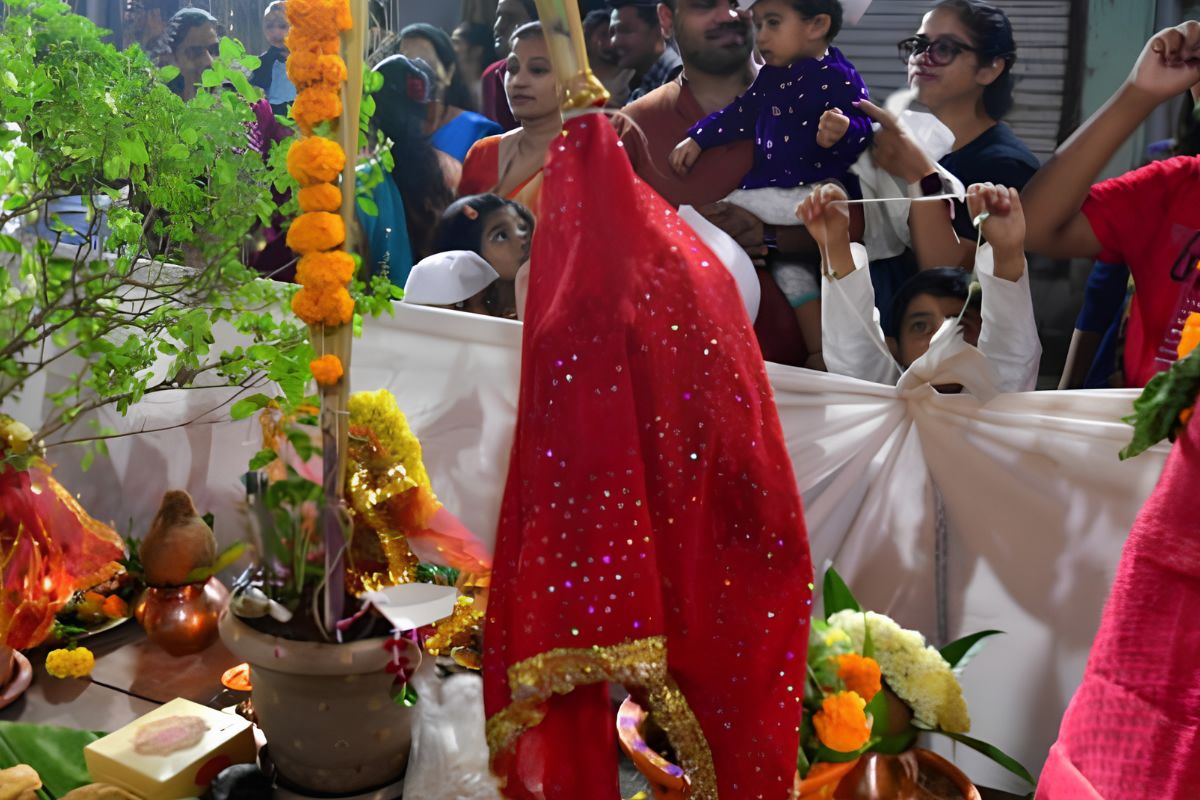
Tulsi Vivah is one of the most common celebrations linked with Devuthani Ekadashi. It marks the ceremonial marriage of the sacred Tulsi plant, also known as holy basil, to Lord Vishnu in his Shaligram form.
Tulsi is popularly associated with the legend of Vrinda, a devoted woman whose story is linked to Lord Vishnu in Hinduism. Her devotion and divine intervention led to a series of events, and she became the holy plant, Tulsi. Vishnu had a special place in his worship for her.
Families decorate the Tulsi plant with colourful fabrics, flowers, jewellery, and traditional wedding ornaments during Tulsi Vivah. Sometimes a small mandap is made out of the stalks of sugarcane. Shaligram is decorated and worshipped as a groom, and wedding rituals are performed with prayers, offerings and devotional songs.
The ceremony is important, particularly for families, as it reflects the importance of commitment, devotion and harmony.
Many communities celebrate Tulsi Vivah on the day of Devuthani Ekadashi, but some celebrate it on the day of Dwadashi or any auspicious day before Kartik Purnima.
How Do Devotees Observe Devuthani Ekadashi?
Devuthani Ekadashi is observed with a mix of fasting, worship and household customs. The exact rituals will vary depending on family tradition and region.
Here are some commonly followed traditions:
- Early morning prayers: Devotees wake up early, take a bath and prepare their prayer spaces for Vishnu worship.
- Fasting: Some people observe a strict fast without food or water, while others consume fruits, milk and permitted fasting meals.
- Tulsi worship: Tulsi leaves are offered during Vishnu puja as the plant holds special religious significance.
- Lighting lamps: Diyas are placed near the prayer area and the Tulsi plant to create an atmosphere of devotion.
- Bhajans and mantras: Devotees sing devotional songs and recite Vishnu-related prayers.
- Charity: Donating food, clothes and other essentials to people in need is considered a meaningful act.
One custom that is interesting to households is to wake up Lord Vishnu by ringing bells, blowing conch shells, singing devotional songs and reciting prayers. In some areas, families establish a small ceremonial area to greet the deity’s awakening.
Also Read – What Happens During Nishita Kaal on Janmashtami
Conclusion
Devuthani Ekadashi is a festival that combines faith, mythology, family traditions and the changing rhythm of the Hindu calendar. The occasion is particularly significant as it marks the awakening of Lord Vishnu, the story of King Bali and Vamana, the end of Chaturmas and the celebration of Tulsi Vivah.
The belief that Vishnu sleeps for four months is not simply a story about a deity resting. It has deeper implications about divine promises, spiritual discipline, and the balance between stillness and activity.
The festival’s rituals communicate a simple message: every ending can be the start of something new. The day of November 20, 2026 offers an opportunity for devotees to renew their spiritual journeys, adopt gratitude and begin a new chapter with devotion.
Frequently Asked Questions (FAQs)
1. When is Devuthani Ekadashi in 2026?
Devuthani Ekadashi will be celebrated on Friday, 20 November 2026. Ekadashi Tithi begins at 7:15 AM on November 20 and ends at 6:31 AM on November 21 in New Delhi.
2. What is another name for Devuthani Ekadashi?
It is also called Prabodhini Ekadashi, Devutthana Ekadashi and Haribodhini Ekadashi. All these names are connected with the awakening of Lord Vishnu.
3. Why does Lord Vishnu sleep for four months?
According to Hindu belief, Lord Vishnu enters in Yoga Nidra on Devshayani Ekadashi and remains in this divine state for about four months. Popular legend also associates the tradition with his promise to stay with King Bali in Patala.
4. What is the story of King Bali and Lord Vishnu?
Lord Vishnu took the form of Vamana and approached King Bali for three steps of land. After measuring the Earth and heavens in two steps, Vishnu asked where he should place the third. Bali offered his own head. Pleased with his devotion and generosity, Vishnu granted him a blessing and agreed to remain with him in Patala in popular retellings.
5. What is Chaturmas?
Chaturmas is four months in the Hindu calendar associated with Lord Vishnu’s Yoga Nidra. It begins around Devshayani Ekadashi in Ashadha and concludes around Devuthani Ekadashi in Kartik.
6. Is Tulsi Vivah celebrated on Devuthani Ekadashi?
Yes. Many families celebrate Tulsi Vivah around this occasion, although the ceremony may also take place on Dwadashi or another auspicious day before Kartik Purnima.
7. Can devotees observe Devuthani Ekadashi without fasting?
Yes. People who cannot fast can still participate through prayers, Vishnu worship, devotional songs and charitable activities. Fasting practices should follow individual health needs and family traditions.
Sources and References
1. Drik Panchang – Devuthana Ekadashi 2026 Date and Timings.
2. The Indian Express – Tulsi Vivah and Its Religious Significance.
3. Sanatan World – Dev Uthani Ekadashi Traditions.
4. Hindu Fasts and Feasts – Devotthan Ekadashi.