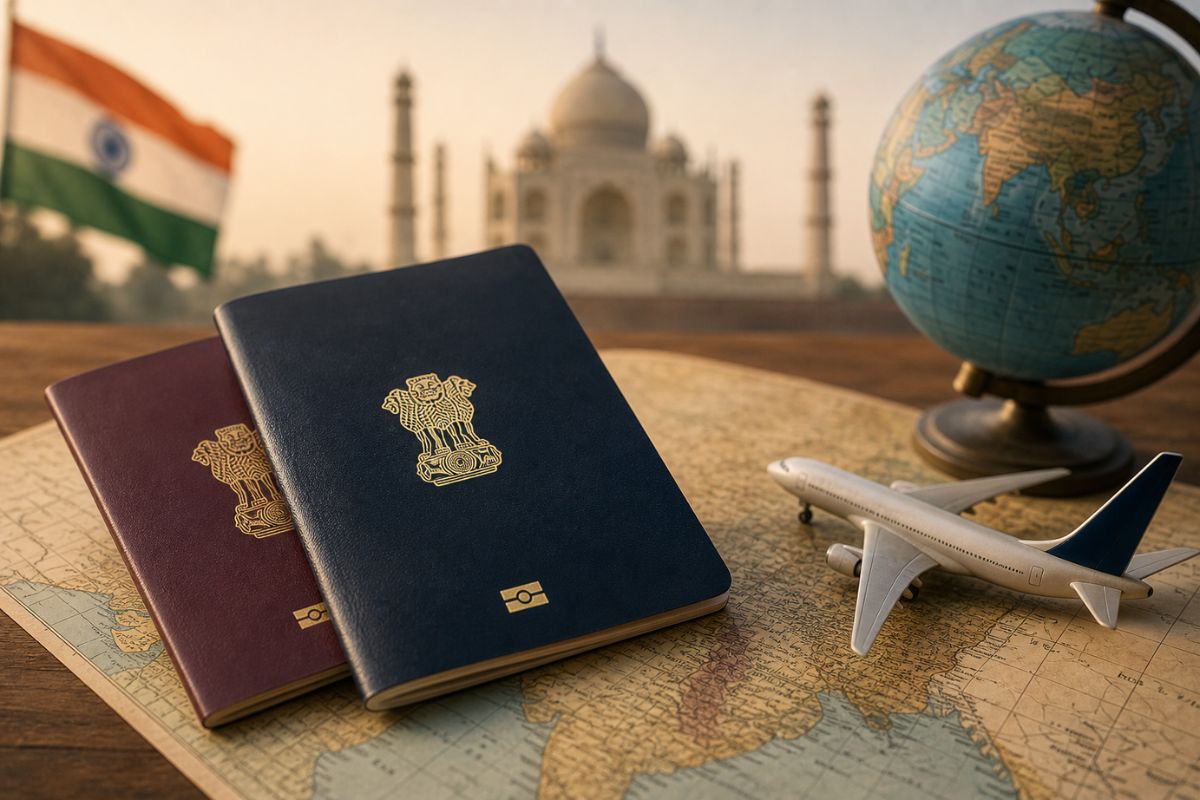
If you are an Indian citizen thinking about becoming a citizen of another country, one of the most important questions is: Does India allow dual citizenship?
The short answer is no. India does not generally permit a person to simultaneously hold Indian citizenship and the citizenship of another country.
Under Indian citizenship law, an Indian citizen who voluntarily acquires the citizenship of another country ceases to be an Indian citizen. However, eligible people of Indian origin may be able to obtain Overseas Citizen of India (OCI) status, which provides certain benefits but does not make them Indian citizens.
This guide explains India’s dual-citizenship rules, what happens to an Indian passport after acquiring foreign citizenship, how OCI works, and what rights former Indian citizens may retain in India.
Does India Allow Dual Citizenship?
No, India does not allow dual citizenship.
India follows a single-citizenship framework. A person cannot normally hold Indian citizenship while voluntarily holding citizenship of another country.
The Citizenship Act, 1955 provides that an Indian citizen who voluntarily acquires the citizenship of another country ceases to be an Indian citizen.
This means that an Indian citizen who becomes a citizen of countries such as the United States, Canada, the United Kingdom or Australia cannot continue to hold Indian citizenship alongside that foreign citizenship.
Quick Answer
| Question | Answer |
|---|---|
| Does India allow dual citizenship? | No |
| Can an Indian citizen voluntarily acquire foreign citizenship? | Yes, but Indian citizenship is lost |
| Can you keep an Indian passport after becoming a foreign citizen? | No |
| Can former Indian citizens apply for OCI? | Potentially, if they meet the eligibility requirements |
| Is OCI the same as Indian citizenship? | No |
| Can OCI cardholders vote in Indian elections? | No |
What Happens When an Indian Citizen Gets Foreign Citizenship?
Suppose an Indian citizen becomes a citizen of another country.
Once the person voluntarily acquires foreign citizenship, they cease to be an Indian citizen under Indian law.
They therefore cannot continue to use an Indian passport as an Indian citizen.
The person’s rights and status in India may instead depend on their foreign citizenship and, where applicable, their OCI status.
Example: Indian Citizen Becomes a Canadian Citizen
Imagine someone was born in India and later becomes a Canadian citizen.
After voluntarily acquiring Canadian citizenship, they cannot retain Indian citizenship as well.
They would travel internationally using their Canadian passport. If eligible, they could apply for an OCI card to facilitate long-term travel and residence in India.
The same basic principle applies when an Indian citizen voluntarily acquires citizenship of countries such as the United States, United Kingdom, Australia or other foreign countries.
Can You Have an Indian Passport and a Foreign Passport?
No, not as a dual citizen.
An Indian passport is issued to Indian citizens. If an Indian citizen voluntarily acquires foreign citizenship, they are no longer entitled to retain Indian citizenship.
A person should therefore not assume that holding both passports is permitted simply because both countries have issued documents to them.
Former Indian citizens who have acquired foreign citizenship should follow the applicable Indian passport surrender and renunciation procedures.
What Is OCI?
OCI stands for Overseas Citizen of India.
OCI is a status created by the Government of India for eligible foreign citizens of Indian origin.
Despite its name, an OCI cardholder is not an Indian citizen.
OCI is sometimes misunderstood as a form of dual citizenship because it gives eligible foreign nationals significant immigration-related benefits in India. However, legally, OCI and Indian citizenship are different statuses.
What Benefits Does OCI Provide?
Depending on the applicable rules, OCI cardholders can receive benefits such as:
- A lifelong multiple-entry visa for visiting India
- Exemption from registration with local authorities for extended stays in India
- Certain economic, financial and educational benefits available under government rules
- The ability to live and work in India subject to the applicable OCI framework
However, OCI does not provide all the rights of an Indian citizen.
Is OCI the Same as Dual Citizenship?
No.
This is one of the most important distinctions to understand.
An OCI cardholder remains a foreign citizen.
OCI does not provide Indian citizenship, an Indian passport, or the full political rights of an Indian citizen.
For example, OCI cardholders generally cannot:
- Vote in Indian elections
- Hold constitutional positions reserved for Indian citizens
- Become members of Parliament
- Hold certain government positions
- Obtain an Indian passport as an OCI cardholder
Therefore, OCI is better understood as a special immigration and residency status for eligible people of Indian origin rather than dual citizenship.
Can an Indian Citizen Become a US Citizen?
Yes. An Indian citizen can become a US citizen if they meet US naturalisation or other citizenship requirements.
However, India does not generally permit the person to retain Indian citizenship after voluntarily acquiring US citizenship.
The person may subsequently be eligible for OCI, depending on their circumstances.
The same general principle applies to people who acquire citizenship of Canada, the UK, Australia and other countries.
Can an Indian Citizen Become a Canadian Citizen?
Yes.
However, acquiring Canadian citizenship does not allow a person to retain Indian citizenship.
After becoming a Canadian citizen, the person is treated as a Canadian citizen under Canadian law and no longer as an Indian citizen under Indian citizenship law.
If eligible, they can explore OCI as a way to maintain a long-term connection with India.
What About Children Born to Indian Parents Abroad?
Children born outside India can have different citizenship outcomes depending on their parents’ citizenship, the law applicable at the time of birth, registration requirements and the laws of the country where they were born.
This is particularly important because citizenship by birth or descent can involve different rules from voluntarily acquiring another citizenship later in life.
Parents should therefore check the applicable Indian citizenship rules and the laws of the child’s country of birth before assuming that the child automatically has dual citizenship.
Can an OCI Cardholder Become an Indian Citizen Again?
In certain circumstances, a former Indian citizen who holds OCI status may be able to apply for Indian citizenship through the applicable registration or naturalisation provisions.
However, this is not automatic.
Eligibility can depend on factors such as the person’s Indian origin, residence in India and the specific requirements of Indian citizenship law.
Anyone considering this route should check the current requirements with the Indian authorities before making decisions about citizenship or immigration status.
What Happens to Property in India After Giving Up Indian Citizenship?
Losing Indian citizenship does not necessarily mean that a person loses every connection to India.
Former Indian citizens who become foreign citizens may continue to have certain rights concerning property and financial matters, but these can depend on their citizenship status, OCI status, the type of property and applicable foreign-exchange and property laws.
For example, rules concerning agricultural land, farmhouses and plantations can differ from rules applicable to other forms of property.
Therefore, someone who has surrendered Indian citizenship and owns property in India should check the current rules applicable to their particular situation rather than assuming that OCI status gives exactly the same property rights as Indian citizenship.
Can OCI Cardholders Buy Property in India?
OCI cardholders may generally purchase certain types of immovable property in India, subject to applicable laws and restrictions.
However, there are important exceptions and special rules, particularly concerning agricultural land, farmhouses and plantation property.
Because property and foreign-exchange regulations can change, anyone planning a significant property transaction should verify the current rules before purchasing or transferring property.
Can OCI Cardholders Vote in India?
No.
OCI status does not give a person the right to vote in Indian elections.
Voting rights are connected to Indian citizenship and the applicable electoral laws.
An OCI cardholder who is a foreign citizen therefore cannot vote in Indian elections merely because they hold an OCI card.
Can OCI Cardholders Get an Indian Passport?
No.
An Indian passport is issued to Indian citizens.
An OCI cardholder is a foreign citizen and normally travels using the passport issued by their country of citizenship.
OCI provides immigration-related benefits for travel to and residence in India, but it does not turn the holder into an Indian citizen.
Why Doesn’t India Allow Dual Citizenship?
India’s citizenship framework has historically followed a single-citizenship approach.
Instead of allowing dual citizenship, India provides OCI status to eligible people of Indian origin who hold foreign citizenship.
This approach allows India to maintain a legal distinction between Indian citizens and foreign citizens of Indian origin while still providing the latter with substantial long-term connections to India.
India Dual Citizenship vs OCI: What’s the Difference?
The difference can be summarised simply:
| Feature | Indian Citizen | OCI Cardholder |
|---|---|---|
| Indian citizenship | Yes | No |
| Indian passport | Yes | No |
| Foreign citizenship | Generally cannot simultaneously retain Indian citizenship after voluntary acquisition | Yes |
| Lifelong multiple-entry visa framework | Not applicable | Yes, subject to OCI rules |
| Right to vote | Yes, subject to electoral requirements | No |
| Constitutional political rights | Yes, subject to eligibility | No |
| Foreign national | No | Yes |
| Can live/work in India | Yes | Subject to OCI rules |
What Should You Do If You Are an Indian Citizen Becoming a Foreign Citizen?
If you are planning to acquire foreign citizenship, do not assume that you can simply keep using your Indian passport.
A sensible checklist is:
- Check the citizenship rules of both countries.
- Confirm when Indian citizenship will cease.
- Follow the applicable Indian passport surrender/renunciation process.
- Check whether you qualify for OCI.
- Review your property, banking, tax and investment situation.
- Keep documentation proving your previous Indian citizenship and Indian origin.
- Check the latest rules with the relevant Indian government authority before making a citizenship decision.
Frequently Asked Questions
Does India allow dual citizenship?
No. India does not generally allow a person to simultaneously hold Indian citizenship and another country’s citizenship.
Can I keep my Indian passport after getting foreign citizenship?
No. Once an Indian citizen voluntarily acquires foreign citizenship, they cease to be an Indian citizen and cannot continue to use an Indian passport as an Indian citizen.
Is OCI dual citizenship?
No. OCI is not Indian citizenship. An OCI cardholder remains a foreign citizen.
Can a US citizen of Indian origin get OCI?
Potentially, yes, if the person satisfies the applicable OCI eligibility requirements.
Can a Canadian citizen of Indian origin get OCI?
Potentially, yes, subject to the applicable OCI eligibility rules.
Can OCI holders vote in India?
No. OCI status does not provide voting rights in Indian elections.
Can OCI holders buy property in India?
OCI cardholders can generally purchase certain types of property in India, subject to applicable laws and restrictions. Special restrictions apply to agricultural land, farmhouses and plantation property.
Can I get Indian citizenship again after becoming a foreign citizen?
In certain circumstances, a former Indian citizen may be able to apply for Indian citizenship under the applicable legal provisions. Eligibility is not automatic.
Final Answer
India does not generally allow dual citizenship.
An Indian citizen who voluntarily acquires foreign citizenship ceases to be an Indian citizen. They cannot retain Indian citizenship simply by keeping an Indian passport.
However, eligible people of Indian origin who become foreign citizens may be able to obtain OCI status, which provides important immigration and other benefits in India but does not grant Indian citizenship or political rights.
Because citizenship, passport, OCI, property and foreign-exchange rules can change, always verify the current requirements with the Government of India and the relevant Indian authorities before taking action.
Sources & References
- Citizenship Act, 1955 — India Code
- MHA — OCI Frequently Asked Questions
- Official OCI Services Portal
- Passport Seva — Surrender Certificate
- Passport Seva — Passport Manual