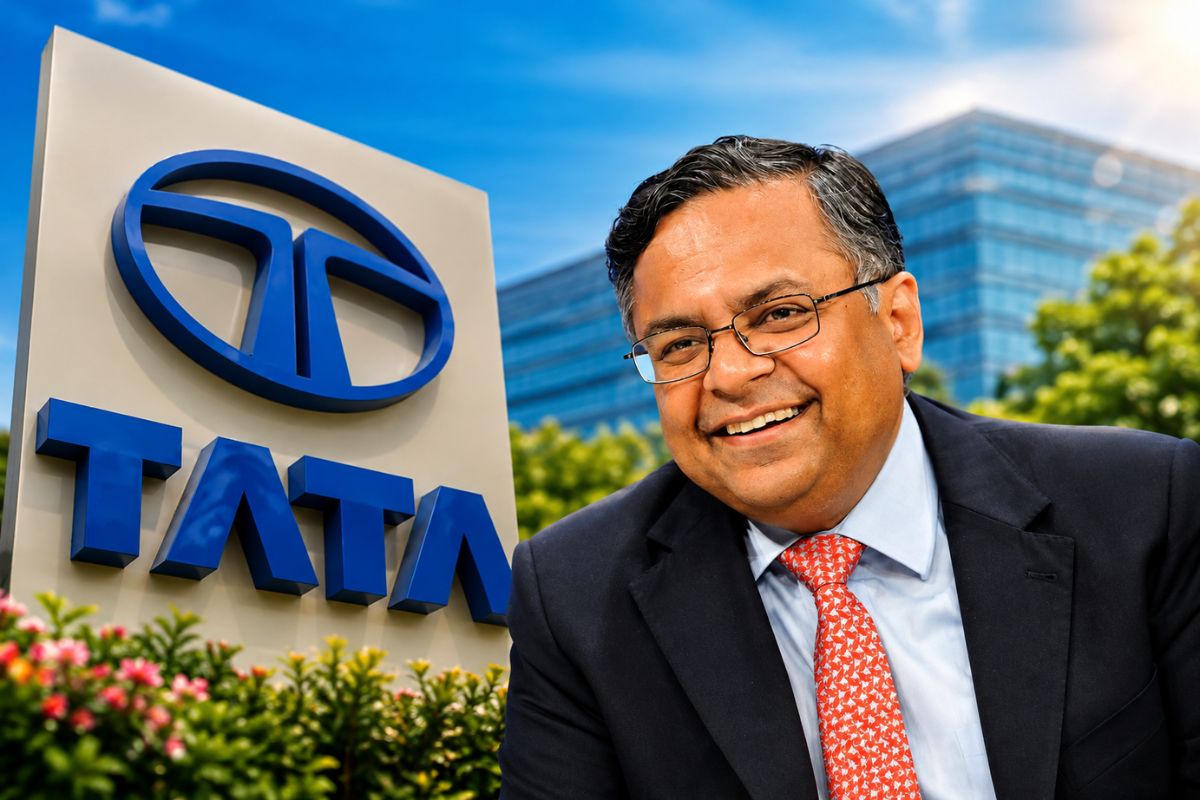
News that the Tata Sons Chairman resigned marks the end of N Chandrasekaran’s remarkable 40-year legacy at the conglomerate. Rather than seeking another term, Chandrasekaran will remain fully in charge until his official departure on February 20, 2027, allowing ample time for succession.
The announcement sent shockwaves across corporate India, where Natarajan Chandrasekaran, a.k.a. Chandra, is widely respected. His peaceful decision resolves a six-month boardroom stalemate, granting India’s premier $180 billion conglomerate sufficient runway to select its next chief without disrupting ongoing multi-billion-pound initiatives.
- Term Completion: N. Chandrasekaran stays put until 20 February 2027. He will serve out his full remaining term as Executive Chairman.
- Reason for Departure: A 6-month deadlock followed a 24 February 2026 board meeting. One member withheld support for his five-year extension.
- Four-Decade Journey: N Chandrasekaran joined TCS as an intern back in 1987. He became CEO in 2009 and Tata Sons Chairman in February 2017.
- Transformational Legacy: Over a decade, he bought Air India back. He pushed semiconductor plants, battery gigafactories, and massive group consolidation.
- Orderly Succession: Tata Trusts holds a controlling 66% stake in Tata Sons. They will set up a selection committee for the next chief.
The Six-Month Boardroom Deadlock
Let’s look back to understand his choice better. It all started on 24 February 2026. A five-year extension proposal went to the board. The Sir Dorabji and Sir Ratan Tata Trusts approved it. They hold a dominant 51.54% stake in Tata Sons. The Nomination and Remuneration Committee backed him completely too.
Yet, the resolution failed to pass easily. One single board member withheld support that day. Rather than forcing a messy vote, Chandra deferred it. He hoped a consensus would form later on. In Tata’s long history, major choices require harmony. They hate split decisions, plain and simple.
Six long months passed with zero resolution. Lingering leadership doubt can destroy corporate trust fast. It hurts a holding company managing dozens of firms. Tata Sons manages huge multi-billion-pound projects right now. They build chips, run airlines, and grow digital apps. Chandra knew total clarity was paramount for everyone. So he asked the board to find his successor.
Reports suggest deep vision differences caused the deadlock. Debates raged over whether Tata Sons should list publicly. Relations with minority owner Shapoorji Pallonji Group stayed tense. Mounting losses in unlisted ventures raised huge red flags. Air India lost money, and Tata Digital struggled too. With Noel Tata leading Tata Trusts since 2024, dynamics shifted. The board wanted a closer review of group strategy.
Also Read: India’s Richest Investors: The 8 People Who Actually Move Markets in 2026
Four Decades At Tata: From Trainee To Chairman
Chandra’s rise inside Tata is pretty amazing. He joined TCS back in 1987 as a software intern. Hard work and vision pushed him up the ladder fast. By 2009, he became CEO of TCS. Under his watch, TCS became India’s top IT giant. It became the cash engine for the whole group.
In February 2017, Chandrasekaran made history in Mumbai. He was the first non-Parsi chairman without family ties. He took over after Cyrus Mistry’s stormy exit. Over ten years, Chandra brought real institutional calm. He streamlined complex structures and drove modern tech hard.
He dismantled confusing cross-holdings between group firms. He brought the aviation company Air India home after nearly seven decades. Plus, he poured billions into green energy and microchips. His reign proved professional managers can lead historic trusts.
Key Financials And Strategic Benchmarks
During Chandra’s decade at the top, market valuation surged. The group made bold strategic bets on future tech. Peers like Infosys have also been expanding hiring through this period, reflecting the broader strength of India’s IT sector. However, rapid expansion brought heavy financial headwinds as well. New digital platforms and aviation ventures bled serious cash.
His personal pay reflected his massive responsibilities. In FY26, Chandra earned ₹158.66 crore in total pay. That made him one of Asia’s highest-paid executives.
| Key Benchmark / Metric | Primary Transit Modes | Strategic Context & Significance |
|---|---|---|
| Overall Career at Tata | 40 Years (1987–2027) | Joined TCS as an intern; completed 10 years as Chairman. |
| Tata Trusts Shareholding | 66% controlling stake | Philanthropic trusts hold primary control over holding firm. |
| FY26 Executive Remuneration | ₹158.66 crore | Up from ₹155.81 crore in FY25; mostly profit-linked commission. |
| Air India FY26 Performance | ₹22,238 crore net loss | Revenues reached ₹71,870 crore despite massive fleet upgrades. |
| Tata Digital FY26 Loss | ₹4,974 crore net loss | Heavy spending went into scaling the Tata Neu app. |
Table Source: Tata Sons Annual Report & Ministry of Corporate Affairs Filings.
Profits at TCS and Tata Motors provided strong cash cushions. Still, heavy tech spending sparked tough questions from Tata Trusts. Aviation losses added fuel to the fire. Balancing rapid growth with fiscal discipline remains a tricky job. Whoever inherits his chair faces a tough road ahead.
What Lies Ahead: The Search For A Successor
Six months remain until February 2027 arrive. That gives Tata Sons time for an orderly transition. Under company rules, a special selection panel will form soon.
This committee includes Tata Trusts leaders and independent directors. External business experts usually join the panel as well. Since Tata Trusts owns 66%, Noel Tata holds huge power. Trustees will heavily sway the final leadership choice.
Speculation is growing rapidly across Mumbai’s financial district. Will they pick an internal veteran like a flagship CEO? Or will they hire an accomplished corporate outsider globally? Either way, the next chief gets a modern conglomerate. It is far cleaner than what Chandra inherited in 2017.
Until 20 February 2027, Chandra remains fully in control. He will oversee major projects and annual meetings personally. He wants zero friction for staff, investors, and global partners.
Also Read: Top 10 Manufacturing Companies in India You Should Know in 2026
Frequently Asked Questions
Why Is N Chandrasekaran Stepping Down As Tata Sons Chairman?
N Chandrasekaran opted out of a third term recently. A five-year extension failed to get unanimous board support. To prevent leadership confusion, he asked for a successor search.
When Will N Chandrasekaran Officially Leave His Post?
His full tenure ends on 20 February 2027. He stays as Executive Chairman until then to ensure stability.
Who Holds Controlling Power Over Tata Sons?
Tata Trusts holds a dominant 66% controlling stake overall. The Sir Dorabji and Sir Ratan Tata Trusts hold 51.54%.
How Much Did N Chandrasekaran Earn In FY26?
Official annual reports show he earned ₹158.66 crore in FY26. That is up slightly from ₹155.81 crore in FY25.
Who Will Succeed N Chandrasekaran As Tata Sons Chairman?
No successor has been chosen yet. A selection panel from Tata Sons and Tata Trusts will decide. They will evaluate both internal and external candidates before 2027.
Sources & References
- Moneycontrol. Chandrasekaran exit: What his departure means for Air India’s transformation. (2026, August 12).
- CNBC TV18. Here’s how the Tata Group fared over the last decade under N Chandrasekaran. (2026, August 12).
- The Hindu. Air India’s FY26 losses more than double to ₹22,238 crore, turnaround deadline extended. (2026, July 28).
- Tata Sons Private Limited. Annual Report FY 2025–26. Ministry of Corporate Affairs filings, Government of India. (2026, March 31).
- Wikipedia. Natarajan Chandrasekaran. (2026).
Disclaimer: This article is provided solely for general informational and educational purposes concerning corporate governance and executive management within business organisations, and does not constitute commercial promotion, endorsement, or financial advice. The information presented herein should not be relied upon as official corporate disclosures or professional investment recommendations. Readers are strongly advised to independently verify all facts, numbers, and corporate developments from official primary sources and consult qualified legal, financial, or management professionals before taking any related decisions or actions.