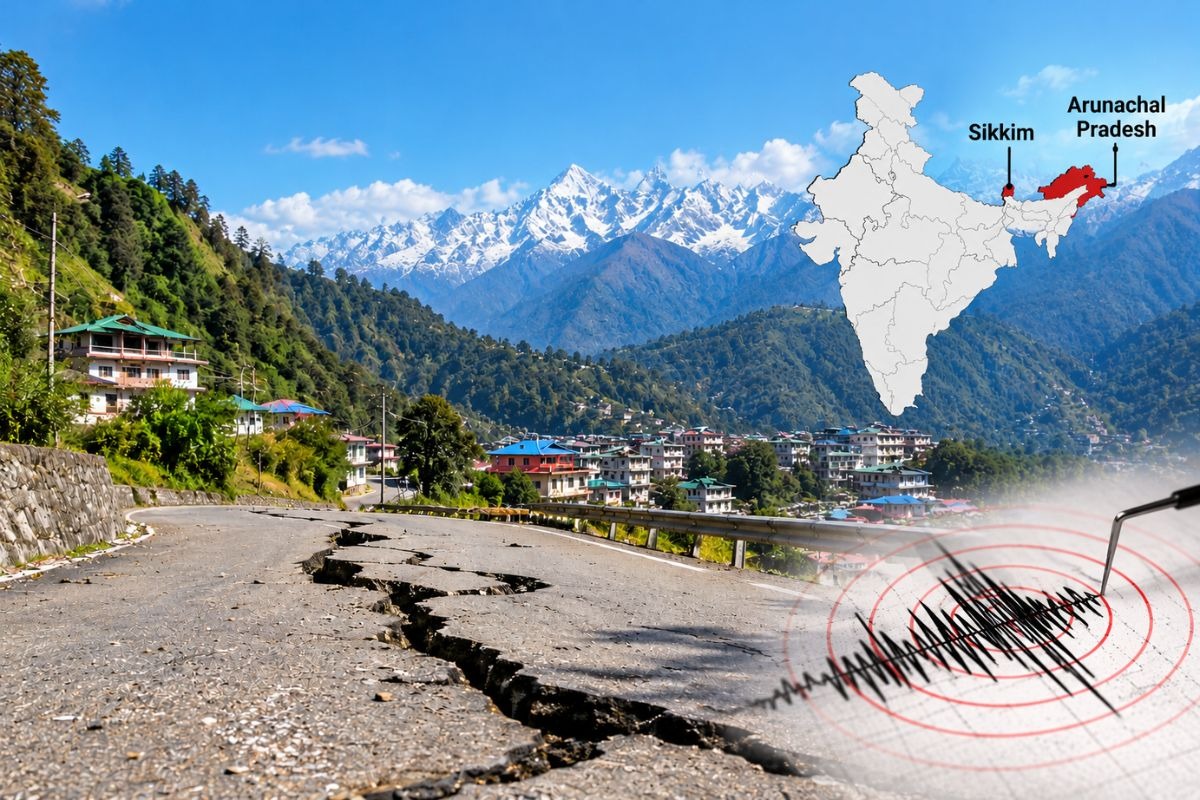
October 13, 2026: Earthquakes hit India’s northeast again recently. Tectonic shifts cause frequent ground shaking here. Arunachal Pradesh and Sikkim felt the movements. These states sit right on the Himalayan seismic belt. Honestly, constant ground movement gets scary fast. Local residents and travellers need clear safety updates today.
The National Centre for Seismology tracks all these quakes closely. A magnitude 3.9 earthquake hit Tibet on October 12. Its epicentre was 273 km north-northeast of Tawang. Tawang sits inside Arunachal Pradesh. Official government records confirm these exact measurements. Reports mention another earthquake on October 13 morning. You should always check verified data before trusting rumours online. Recent data shows over 150 minor tremors hit this zone yearly. About 68% of Himalayan earthquakes happen at shallow depths. Shallow quakes often cause stronger surface shaking.
Why Is Northeast India Prone to Earthquakes?
Northeast India sits on an unstable geological zone. The Indian tectonic plate collides with the Eurasian plate here. This massive collision zone pushes the Himalayas higher every single year. The Indian plate moves north at 5 centimetres annually. That continuous push creates immense underground pressure. The built-up strain releases as earthquakes eventually. Arunachal Pradesh and Sikkim experience constant underground friction.
Many local earthquakes remain relatively small. Still, small shocks cause major problems. Danger depends on depth and local soil structure. Distance from towns matters a lot too. Building quality plays a huge role in safety. Roughly 55% of India’s landmass faces earthquake hazards. Over 80% of northeastern structures lack proper seismic retrofitting. Poor construction increases human risk during heavy shaking.
Also Read: GST Law Set for Major Change: Arrest Powers of Tax Officers May Be Curbed
| Seismic Risk Factors | Regional Impact Statistics |
|---|---|
| Annual Plate Movement | 5 centimetres per year |
| Shallow Quake Proportion | 68% of local tremors |
| India Land Area at Risk | 55% in Seismic Zones III-V |
| Unreinforced Buildings | Over 80% in northeast states |
What Should People in India Know?
People living in high-risk zones need clear safety plans. Follow these basic survival steps during ground shaking:
- Drop to the floor immediately when the ground moves.
- Cover your head under a sturdy wooden table.
- Hold on tight until all shaking stops completely.
- Stay far away from glass windows and loose shelves. Falling items cause nearly 55% of non-fatal injuries.
- Never use elevators during or after tremors. Use stairwells only after checking structural stability carefully.
- Check official updates from the National Centre for Seismology. Disaster management teams post accurate emergency reports online.
- Avoid damaged buildings showing visible wall cracks. Wait for certified engineers to inspect the structure’s safety first.
Where Can You Check the Latest Earthquake Updates?
Get reliable earthquake news directly from official government sources. Visit the National Centre for Seismology website.
Official data helps people ignore fake social media panic. Early government updates prevent unnecessary chaos during real emergencies.
Conclusion
Tremors near Arunachal Pradesh and Sikkim highlight local seismic dangers. Northeastern states must improve daily emergency preparedness plans. Trust scientific facts instead of unverified social posts. Following official safety advice saves lives during sudden disasters.
Note: Details on magnitude, casualties, or damage regarding the October 13 quakes need official verification. Check government portals before publishing unconfirmed numbers.