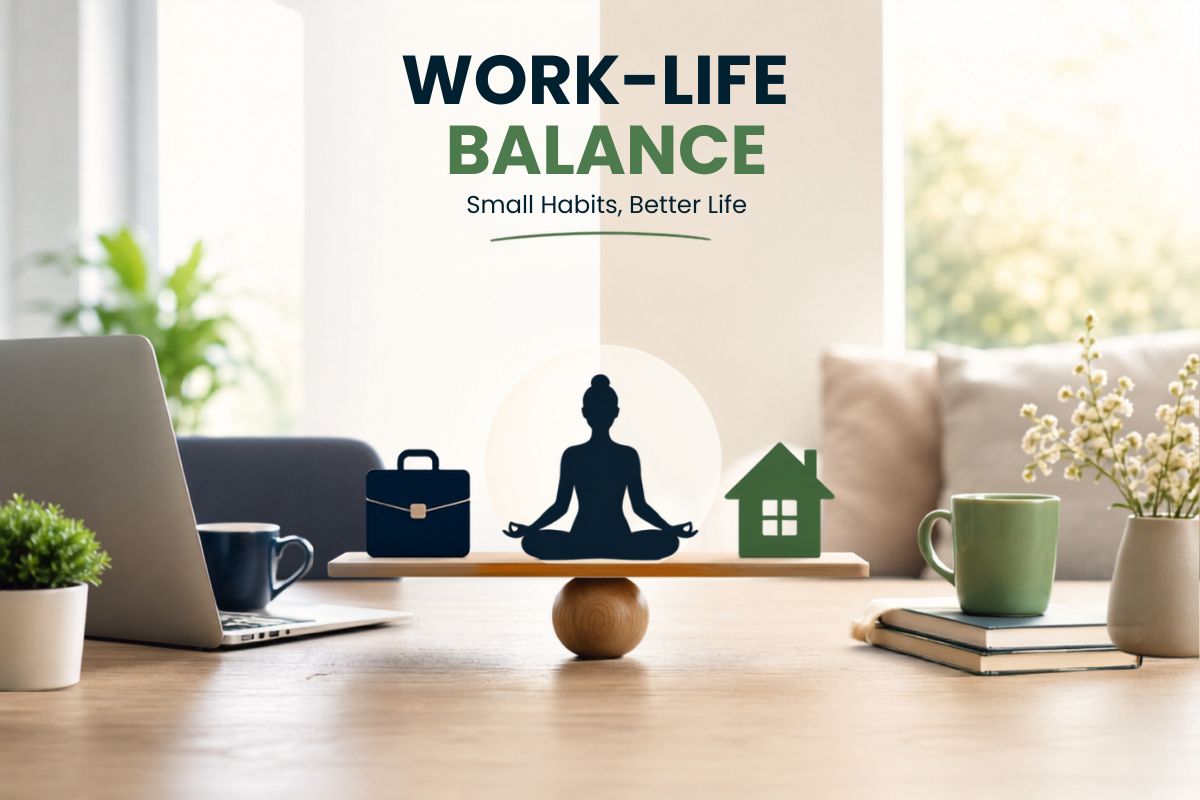
Most people don’t lose their work-life balance in one dramatic moment. It slips away quietly — one late email here, one skipped lunch break there — until one day the line between “on” and “off” barely exists anymore. The good news is that fixing it rarely requires a complete life overhaul. Small, consistent habits tend to do far more than big, unsustainable changes.
Here’s what actually helps, broken down in a way you can start using today.
What Does Work-Life Balance Really Mean?
Work-life balance isn’t about splitting your day into two perfect, equal halves. It’s about having enough energy, time and mental space left over after work to actually enjoy the rest of your life — your relationships, your hobbies, your rest. When that balance tips too far in one direction for too long, it manifests itself in the form of exhaustion, irritability and a nagging sense that you’re always behind, even when you’re technically “off the clock.”
Also Read: The Health Effects of Sitting on the Floor vs. Chairs

Set a Real End Time for Your Workday
One of the simplest fixes is also the most overlooked: decide when your workday ends, and actually stop. This sounds obvious, but for many people — especially those working remotely — the workday has no natural edge anymore. Without a commute or a closing office door, work quietly expands into the evening.
Try picking a specific time, like 6:00 p.m., and treat it the way you’d treat a meeting you can’t miss. Close your laptop. Put your phone in another room if you have to. The point isn’t perfection; it’s giving your day a clear finish line.
Also Read: The Indoor Plant Guide for Every Indian Home, Big or Small
Protect Small Pockets of Time for Yourself
You don’t need a free weekend to recharge. Even fifteen minutes of uninterrupted time — a walk, a coffee in silence, a few pages of a book — can reset your mood more than people expect. The trick is protecting that time the same way you’d protect a work deadline. If it’s not written down or planned for, it tends to disappear into whatever else is demanding your attention.

Also Read: Quick 10-Minute Breakfasts That Actually Work for Busy Indians
Learn to Say No Without Over-Explaining
A lot of imbalance comes from saying yes too often — to extra tasks, favors, or plans — out of guilt rather than genuine willingness. Saying no doesn’t require a long justification. A simple, polite “I can’t take that on right now” is enough. People generally respect a clear boundary far more than a reluctant yes followed by visible stress later.
Turn Off Notifications During Personal Time
Constant pings from email and work chats keep your brain in “on” mode even when you’re technically off duty. Turning off non-urgent notifications after hours isn’t about being unreachable — it’s about giving your mind permission to actually rest. Most workplaces can survive a few unread messages until morning.
Also Read: India Faces Heatwave In April As Temperatures Break Records
Move Your Body, Even Briefly
Exercise doesn’t need to mean an hour at the gym to make a difference. A quick walk after lunch, some stretches between meetings, or a short bike ride in the evening can reduce stress and increase focus. It’s not about fitness perfection, it’s about giving your body a break from sitting and your brain a break from screens.

Group Similar Tasks Together
The constant jumping from task to task – emails, calls, deep work, errands – is more energy draining than the tasks themselves. If you group similar tasks together, such as answering all emails in one chunk of time rather than throughout the day, you’ll find that you tend to free up mental space and reduce that scattered, never-caught-up feeling.
Also Read: The Ultimate 2026 Guide to Things Only Indians Can Relate To
Talk to Your Manager Before You Reach a Breaking Point
Many people wait until they’re completely burnt out before raising concerns about workload. A better approach is having an honest, low-drama conversation early — before resentment builds. Most reasonable managers would rather adjust a workload slightly than lose a good employee to burnout later.

Make Rest a Non-Negotiable, Not a Reward
It’s easy to treat rest as something you earn only after finishing everything on your list. But that list rarely ends. Sleep, downtime, and slower weekends work best when they’re scheduled in as a normal part of life, not something you have to justify or wait for.
Also Read: Easy Kitchen Tips To Master How To Cook Poha On Induction Without Drying It Out
Revisit Your Balance Regularly
What works for your schedule this year might not work next year. Life changes — new jobs, new responsibilities, new seasons — and your approach to balance should shift with it. Checking in with yourself every few months, even briefly, helps catch small imbalances before they turn into bigger ones.
Frequently Asked Questions
What is the fastest way to improve work-life balance?
Setting a firm end time for your workday and actually sticking to it tends to produce the quickest, most noticeable change.
Can work-life balance be improved without changing jobs?
Yes. “Most change is from daily habits and boundaries, not changing roles or employers.”
How do I know if my work-life balance is off?
Many people experience common signs such as constant fatigue, irritability, difficulty relaxing during time off, and feeling like personal time is always “borrowed” from work.
Sources and References
- World Health Organization (WHO) – Mental Health at Work.
- Mayo Clinic – Work-Life Balance: Tips to Reclaim Control.
- American Psychological Association (APA) – Stress Effects on the Body.
- Centers for Disease Control and Prevention (CDC) – Sleep and Sleep Disorders.
- Harvard Business Review – Research and Articles on Work-Life Balance.