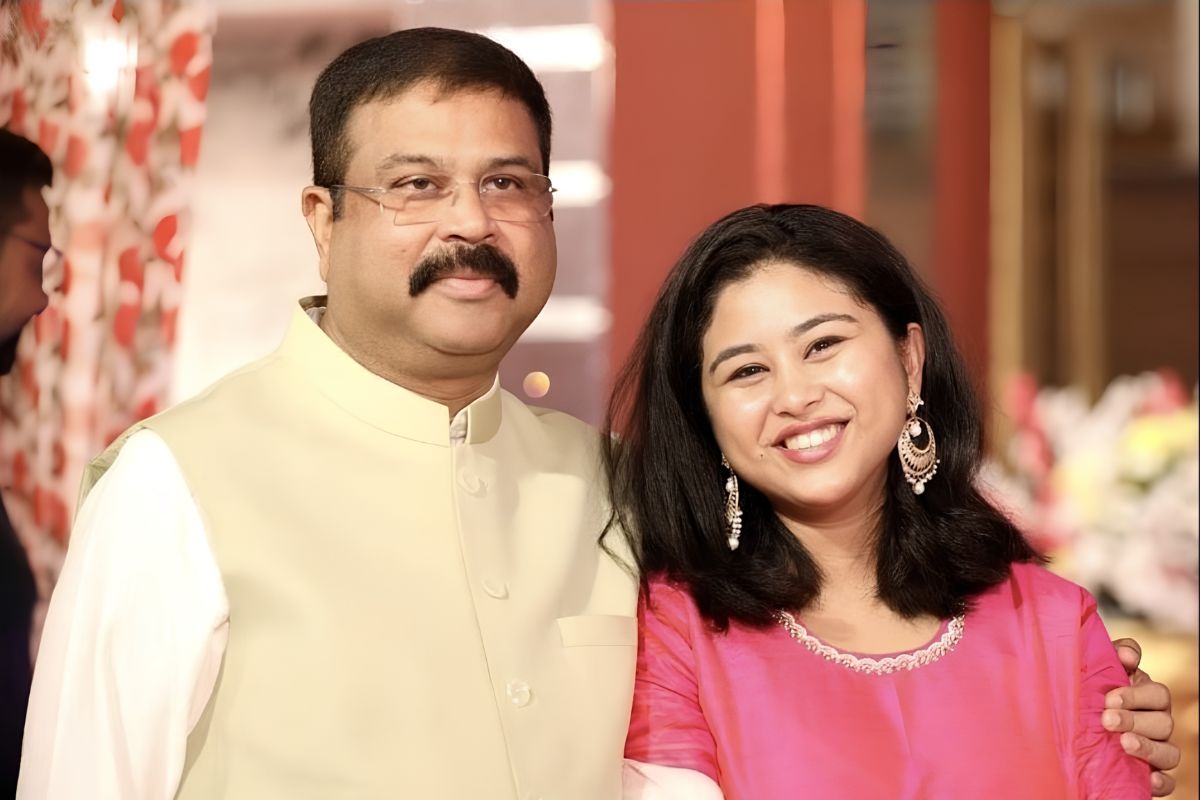
Quick summary: Naimisha Pradhan, daughter of Education Minister Dharmendra Pradhan, deactivated her Instagram account this week after being trolled over her US law degree amid the NEET protests demanding her father’s resignation. This explainer is for readers following Indian political news and the NEET/CJP controversy — the takeaway is that this isn’t just one family’s bad week online, it’s a repeating pattern where protest anger with no sanctioned outlet defaults to targeting relatives who hold no office and no policy responsibility, rather than the officials actually being protested.
Most headlines covered this as a single fact: minister’s daughter trolled, account gone. That’s accurate, but incomplete. The real story is what happens when a political protest with genuine grievances runs out of official targets and starts looking for personal ones instead.
- Naimisha Pradhan, daughter of Education Minister Dharmendra Pradhan, deactivated her Instagram account after sustained online trolling.
- The trolling was tied to her personal choice to study law at Tufts University, not to any policy decision she made — she holds no public office.
- Protesters even flooded Tufts University’s own social media pages, despite the university having no connection to India’s exam policy.
- This isn’t an isolated case — Indian digital politics has a recurring pattern of targeting officials’ family members when protests can’t reach the official directly.
- The Centre has said the exam lapses are already acknowledged and administratively fixed, and has ruled out Dharmendra Pradhan’s resignation, despite continued opposition pressure.
- Activist Sonam Wangchuk’s revised hunger-strike conditions and a hospital meeting with Union ministers this week are the more consequential — but less discussed — thread of this story.
What Happened to Naimisha Pradhan’s Instagram Account?
The backdrop is familiar by now. Student groups and opposition parties have spent weeks demanding Dharmendra Pradhan’s resignation over alleged irregularities in national entrance exams, with the youth-led Cockroach Janta Party camped at Jantar Mantar since early June. The protest turned confrontational in parts, drew police action, and eventually pulled in hunger-strike activism as well, with talks around Sonam Wangchuk’s fast adding a second flashpoint to an already tense standoff.
None of that is new information. What’s less discussed is the mechanics of how a protest aimed at a policy failure — exam paper leaks, administrative accountability, institutional trust — mutates into a pile-on against someone who has never held office, never made a policy decision, and has no institutional accountability to answer for. Naimisha Pradhan completed her LLM at Tufts University’s Fletcher School in 2023 and later worked with a Delhi-based strategic policy forum. She isn’t part of the government. She isn’t a public official. Yet her Instagram comments became a proxy battlefield for a fight that belonged elsewhere, with users even spilling into Tufts University’s own social pages to demand answers from an institution that has nothing to do with Indian exam policy.
Why Did Trolls Target Naimisha Pradhan Specifically?
Here’s the angle most coverage has left out entirely: this isn’t really about one family. It’s part of a recurring script in Indian digital politics where the relatives of officials — spouses, children, siblings — become stand-ins for anger that has no other outlet. It has happened across party lines, across controversies, and across issues that have nothing to do with the people being targeted. The justification is almost always the same: “if your parent holds public office, you’re fair game.” But that logic collapses quickly under scrutiny. Public accountability is supposed to track decision-making power, not surname. A minister’s daughter choosing to study law abroad is a personal decision with zero bearing on exam-paper security in Bihar or Jharkhand.
There’s also a quieter irony in the specific criticism levelled at her — that studying abroad reflects a lack of faith in India’s own education system. Whatever the merits of that argument in general, aiming it at an individual graduate student, rather than at the system itself, replaces a policy debate with a character trial. It’s a shortcut that feels satisfying in the moment and solves nothing.
Also Read – SBI Employees Set for 2-Day Nationwide Strike
What the Government Is Actually Saying Right Now
The latest movement on the substantive issue matters more than the social media fallout, and it’s where this story is genuinely still developing. Government functionaries have told reporters this week that the Centre has already acknowledged the exam lapses on record and does not view resignation as the appropriate response to a problem it says has been administratively addressed. Officials are pointing to enrolment numbers — citing roughly 72,000 admissions at Delhi University alone — as evidence that the academic pipeline is functioning again, even as opposition parties keep resignation demands alive heading into the Monsoon Session.
Separately, Union ministers met activist Sonam Wangchuk in hospital this week after he revised his list of conditions for ending his fast, tying the standoff to whether the government accepts responsibility for the paper leaks or allows the matter to be raised formally in Parliament. That thread is arguably more consequential to how this controversy resolves than anything happening in a minister’s daughter’s comment section — yet it’s getting a fraction of the attention.
The Real Takeaway
Naimisha Pradhan deactivating her account isn’t an isolated incident of one person having a bad week online. It’s a symptom of a pattern that keeps repeating in Indian political discourse: institutional anger with nowhere sanctioned to land, defaulting to the easiest, least accountable target available — a private citizen with a public last name. Until protest movements and platforms alike draw a firmer line between “the official” and “the family,” this specific kind of collateral damage isn’t going away. It will just have a different name attached the next time a controversy needs somewhere to point.
FAQs
1. Who is Naimisha Pradhan?
She is the daughter of Union Education Minister Dharmendra Pradhan and a Master of Laws graduate from Tufts University’s Fletcher School, currently working in policy research.
2. Why did she deactivate her Instagram account?
She faced sustained online criticism and trolling linking her personal choice to study abroad with the ongoing protests demanding her father’s resignation over exam-related controversies.
3. Is Dharmendra Pradhan resigning?
As of this week, government officials have said the Centre views the matter as administratively resolved and has no plans for his resignation, despite continued opposition pressure.
Sources & References
- Who is Naimisha Pradhan? Dharmendra Pradhan’s daughter deactivates Instagram amid foreign degree backlash
- Dharmendra Pradhan’s Daughter Trolled On Social Media Amid CJP Protest, Deactivates Instagram Account
- Caught in the crossfire: Dharmendra Pradhan’s daughter Naimisha deactivates Instagram account amid massive online outrage
- Dharmendra Pradhan’s Daughter Faces Online Backlash Over Foreign Education, Disables Instagram
- CJP protests: Centre says NEET lapses fixed, calls for Dharmendra Pradhan’s resignation political