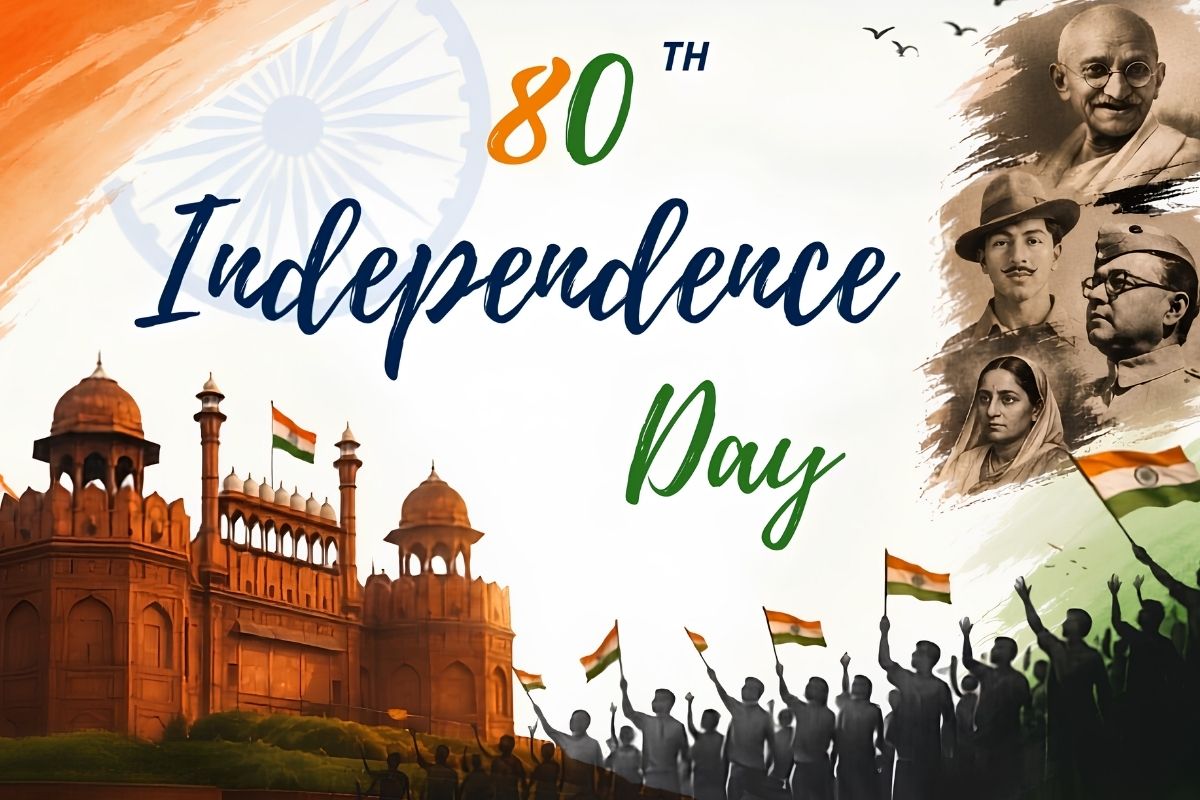
British rule in India formally ended on August 15, 1947. That’s the whole reason for the date. The Indian Independence Act named it the day two new countries, India and Pakistan, came into being, and the handover was nowhere near as tidy as the flag ceremonies make it look. Partition happened at the same time, and the human cost of that gets left out of most classroom versions of the story.
By 2026, India will complete 79 years of independence on 15 August 2026, but 15 August 2026 is officially the 80th Independence Day. Getting there took decades of resistance, arrests, mass movements, and a lot of people whose names never made it into any official record.
- India became independent on August 15, 1947.
- 2026 marks 79 years of freedom and the 80th Independence Day.
- Partition caused massive displacement and suffering.
- India became a republic in 1950.
- Independence remains a responsibility, not just a celebration.
25 Surprising Facts About India’s Independence
1. India became independent on August 15, 1947.
The Indian Independence Act, 1947, named August 15 as the “appointed day” for the new Dominions to exist.
2. India did not become a republic in 1947.
That took another three years. The Constitution came into force on January 26, 1950, which is why Republic Day exists as a separate holiday.
3. Partition accompanied independence
It happened under the same Act. For millions of families, 1947 meant packing up and leaving, not celebrating.
4. The Indian Independence Act was passed by the British Parliament
It got Royal Assent on July 18, 1947, less than a month before India became independent.
5. The national flag was adopted before Independence Day
The Constituent Assembly signed off on its design on July 22, 1947, ahead of independence.
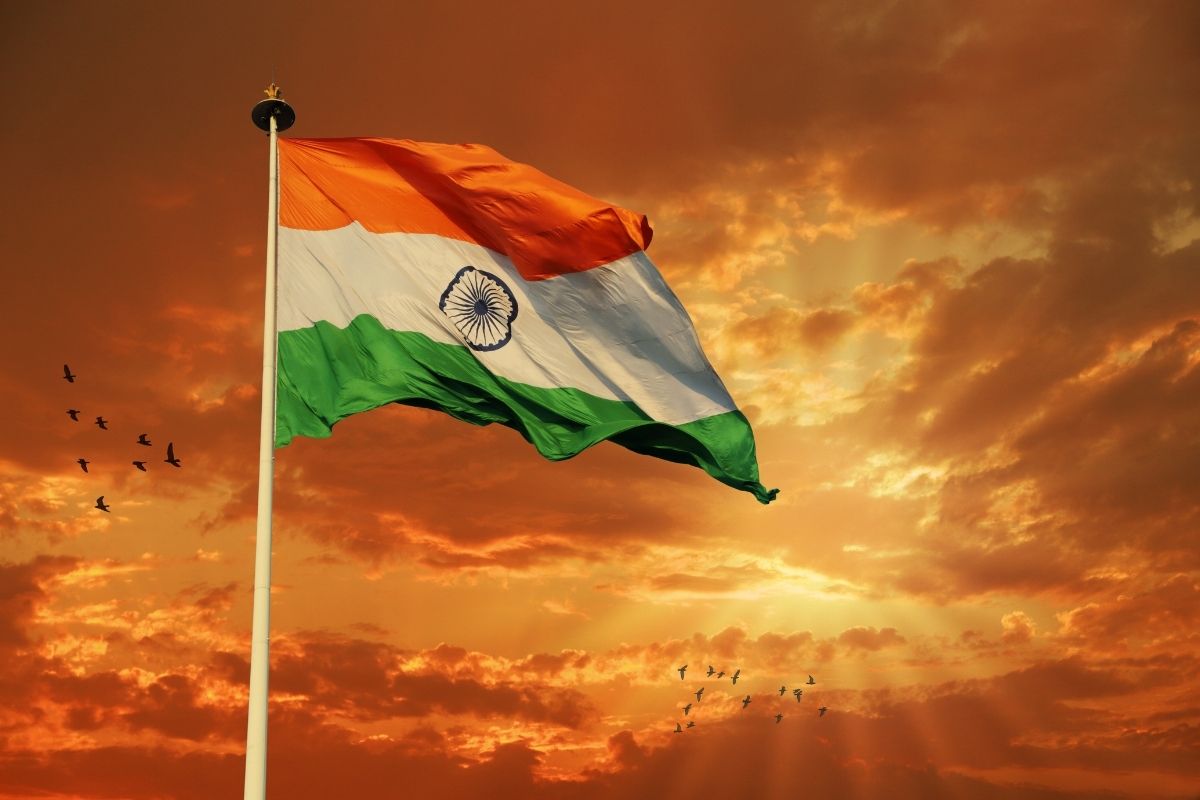
6. The flag isn’t just three colours.
Saffron, white, and green, with a navy Ashoka Chakra in the middle. The Chakra has 24 spokes, taken from the Lion Capital of Ashoka.
7. No single person or group won this on their own.
It took decades: constitutional politics, mass protest, underground resistance, social reform, and a huge number of people who were never remembered for it.
8. Gandhi skipped the main celebrations.
He was in Bengal instead, trying to calm communal violence while Delhi was celebrating. That gap between the ceremony and what was actually happening on the ground tells you a lot.
9. Nehru became the first Prime Minister.
His midnight speech is still one of the most quoted moments in Indian political history.
10. The actual handover happened right at midnight
Between August 14 and 15. One government ended, and another started almost at the stroke of twelve.
11. India started out as a Dominion, not a republic.
It stayed inside the Commonwealth framework for three years before that changed.
12. The same 1947 law that freed India also created Pakistan as a separate Dominion.
13. The new borders were drawn in a rush.
The Radcliffe Boundary Commission had almost no time to work with, and for people living near the line, a single announcement could decide overnight which country they were now in.
14. Freedom and displacement were happening at the same moment, not in sequence.
While one part of the country celebrated, millions of people elsewhere were leaving homes their families had lived in for generations.
15. Most of the people who actually won independence were never famous.
Students, farmers, lawyers, factory workers. The movement ran on people whose names history mostly dropped.
16. Women weren’t a side note in the freedom struggle.
Sarojini Naidu, Aruna Asaf Ali, and Sucheta Kriplani organised protests and went underground right alongside the men who get remembered more often.
17. Nothing got easier the day after independence.
The new government inherited the aftermath, a struggling economy, and the job of building democratic institutions close to from scratch.
18. There was still no Constitution.
The Constituent Assembly spent over two years writing one before it took effect on January 26, 1950.
19. The Red Fort became the site of the yearly address.
The Prime Minister’s speech there each August 15 is now one of the most recognisable parts of the whole day.
20. The first Independence Day looked nothing like the ones now.
In 1947, the country was still absorbing the Partition. Today it’s flag-hoisting, school assemblies, and events in every state.
21. Delhi isn’t the only place this happens.
Every state and union territory runs its own version, schools and offices included.
22. There are actual rules for how the flag can be displayed.
It’s treated as a formal national symbol, not decoration.
23. The day now looks forward as much as back.
It’s become a moment to weigh how far the country has come in science, education, infrastructure, and democracy against where it started.
24. India has marked big milestones before.
The 75th anniversary in 2022 came with a campaign called Azadi Ka Amrit Mahotsav, which had actually been launched the year before. 2026 brings the 80th.
25. Independence isn’t a finished event.
It gave Indians the chance to shape their own political future. What they do with that, in terms of democracy, equality, and how people treat each other, is still an open question.
Why does the date still matter?
It’s easy to treat August 15 as just another day off, especially after 79 years of similar speeches. But the country marking it now is barely recognisable next to the one that existed in 1947. Different economy, different technology, different set of problems entirely.
It’s also a fair moment to ask harder questions. Is opportunity actually reaching everyone? Are institutions holding up or eroding? Do younger Indians know what the freedom struggle cost? Those questions matter more than whatever gets posted online that day.
The short version
On August 15, 1947, British rule ended, and an enormous experiment began: turning a colony into a working democracy. The flag came a few weeks earlier. The republic came a few years later. And the question of what independence actually means in practice never really got settled.
FAQs
Why August 15?
Because the Indian Independence Act, 1947, set that as the date the new Dominions would exist.
How many years since independence in 2026?
79, counting from August 15, 1947.
Who was the first Prime Minister?
Jawaharlal Nehru.
When was the flag adopted?
July 22, 1947, shortly before independence.
Did India become a republic right away?
No. That happened on January 26, 1950, when the Constitution took effect.
What happened to India and Pakistan in 1947?
The same Act split British India into two independent countries.
Why the Red Fort?
It’s where the Prime Minister gives the yearly address. The tradition stuck.
What does the day mean now, beyond the history lesson?
A reminder of what the freedom struggle cost, how far the country has moved since, and how much is still unsettled.
Sources & References
- Government of India – National Portal of India: Information on the history and significance of India’s National Flag, including its adoption on 22 July 1947 and the symbolism of the Tricolour.
- Press Information Bureau (PIB), Government of India: Background information on India’s independence, the freedom struggle, and the transition from independence in 1947 to becoming a republic in 1950.
- Indian Independence Act, 1947: The primary legislation establishing India and Pakistan as independent Dominions and designating 15 August 1947 as the appointed day.
- Ministry of Culture, Government of India: Historical facts about the evolution of the Indian National Flag, including the role of Pingali Venkayya and the adoption of the present Tricolour in July 1947.
- Ministry of Defence – Rashtraprav: Official information about the Independence Day ceremony at the Red Fort, including the Prime Minister’s address, flag-hoisting ceremony, and national observances.
- Government of India – Incredible India: Overview of Independence Day, its historical significance, and its role as a national celebration of freedom, patriotism, and unity.
- Digital Sansad – Parliament of India: Information about the Constituent Assembly, adoption of the Constitution on 26 November 1949, and its coming into force on 26 January 1950.