India has a railway journey for almost every kind of traveller. You can cross mountains, forests, tea plantations, valleys, coastlines and rural landscapes without booking an expensive luxury train.
In fact, some of the country’s most memorable railway experiences come from ordinary passenger services and heritage trains, where the scenery outside the window is the real attraction.
From the historic Kalka-Shimla Railway to the tea gardens of Darjeeling, the Konkan coast, the Nilgiri hills and the dramatic landscapes of Kashmir, these journeys show why Indian rail travel can be an experience in itself.
The best part? You don’t necessarily need a luxury-train budget to enjoy them.
What Are the Best Scenic Train Journeys in India?
Some of India’s best non-luxury scenic train journeys include:
- Kalka-Shimla Railway – Best for Himalayan landscapes and heritage railway experience
- Darjeeling Himalayan Railway – Best for tea gardens, mountain scenery and heritage
- Konkan Railway – Best for monsoon landscapes, tunnels, bridges and the Western Ghats
- Nilgiri Mountain Railway – Best for tea plantations and mountain scenery
- Kashmir Valley Railway – Best for Himalayan valleys and dramatic engineering
- Kangra Valley Railway – Best for a slower, offbeat Himalayan journey
- Chennai-Rameswaram Railway – Best for a coastal and sea-crossing experience
These routes offer something luxury trains often cannot: the feeling of travelling through the everyday landscape of India rather than simply travelling around it.
1. Kalka-Shimla Railway: The Classic Himalayan Train Journey
Route: Kalka, Haryana → Shimla, Himachal Pradesh
Best for: Mountains, forests, tunnels and heritage railway
If you want to experience one of India’s most iconic mountain rail journeys, the Kalka-Shimla Railway is an obvious starting point.
The narrow-gauge railway climbs from Kalka into the hills of Himachal Pradesh, passing through forests, valleys, bridges and tunnels before reaching Shimla.
The route is part of the Mountain Railways of India UNESCO World Heritage Site. Incredible India describes the journey as passing through 103 tunnels, 917 curves and 988 bridges.
The journey is not about speed. That is precisely its appeal.
As the train slowly climbs, the landscape changes from the plains around Kalka to pine-covered Himalayan hills. You get time to actually watch the scenery instead of seeing it disappear at highway speed.

Why take the Kalka-Shimla train?
- Heritage railway experience
- Himalayan scenery
- Forests and valleys
- Numerous tunnels and bridges
- Easy connection from the Delhi-Chandigarh region
- Good option for a slower weekend trip
Himachal Tourism also identifies Kalka as the major rail gateway to Shimla and describes the railway line as a UNESCO World Heritage Site.
Best experience: Sit near the window and avoid treating the train simply as transportation. The journey itself is the attraction.
2. Darjeeling Himalayan Railway: India’s Famous Toy Train
Route: New Jalpaiguri → Darjeeling
Best for: Tea gardens, mountain scenery and railway history
The Darjeeling Himalayan Railway, popularly called the Toy Train, is one of India’s most recognizable heritage railways.
The railway was built between 1879 and 1881 and climbs from the plains to Darjeeling at around 2,200 metres. Its route uses six zigzags and five loops to gain altitude.
The railway is also a UNESCO World Heritage Site.
Unlike a luxury train, the attraction here is the railway itself: the small coaches, narrow tracks, slow speed, steep gradients and views of the Himalayan foothills.
The route passes through landscapes associated with Darjeeling’s famous tea-growing region, while the higher sections provide spectacular mountain views.

Why take it?
- UNESCO World Heritage railway
- Tea gardens
- Himalayan foothills
- Historic railway engineering
- Slow and immersive journey
- Excellent experience for first-time heritage railway travellers
For travellers who want something shorter, Darjeeling also has heritage joy rides, including services around Darjeeling, Ghum and Batasia Loop.
Best experience: Combine the railway journey with a few days exploring Darjeeling rather than treating the train ride as a standalone attraction.
3. Konkan Railway: India’s Greenest Long-Distance Train Experience
Route: Maharashtra → Goa → Karnataka
Best for: Monsoon landscapes, tunnels, waterfalls and coastal scenery
Not every great train journey in India is a toy train.
The Konkan Railway offers a completely different experience. The railway runs through the Western Ghats and the Konkan region, connecting important parts of Maharashtra, Goa and Karnataka.
During the monsoon, the landscape can become exceptionally green, with waterfalls, streams, forests and hills appearing alongside the railway.
The route is also known for its extensive network of tunnels and bridges. A scenic journey through the Konkan region can combine mountains, countryside and glimpses of the Arabian Sea.

Why take the Konkan Railway?
- Western Ghats scenery
- Monsoon greenery
- Waterfalls and streams
- Long tunnels and major bridges
- Coastal landscapes
- Excellent alternative to flying between western Indian destinations
For many travellers, this is one of the best choices when the objective is not a heritage train but a normal train journey through extraordinary scenery.
Best season: The monsoon can produce spectacular scenery, although heavy rain can also affect travel conditions. Check the latest railway status before travelling.
4. Nilgiri Mountain Railway: Through the Blue Mountains
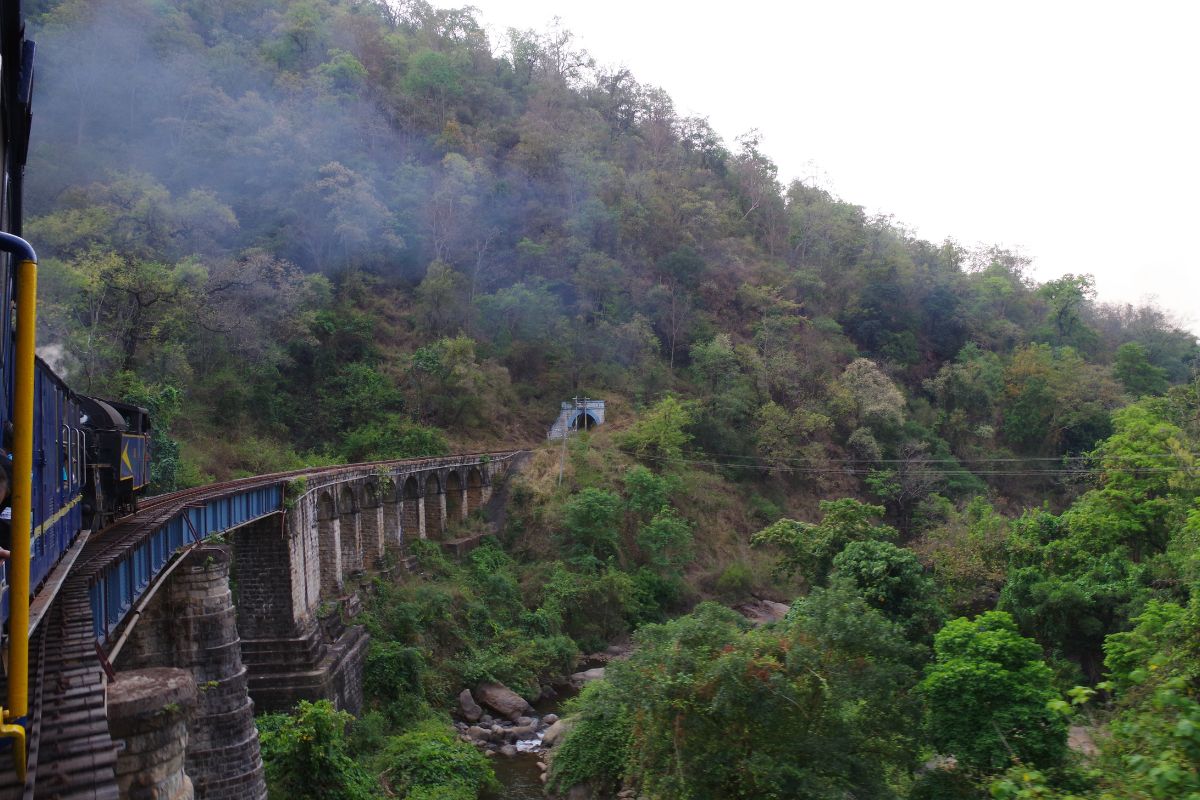
Route: Mettupalayam → Coonoor → Ooty
Best for: Tea plantations, forests and hill scenery
The Nilgiri Mountain Railway takes travellers from the plains into Tamil Nadu’s Nilgiri Hills.
It is another component of India’s UNESCO-listed Mountain Railways. The railway is particularly interesting from an engineering perspective because of the steep gradients involved in climbing into the hills.
The route passes through forests, bridges, tunnels and tea-growing landscapes.
The Ministry of Tourism has described the Nilgiri Mountain Railway as a scenic journey through the Blue Mountains, with tea and coffee plantations, tunnels, bridges and mountain scenery along the route.
Why take it?
- Nilgiri mountain landscapes
- Tea plantations
- Forests
- Historic railway experience
- Access to Coonoor and Ooty
- A very different landscape from Himalayan toy trains
Best for: Travellers who want a slower alternative to a road trip through the Nilgiris.
5. Kashmir Valley Railway: A Train Journey Through the Himalayas

Route: Kashmir Valley railway network
Best for: Mountains, valleys, bridges and modern railway engineering
Kashmir’s railway experience is different from the heritage toy trains.
Here, the attraction is the combination of Himalayan scenery and modern railway engineering.
The railway through the Kashmir Valley has become one of India’s most talked-about scenic rail experiences, particularly because of the difficult terrain and major engineering structures involved.
For travellers interested in seeing Kashmir beyond the usual road-trip itinerary, travelling by train offers another perspective on the valley.
Why consider it?
- Himalayan landscapes
- Valleys and mountains
- Major railway engineering projects
- Local travel experience
- Different perspective on Kashmir
Travel tip: Railway operations and services can change, particularly on newly developed or operationally sensitive sections. Always check the latest official railway information before planning a journey.
6. Kangra Valley Railway: The Offbeat Himalayan Choice

Route: Pathankot → Jogindernagar
Best for: Quiet landscapes and slow travel
If the famous Kalka-Shimla route feels too mainstream, consider exploring the Kangra Valley Railway.
The narrow-gauge railway travels through the Kangra region of Himachal Pradesh, offering views of valleys, villages and mountain landscapes.
Himachal Tourism lists the Pathankot–Jogindernagar narrow-gauge railway as one of the railway connections serving the state.
It is not the quickest way to explore the region, but that is exactly why it appeals to slow-travel enthusiasts.
Why take it?
- Less commercialised experience
- Himalayan foothills
- Rural landscapes
- Villages and fields
- Excellent option for slow travellers
Best for: Travellers who care more about the journey than reaching their destination quickly.
7. Chennai to Rameswaram: A Journey Towards the Sea
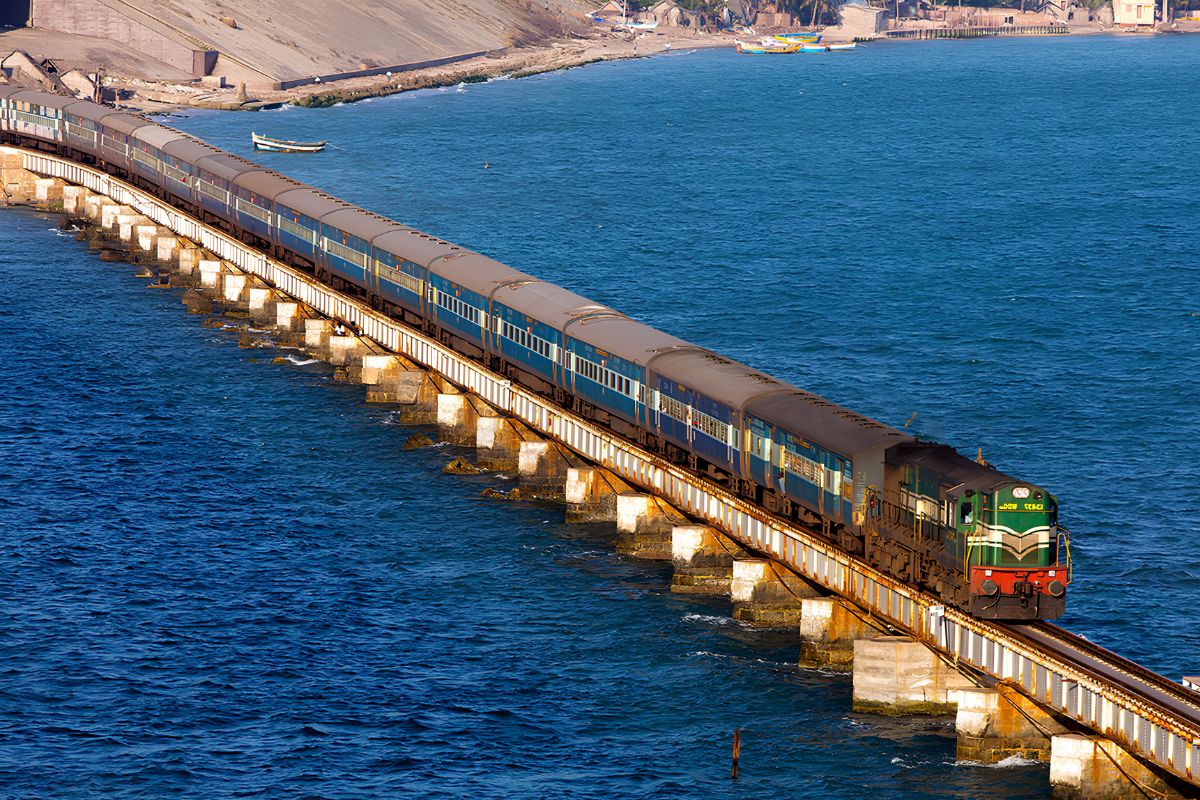
Route: Chennai → Rameswaram
Best for: Coastal landscapes and the Pamban region
For something completely different from mountain railways, head south.
The Chennai-Rameswaram rail journey takes travellers toward one of India’s most distinctive coastal landscapes.
The historic attraction here is the crossing toward Rameswaram and the famous Pamban Bridge area.
Unlike Himalayan routes, this journey is about the contrast between railway, coastline and sea.
Why take it?
- Coastal scenery
- Rameswaram’s religious and cultural importance
- Unique railway landscape
- A very different experience from India’s mountain trains
If your idea of a scenic train journey involves water rather than mountains, this is one to consider.
Which Indian Train Journey Should You Choose?
| Train Journey | Best For | Landscape | Experience |
|---|---|---|---|
| Kalka-Shimla | First-time scenic train travellers | Himalayas | Heritage + scenic |
| Darjeeling Himalayan Railway | Railway lovers | Tea gardens + Himalayas | Heritage |
| Konkan Railway | Nature lovers | Ghats + coast | Long-distance scenic |
| Nilgiri Mountain Railway | Tea and hill lovers | Nilgiris | Heritage + scenic |
| Kashmir Valley Railway | Mountain lovers | Kashmir Himalayas | Modern + scenic |
| Kangra Valley Railway | Slow travellers | Kangra Valley | Offbeat |
| Chennai-Rameswaram | Coastal travellers | Coast + sea | Scenic + cultural |
Are Scenic Train Journeys in India Expensive?
Not necessarily.
One of the biggest advantages of these journeys is that you don’t have to book a luxury train to experience India’s spectacular railway landscapes.
Regular railway services, heritage services and selected tourist/joy-ride services can provide very different experiences at different price points.
However, fares, schedules, classes and availability vary by route and date. The safest approach is to check the current service details through official Indian Railways channels before booking. The National Portal of India provides information on hill trains including Shimla, Matheran, Darjeeling and Ooty.
For reservations and current train information, travellers should verify the latest details through Indian Railways’ official passenger services.
When Is the Best Time for a Scenic Train Journey in India?
There isn’t one perfect season for every route.
For Himalayan routes
Spring, summer and autumn can offer pleasant conditions, while winter can provide a very different landscape but may also bring weather-related disruptions.
For the Konkan Railway
The monsoon can produce some of the most dramatic scenery, with lush greenery and waterfalls. However, heavy rainfall can also affect railway operations.
For Darjeeling
Clear-weather periods can offer better mountain visibility, while the monsoon brings a much greener landscape.
For the Nilgiris
Different seasons offer different combinations of greenery, mist and clear mountain views.
The key lesson is simple: choose the season according to the landscape you want to see, not simply according to the destination.
How to Make a Scenic Train Journey Better
A few simple choices can make a major difference.
1. Choose a daytime service
A scenic railway is obviously less useful when most of the route is travelled after dark.
2. Prioritise the window
The view is the main attraction. If possible, choose seating that gives you a clear view outside.
3. Don’t over-plan
Leave some time around the journey itself. Scenic rail travel works best when you aren’t constantly watching the clock.
4. Carry snacks and water
Food availability can vary significantly between routes and services.
5. Keep your camera ready
Tunnels, bridges, stations, villages, forests and sudden mountain views can appear quickly.
6. Check railway updates before departure
Schedules and operating patterns can change. Verify the current train and route information before leaving.
Why These Train Journeys Matter
India’s railway network is more than a way to move between two cities.
Some railway lines are historical achievements in engineering. Others connect remote communities. Many pass through landscapes that would be difficult to appreciate from an airport or highway.
The Mountain Railways of India—including Darjeeling Himalayan Railway, Nilgiri Mountain Railway and Kalka-Shimla Railway—are officially recognised for their engineering and historical importance. The Ministry of Culture describes them as outstanding examples of engineering that helped connect remote mountainous regions.
That is what makes these journeys different from luxury train tourism.
You aren’t paying primarily for a palace on wheels.
You are paying for time, scenery, history and the experience of watching India change outside your window.
Frequently Asked Questions
Which is the best scenic train journey in India?
There is no single winner. Kalka-Shimla is excellent for Himalayan scenery and heritage, Darjeeling Himalayan Railway for tea gardens and railway history, while Konkan Railway is ideal for long-distance scenery through the Western Ghats and coastal region.
Which is the best toy train in India?
The Kalka-Shimla, Darjeeling Himalayan and Nilgiri Mountain Railways are among India’s best-known heritage mountain railways. All three form part of the UNESCO-recognised Mountain Railways of India.
Which train journey is best in India during the monsoon?
The Konkan Railway is particularly attractive during the monsoon because the Western Ghats become intensely green and waterfalls become more prominent. However, travellers should check weather and railway advisories before travelling.
Is the Kalka-Shimla train worth taking?
Yes, especially if you enjoy slow travel and mountain scenery. The route is a UNESCO World Heritage railway and travels through numerous tunnels, curves and bridges while climbing into the Himalayas.
Which scenic train journey is best for families?
Kalka-Shimla and Nilgiri Mountain Railway are strong choices because the train journey itself can be an attraction for children as well as adults.
Are these luxury trains?
No. This list deliberately focuses on regular, heritage or scenic railway experiences rather than India’s luxury tourist trains.
How can I book these train journeys?
Check current schedules, availability and fares through official Indian Railways services before travelling. Some heritage or tourist services may have different booking arrangements.
Final Word
You don’t need a luxury train, an expensive cabin or a five-star itinerary to experience India’s railways at their most beautiful.
Sometimes all you need is a window seat, a cup of chai and a few hours with the landscape outside.
From the pine forests of Shimla and tea gardens of Darjeeling to the green Western Ghats, Nilgiri hills and Kashmir Valley, India’s best scenic train journeys prove that the journey can be just as memorable as the destination.
Sources & References
The information in this article has been cross-checked against official tourism, railway and UNESCO sources.
- UNESCO — Mountain Railways of India
- UNESCO — Mountain Railways of India Documents
- Indian Railways — Railway Board
- Northern Railway — Kalka-Shimla Railway
- Darjeeling District Administration — Darjeeling Himalayan Railway
- UNESCO — Mountain Railways of India Extension
- Incredible India