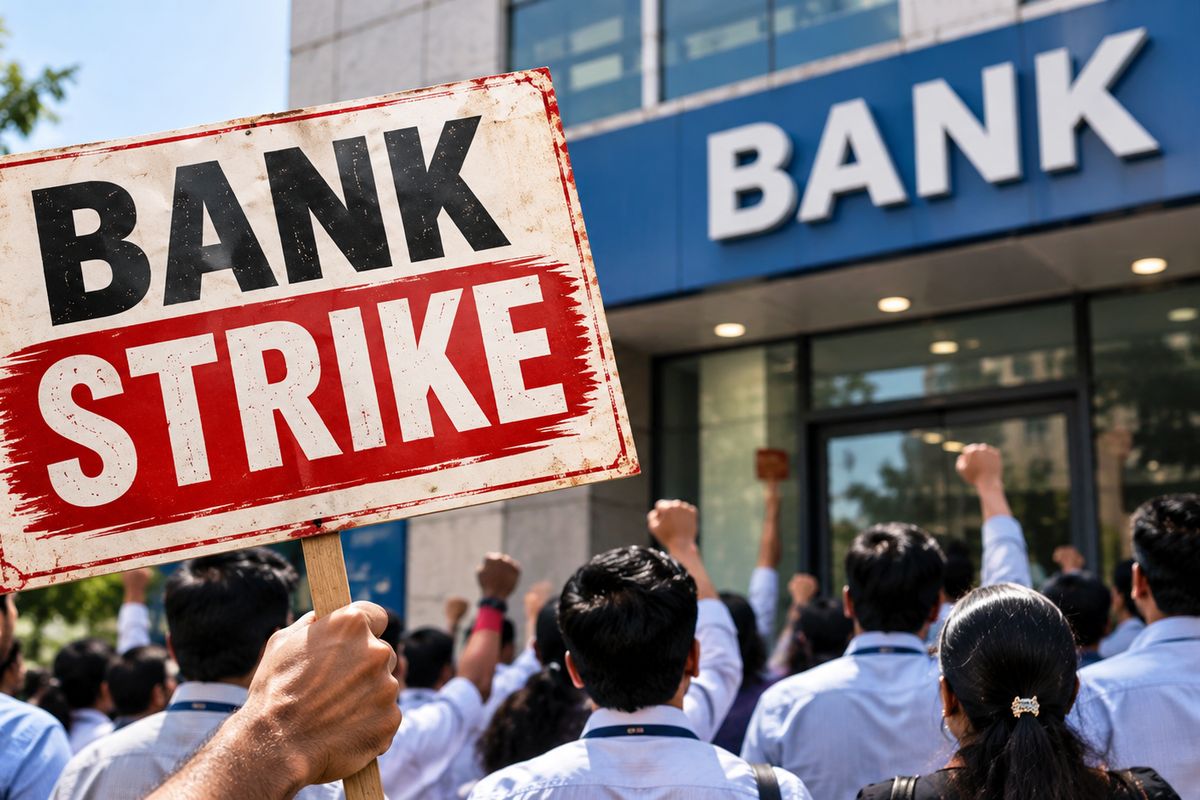
On September 11, 2026, bank unions across India went on a one-day nationwide strike. Public sector banks were hit hardest. Private banks like HDFC, ICICI, and Axis stayed open. The strike was about three things: a five-day banking week that’s been stuck since 2024, a bonus scheme unions call unfair, and pension reforms. A weekend and a festival holiday followed right after, so many customers lost branch access for four to five days in a row. Two bigger strikes are already planned for late September and late October.
What Happened on September 11
The strike was called by the United Forum of Bank Unions (UFBU). This is a group of seven unions:
- AIBEA
- AIBOC
- NCBE
- AIBOA
- BEFI
- INBOC
- INBEF
Together, these unions say they represent over 90% of India’s bank workers.
Public sector banks took the biggest hit. Branches of the State Bank of India and other government-owned banks were either closed or short-staffed. This affected:
- Cash deposits and withdrawals at the counter
- Cheque clearance and cheque books
- New fixed deposit applications
- Loan paperwork
- KYC updates
A few older private banks also saw some disruption. These include Federal Bank, South Indian Bank, Dhanlaxmi Bank, RBL Bank, Karnataka Bank, CSB Bank, and Jammu & Kashmir Bank. Their staff joined in, but the banks themselves weren’t part of the official strike call.
Newer private banks stayed open. HDFC Bank, ICICI Bank, Axis Bank, and Kotak Mahindra Bank all worked normally. Their employees are not part of the UFBU, so they don’t join these strikes.
Digital banking kept working. UPI, internet banking, mobile apps, and ATMs all functioned as usual. This gave most customers a way around the branch closures. That resilience of digital rails is exactly the kind of scale being showcased at the Global Fintech Fest 2026, where regulators and banks are unveiling the next generation of digital finance infrastructure.
In Madhya Pradesh, regional media reported that around 7,000 bank branches were affected. Cash transactions and cheque work were hit the hardest there.
Also Read: Why The UN Approved A New World Map: A Fair World Begins With A Fair Map
Why the Timing Made Things Worse
Here’s the problem: September 11 fell on a Friday. That alone would be a one-day issue. But it wasn’t.
- September 12 (Saturday) was the second Saturday—already a bank holiday.
- September 13 (Sunday) is always a bank holiday.
- September 14 was Ganesh Chaturthi in several states, closing banks in Mumbai, Bengaluru, Hyderabad, Chennai, and Bhubaneswar.
- September 15 was an extra holiday in a few locations.
Add it up, and customers in parts of western, southern, and eastern India went four to five days without normal branch banking. That’s long enough to delay cheque clearances, FD renewals, and loans that need paperwork.
The Three Demands Behind the Strike
1. A Five-Day Banking Week
This is the oldest and biggest demand. Unions want all Saturdays off, not just the second and fourth ones. In exchange, employees have already agreed to work 40 extra minutes each day, Monday to Friday.
This isn’t a new idea. The Indian Banks’ Association agreed to it back in March 2024, as part of a formal settlement. The plan then went to the Finance Ministry for approval. It’s been stuck there for over two years. Unions see this delay as the government sitting on a deal that’s already settled.
2. The Bonus Scheme Dispute (PLI)
This is where things get confusing, and it’s the reason for those “even after the government withdrew the scheme” headlines. Here’s the real story.
In November 2024, the government rolled out a new bonus structure. Under it:
- Senior officers (Scale IV and above) could earn bonuses worth up to 365 days of basic pay, based on Bank Strike individual performance.
- Everyone else—regular staff and officers up to Scale III—was capped at just 15 days’ basic pay plus allowance.
Also Read: RBI’s New Bank Deposit Interest Rate Rules: Everything Changing for FD Holders From October 1, 2026
Unions called this unfair. They wanted bonuses tied to how well the whole bank performs, applied evenly to staff up to Scale VII—which is what they say was originally agreed with the bank association.
Then, three days before the strike, on September 8, Finance Minister Nirmala Sitharaman met a group of bank employees. She agreed to pause the bonus scheme for this financial year.
But the strike went ahead anyway. Two reasons why:
- That meeting was with a different union group (BMS-affiliated), not the UFBU unions who called the September 11 strike.
- A pause isn’t a fix. The scheme could come right back next year. Unions want it rebuilt from scratch—not just delayed.
3. Pension Reforms
The third demand covers pension issues that have been pending for years:
- One dearness allowance formula for all retired bank staff
- Better, updated pension amounts
- An option to move from the newer National Pension System (NPS) back to the Old Pension Scheme (OPS)
Also Read: Does India Allow Dual Citizenship? Indian Citizenship & OCI Rules Explained
What Happens Next
This isn’t over. Two more rounds of action are already scheduled:
- September 28–30, 2026: A three-day strike. This lands during the half-year closing period—one of the busiest times for banks. With September 26 and 27 already holidays, this could mean five straight days of disruption.
- October 26, 2026: An indefinite strike if the government doesn’t act by then.
For now, both banks and the government are telling customers the same thing: digital banking will keep working. Branch services won’t. Whether the late-September strike actually happens—or gets called off, like a similar one was in March 2025—depends on how much progress gets made in the next two weeks.
Frequently Asked Questions
Which banks were closed on September 11, 2026?
Public sector banks, including SBI, were closed or partially open. Some older private banks—Federal Bank, South Indian Bank, Dhanlaxmi Bank, RBL Bank, Karnataka Bank, CSB Bank, and J&K Bank—saw partial disruption. HDFC, ICICI, Axis, and Kotak Mahindra worked as normal.
Did the strike affect ATMs and UPI?
No. ATMs, UPI, mobile banking, and internet banking all worked normally. The strike only affected branch staff and in-person counter services.
Why are unions still striking if the bonus scheme was paused?
The government only paused the scheme for one year. It didn’t change the structure the way unions asked. The pause also came from talks with a different union group, not the one that called this strike.
When is the next bank strike?
A three-day strike is planned for September 28–30, 2026. An indefinite strike could follow from October 26, 2026, if demands aren’t met.
What is the five-day banking week demand?
Unions want every Saturday off, not just the second and fourth. Employees would work 40 extra minutes each weekday to make up the time. Banks agreed to this in March 2024, but the government still hasn’t approved it.
Sources & References
- The Week – When will the banks reopen? Nationwide bank strike disrupts public sector banks
- News18 – Bank Strike News Today: Live Updates, September 11th
- Mid-Day – Bank strike: Banking services impacted as employees and officers go on strike over 5-day working
- The Hindu – Why are bank employees going on strike even after govt withdrew PLI scheme?
This article reflects reporting as of September 11, 2026. Strike plans and government decisions may change as talks continue.