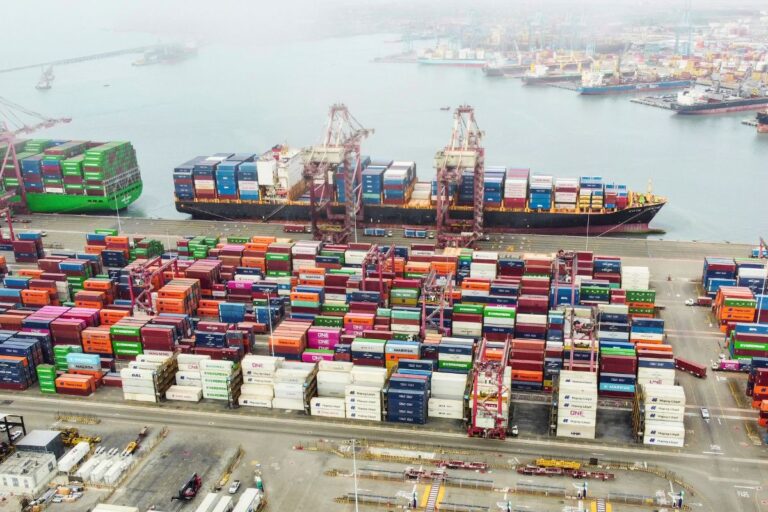
The US proposed tariff on India is a duty of up to 25% under Section 301, which could fall to 17% if India signs a qualifying reciprocal trade agreement. It was announced on 25 November 2026 and is not yet in force.
- The proposed ceiling is 25%, with 17% on the table for a deal.
- Written comments close on 5 January 2027.
- Smartphones are among the proposed exemptions.
- India rejects Washington’s excess capacity claim.
- How old and new duties will combine remains unclear.
What Has Washington Proposed?
The Office of the US Trade Representative (USTR) has made findings against 14 economies, including India. It says their policies contribute to “structural excess capacity”.
Put simply, that means persistently making more, or being able to make more, than a market-led economy would, with government help.
For India, USTR points to industrial plans, weak labour protections, financial policies and market barriers. It highlights steel, solar, health, and information and communications technology. Steel and solar are central to this debate because India’s manufacturing sector has expanded rapidly over the past decade.
Solar is a striking example. The official India notice puts module capacity at roughly 140–160 gigawatts. It puts annual domestic demand at about 40–50 gigawatts.
India disagrees. Its Commerce Ministry says no sector has structural excess capacity, The Week reports. It wants concerns settled through trade talks and says it is examining the notice.
Is 17% Guaranteed With A Deal?
Not quite. This detail is easy to miss.
The notice says USTR will consider adjusting the extra duty. One possibility is 17% if India reaches a reciprocal trade agreement that responds to the investigation’s findings.
So any old signature may not do. The agreement needs to tackle Washington’s concerns.
Also Read: India Flash Composite PMI Delivers Strong Growth of 56.3 In November; With Manufacturing Gains
How Does India Compare?
| Economy | Main proposed rate | Alternative rate |
|---|---|---|
| India | Up to 25% | 17% with a responsive deal |
| Vietnam | Up to 35% | 20% with a responsive deal |
| China* | Up to 20% | Up to 40% |
| Indonesia, Malaysia, Thailand, Cambodia | Up to 18% | Up to 25% |
| Bangladesh | Up to 18% | Up to 20% |
| European Union† | 15% | Up to 20% |
| Japan† | Up to 15% | Up to 20% |
Source: Baker McKenzie, 25 November 2026.
Higher alternatives for China, the EU, Japan and the five other Asian economies apply if the US finds their engagement or commitments inadequate. *Some Chinese goods get a lower rate or exemption. †Main figures account for standard import duties.
That last note matters. India’s figure does not absorb standard import duties, known as most-favoured-nation (MFN) rates. So India’s 17% and the EU’s 15% are not like-for-like.
On paper, 17% would give India a one-point edge over Bangladesh, Cambodia, Indonesia, Malaysia and Thailand.
Will It Stack On Today’s Tariff?
Indian goods currently face a 10% tariff plus regular customs duties. The new levy isn’t meant to be added on top of that 10%, according to Business Standard. This comes on top of recent tariff hikes already affecting Indian consumers and businesses at home.
The catch? The notices don’t specify how this “netting” will be calculated.
As a rough guide, 25% of goods worth $100,000 is $25,000. At 17%, it is $17,000. Neither is a final customs bill.
Which Goods Could Escape?
The proposed exemptions include:
- Smartphones
- Steel, aluminium and copper items already covered by Section 232, a national security trade law
- Vehicles, vehicle parts, wood products, patented medicines and semiconductors under that law
- Books and other information materials, donations and accompanied baggage
- Other goods listed in the notice’s annex
Exempt doesn’t always mean duty-free. The smartphone exemption matters for brands actively expanding in India, including Apple, whose iPhone 18 Pro recently went on sale in the country. However, Section 232 goods can still face their own tariffs.
Clothing exporters have something else to watch. USTR is asking whether a set volume of textiles and apparel should enter at a reduced Section 301 rate. For now, it is only a question.
The wider stakes are large. US goods imports from India reached $103.8 billion in 2025, up 18.9% in a year. That growth comes as India was recently ranked first in business climate rankings among major economies. Exemptions mean not all that trade would be hit.
How Did We Get Here?
Extra US tariffs on most Indian goods reached 50% in August 2025. In February 2026, the two sides outlined a deal with an 18% rate. Under a separate refund process tied to those earlier duties, India is expected to receive $10-12 billion back.
The US Supreme Court then struck down the legal basis for those country-specific tariffs. A temporary 10% global duty followed. In July, a 10% Section 301 duty linked to forced labour concerns replaced it.
Another risk sits in the background. A new law allows tariffs of up to 100% over Russian oil and gas purchases. President Trump waived those duties in October.
What Happens Next?
- 5 January 2027: written comments and requests to speak are due.
- 25 January 2027: public hearings begin in Washington.
- After the hearings: the US decides on final action. The notice process has not set a start date.
Businesses can argue for products to be added or removed. Exporters should check their product codes now.
Politics will matter too. As Business Standard reports, India’s commerce secretary recently said the first part of a trade deal was close. Signing it, he said, depended on clarity about the new US tariffs.
The Global Trade Research Initiative, an Indian think tank, argues the two-rate offer pressures countries into one-sided deals. US Trade Representative Jamieson Greer says the proposals are consistent with recent agreements.
Also Read: Donald Trump Economic War Against Iran Hits 4 Indian Firms As Sanctions
Frequently Asked Questions
Is The 25% US Tariff On India In Force?
No. It is a proposal, open to comments and a public hearing.
What Could India’s Rate Be With A Trade Deal?
The notice floats 17% for an agreement that addresses US concerns.
Why Is The US Targeting India?
It alleges that Indian policies support excess manufacturing capacity and restrict US commerce. India rejects the capacity claim.
Are Indian Smartphones Affected?
Smartphones are listed as exempt from the proposed new duty.
Who Pays A US Tariff?
The US importer pays it. The cost may then reach shoppers or squeeze suppliers’ prices.
Disclaimer: This business and international trade article is provided strictly for general informational purposes only and does not constitute promotional material, commercial endorsement, or official trade policy guidance. Tariff proposals, exemption lists, and bilateral negotiations are subject to ongoing regulatory review and sudden change. Readers should independently verify all trade figures and consult qualified customs brokers, trade attorneys, or financial professionals before making business or import-export decisions.