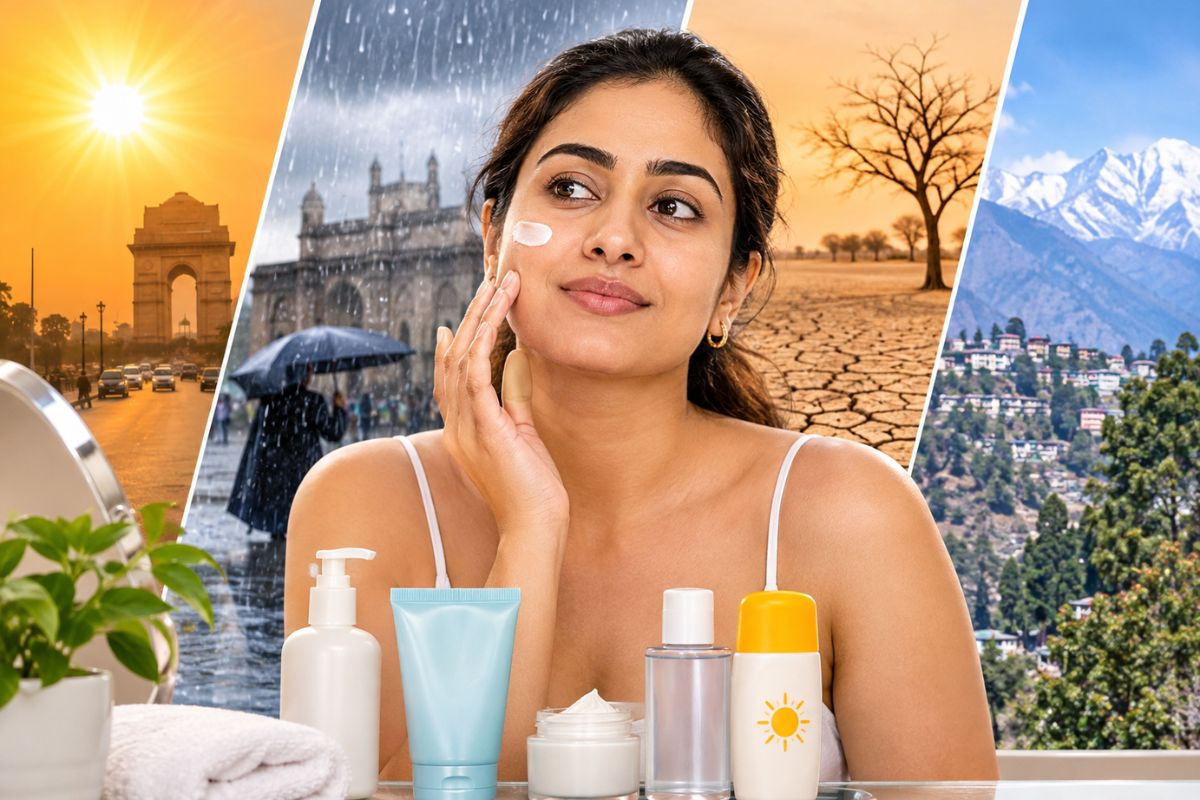
India’s climate directly influences everyday skincare choices because changing temperatures, humidity, rainfall, sunlight, and pollution can affect skin hydration, oil production, sensitivity, and sun exposure. A skincare routine that works during a dry North Indian winter may feel uncomfortable during Mumbai’s humid monsoon. Choosing lightweight products in hot weather, maintaining moisture during winter, keeping skin dry during monsoon, and using sunscreen throughout the year can help maintain healthier skin.
- India’s hot summers can increase sweating, oil production, and skin irritation.
- High humidity during monsoon can contribute to acne flare-ups and fungal skin infections.
- Dry winter air can weaken the skin’s moisture barrier and cause itching and flakiness.
- Sunscreen remains important throughout the year, including cloudy days.
- Pollution and dust make gentle cleansing an important part of everyday skincare.
- Choose skincare products based on your skin type, location, and seasonal conditions.
How India’s Climate Conditions Influence Everyday Skincare
India experiences considerable climatic diversity. People in Rajasthan, Punjab, Mumbai, Kerala, and Northeast India do not experience the same weather conditions year-round. These differences also influence how their skin responds to the environment.
According to the India Meteorological Department’s January 2026 assessment, 2025 was the eighth warmest year across India since records began in 1901. The country’s annual mean temperature was 0.28°C above the 1991–2020 average. The decade from 2016 to 2025 was also recorded as the warmest on record.
These changing conditions make it increasingly important to understand how everyday environmental exposure affects skin health.
1. Summer Heat Makes Lightweight Skincare More Practical
Indian summers can bring intense sunlight, high temperatures, and increased sweating. In several regions, prolonged heat exposure can make the skin feel greasy, uncomfortable, and irritated.
Sweat combined with excess oil can contribute to clogged pores, particularly among people with acne-prone skin. Extended exposure to ultraviolet radiation can also contribute to tanning, pigmentation and premature skin ageing.
During summer, everyday skincare choices can include:
- Using a gentle, non-stripping face cleanser.
- Choosing lightweight, non-comedogenic gel moisturisers.
- Applying broad-spectrum SPF 30 or higher sunscreen.
- Reapplying sunscreen when spending extended periods outdoors.
- Wearing breathable clothing and using shade during intense sunlight.
People with oily skin may find gel-based products more comfortable, while those with dry skin should continue using an appropriate moisturiser.
Also Read: 10 Simple Lifestyle Upgrades That Can Make Your Daily Routine Easier
2. Monsoon Humidity Changes Skin and Hygiene Requirements
The monsoon cools things down, but it brings its own problem: humidity.
When the air stays damp, sweat takes longer to dry. Moisture collects in skin folds, between the toes, and under tight clothing. That creates ideal conditions for fungal infections, irritation, and acne breakouts, and wet shoes or clothes make fungal trouble even more likely.
Some habits that make a difference during the rains:
- Wash your face gently after heavy sweating.
- Dry your skin thoroughly after a bath or after getting caught in the rain.
- Change out of damp clothes quickly.
- Keep your feet and skin folds clean and dry.
- Use lightweight moisturisers.
- Keep wearing sunscreen, even when it’s cloudy.
If you have itching that won’t go away, redness, or ring-shaped rashes, see a doctor instead of piling on more cosmetic products.
3. Winter Weather Increases the Need for Moisture
Winter calls for a different approach, particularly in northern states such as Punjab, Haryana, Himachal Pradesh, and Rajasthan.
Cold winds and low humidity pull moisture out of the skin. Long hot showers and harsh soaps strip the protective barrier even further. The usual results are dry patches, rough skin, cracked lips, and skin that reacts more easily.
To deal with this, you could:
- Switch to a cream-based moisturiser if your skin turns dry.
- Moisturise straight after bathing.
- Replace harsh soaps with gentle cleansers.
- Keep showers lukewarm rather than very hot.
- Put petroleum jelly or a good lip balm on dry lips.
- Carry on using sunscreen daily.
If your skin is naturally oily, you don’t have to reach for heavy creams. A light lotion or lightweight moisturiser is often enough.
Also Read: Slow Mornings vs Productive Mornings: Which Is Better?
4. Pollution and Dust Make Daily Cleansing Important
Climate isn’t only about heat and humidity. Pollution and dust also play a part in how your skin feels day to day.
People in big cities and busy, traffic-heavy areas deal with airborne particles, smoke, and other pollutants all the time. These can irritate the skin and contribute to oxidative stress. Washing your face again and again, or scrubbing with strong exfoliants, won’t fix that.
A gentle cleansing routine does the job better. It clears away sweat, sunscreen, makeup, and the grime that builds up over the day.
The Indian Association of Dermatologists, Venereologists and Leprologists (IADVL) advises choosing cleansers to suit your own skin and steering clear of products that irritate it for no good reason.
5. Sunscreen Is Important Across Indian Seasons
A very common mistake is treating sunscreen as something for summer only.
UV radiation is a concern all year round. Clouds don’t block it completely, so anyone spending time outdoors in winter or during the monsoon can still end up with sun damage.
In September 2025, the Indian Sunscreen Forum published a dermatologist consensus with practical sunscreen advice for Indians, covering how to choose a product, how to apply it, and what to consider for individual skin concerns.
For everyday protection, keep these in mind:
- Use a broad-spectrum sunscreen of SPF 30 or higher.
- Choose a water-resistant formula if you’re swimming or sweating a lot.
- Reapply roughly every two hours when you’re outdoors.
- Add protective clothing, sunglasses, and shade.
- Pick a formula that suits oily, dry,y or sensitive skin.
Sunscreen works best alongside these other habits, not in place of them.
Also read: The Indoor Plant Guide for Every Indian Home, Big or Small
Why One Skincare Routine Does Not Work for Every Indian City
A single skincare routine for the whole country simply isn’t realistic, because India is too varied.
Someone in humid Mumbai may want light products for most of the year. A person in Delhi or Punjab, on the other hand, might have to change moisturisers between humid summers and dry winters. Coastal areas can stay humid for long stretches, while drier inland regions often need extra moisture protection.
Age, skin type, existing skin conditions, job, and the time you spend outside all change what your skin needs too.
The most sensible approach is to adjust the texture of your products and your level of protection as conditions change, rather than constantly trying new active ingredients.
Building a Climate-Responsive Everyday Skincare Routine
A simple routine covers most of what the environment throws at your skin.
Morning routine:
- Cleanse gently, in a way that suits your skin type.
- Apply a suitable moisturiser.
- Finish with a broad-spectrum sunscreen of SPF 30 or higher.
- Cover up with protective clothing if you’ll be outdoors.
Evening routine:
- Remove sunscreen, makeup, and the day’s dirt.
- Cleanse without scrubbing hard.
- Apply a suitable moisturiser.
- Use targeted treatments only when you need them and your skin tolerates them.
If you have persistent acne, pigmentation, eczema, unusual rashes or fungal infections that keep coming back, it’s best to see a qualified dermatologist.
Also Read: Unplugged and Unbothered: A Beginner’s Guide to Your First Digital Detox
Conclusion
India’s climate has a big say in what your skin needs each day. Summer heat, monsoon humidity, winter dryness, ss and pollution each bring their own challenges, and they vary from region to region and season to season.
Instead of following every skincare trend, it makes more sense to understand your local weather and pick products that suit your skin type.
Gentle cleansing, the right moisturiser, and sun protection all year give you a practical base for healthy skin. And with India’s temperature patterns continuing to change, adjusting your routine to local conditions matters more than ever.
FAQs
1. How does Indian weather affect skin health?
Temperature, humidity, sunlight, and environmental exposure all play a role. Heat increases sweating, humidity can lead to acne and fungal infections, and dry winter air causes moisture loss and irritation.
2. Which skincare routine is best for Indian weather?
A practical routine has three parts: gentle cleansing, moisturiser, and daily sunscreen. Adjust the texture of your products to the local weather and your skin type.
3. Should Indians use sunscreen during the monsoon?
Yes. Clouds don’t fully block UV radiation. Use a broad-spectrum sunscreen of SPF 30 or higher every day, and reapply if you’re outside for long periods.
4. Why does skin become oily during Indian summers?
Heat and sweat make skin feel greasier. Your natural sebum production, skin type, and surroundings also have an effect. Gentle cleansing and lightweight, non-comedogenic moisturisers can help.
5. How can people prevent fungal skin infections during monsoon?
Keep your feet and skin folds dry, change out of damp clothes, avoid staying in wet footwear, and maintain good personal hygiene. If itching, redness, or a rash doesn’t go away, get it checked by a doctor.
6. Does winter require a different skincare routine in India?
Often it does. If your skin gets dry in winter, a richer moisturiser, gentle cleansers, and shorter lukewarm showers can help. Keep sunscreen in your routine.
7. Does pollution affect everyday skincare choices?
It can. Pollution may irritate the skin and add to oxidative stress. Cleansing gently at the end of the day, moisturising, and using sunscreen all help.
8. Should oily skin types use moisturiser in humid weather?
Yes. Oily skin can still be dehydrated. A lightweight, non-comedogenic gel or lotion adds moisture without leaving you greasy.
Sources & References
- India Meteorological Department (IMD) – Statement on the Climate of India During 2025
- Indian Association of Dermatologists, Venereologists and Leprologists (IADVL) – Everyday Skin Care: Patient Care Guide
- Indian Sunscreen Forum – 2025 Consensus Study – Practical Recommendations for Indians on Sunscreen Use
- NDTV Health – Monsoon Skin Myths Dermatologists Want You to Stop Believing
- National Centre for Disease Control (NCDC) – Public Health Advisory: Extreme Heat/Heatwave 2026