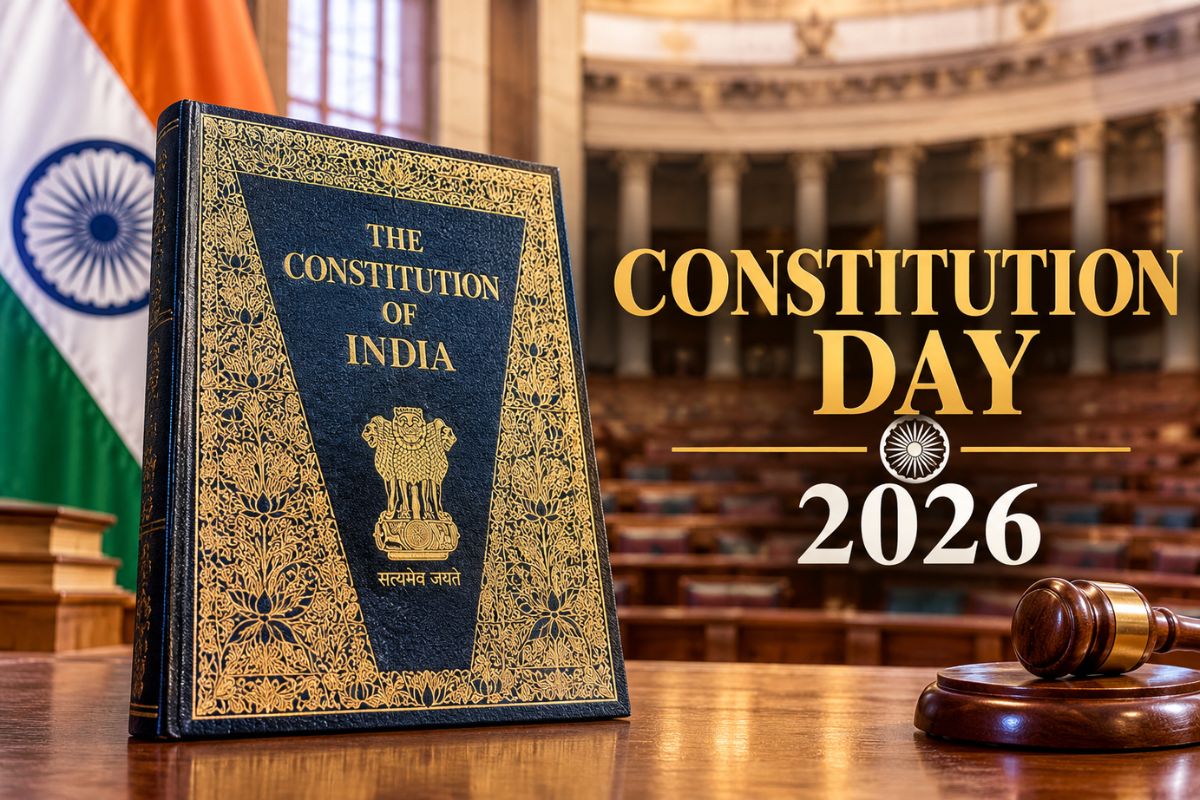
Yes. In India, an ordinary citizen can challenge an unfair, illegal, arbitrary, or unconstitutional government decision through constitutional remedies, administrative appeals, tribunals, consumer forums, information laws, and public-interest litigation. The strongest route is a writ petition under Article 226 before the concerned High Court, or under Article 32 before the Supreme Court when a fundamental right has been violated. On Constitution Day 2026, observed on 26 November, this right to question state action remains one of the most practical protections available to every citizen.
India’s Constitution does not treat government authority as beyond question. A citizen may be a student, farmer, worker, small business owner, pensioner, or homemaker. Still, if a public authority acts unfairly—by denying a rightful benefit, cancelling a licence without reason, discriminating, misusing power, or ignoring a legal duty—the law provides ways to seek correction. Constitution Day, also called Samvidhan Diwas, commemorates the Constituent Assembly’s adoption of the Constitution on 26 November 1949; it came into force on 26 January 1950.
What “Unfair Government Decision” Means?
Not every decision a citizen dislikes is legally “unfair.” A government may have discretion in matters such as recruitment, welfare schemes, land allocation, taxation, licensing, education policy, and public contracts. Courts generally do not replace the government’s judgment with their own.
A decision becomes legally challengeable when it is:
- Illegal or beyond the authority granted by law.
- Arbitrary, meaning it lacks a reasonable basis or is based on irrelevant considerations.
- Discriminatory, especially when it violates equality under Article 14.
- Taken without following the required procedure, such as giving a hearing where the law requires one.
- Malafide, meaning influenced by personal interest, political pressure, or improper motive.
- In violation of a fundamental right, such as equality, freedom of expression, life and personal liberty, or protection against arbitrary state action.
- Contrary to a binding rule, circular, court order, or constitutional provision.
For example, if a government department rejects a scholarship application without giving any reason, despite the applicant meeting every published condition, the decision may be open to challenge. If the rejection is based on a rule that itself violates constitutional equality, the challenge may be even stronger.
The main Constitutional Remedies
Article 226: High Court Writ Jurisdiction
Article 226 is usually the most useful remedy for ordinary citizens. It empowers every High Court to issue directions, orders, or writs to any person or authority, including government, for enforcement of fundamental rights and “any other purpose.” This means the High Court can examine not only fundamental-rights violations but also ordinary legal wrongs committed by public authorities.
A citizen may approach the High Court having territorial jurisdiction over the matter. Under Article 226(2), jurisdiction may arise where the cause of action occurs wholly or partly, even if the government authority is located elsewhere.
The High Court can issue several types of writs:
| Writ | Practical use |
|---|---|
| Habeas corpus | Seeks production of a person illegally detained |
| Mandamus | Asks a public authority to perform a legal duty |
| Prohibition | Stops an authority from acting beyond its legal power |
| Certiorari | Seeks quashing of an illegal or improper order |
| Quo warranto | Questions a person’s unlawful claim to a public office |
Mandamus and certiorari are especially important in everyday disputes. A citizen may seek mandamus when an authority refuses to decide an application, and certiorari when an authority has passed a legally flawed order.
Article 32: Supreme Court Protection
Article 32 allows a person to move the Supreme Court for enforcement of fundamental rights. It is a constitutional remedy, and the Supreme Court can issue appropriate writs, directions, or orders. However, Article 32 is generally focused on fundamental rights violations, whereas Article 226 is wider because it also covers other legal rights.
In many cases, citizens should first use the departmental appeal, statutory appeal, or other effective remedy available under the relevant law. However, a High Court may still entertain a writ petition in exceptional circumstances, including violations of fundamental rights, breaches of natural justice, lack of jurisdiction, or challenges to the validity of legislation.
Also read: Mahesh Babu’s Nephew Siddharth Galla Marries South Korean Girlfriend Hyein Kim
Writs in Simple Language
A writ petition is not a complaint letter. It is a formal court proceeding in which the citizen explains the facts, identifies the government authority responsible, states the legal right affected, and asks for a specific remedy.
A well-prepared petition usually includes:
- The citizen’s basic details and address.
- The government department, officer, or authority being challenged.
- A clear timeline of events.
- Copies of applications, replies, orders, notices, and evidence.
- The specific decision or inaction being challenged.
- The legal grounds, such as arbitrariness, violation of natural justice, or infringement of a fundamental right.
- The relief sought, such as quashing an order, directing a fresh decision, payment of benefits, or restoration of a right.
The court does not decide every grievance. It examines whether the authority followed the law, acted fairly, considered relevant material, and did not misuse its discretion.
Alternative Remedies Before Court
Citizens do not always need to begin with a writ petition. In many cases, the law provides an internal appeal, revision, review, or statutory remedy. Courts often expect a person to use these remedies first, although Article 226 jurisdiction is not completely taken away merely because another remedy exists. Recent judicial discussion in 2026 has again recognised that an alternative remedy ordinarily calls for restraint but does not automatically oust the High Court’s writ jurisdiction.
Common alternative routes include:
- Departmental appeal: Useful in service matters, pension disputes, disciplinary action, and government recruitment issues.
- Statutory appeal: Available under many laws, including tax, land, licensing, education, and municipal laws.
- Tribunal: Specialised bodies such as administrative tribunals, consumer commissions, income-tax tribunals, and educational tribunals deal with defined categories of disputes.
- Grievance portals: Central and state governments provide online platforms for complaints related to public services, pensions, welfare schemes, and consumer issues.
- Right to Information: Under the Right to Information Act, a citizen can seek records and reasons behind many government decisions, which can strengthen a later challenge.
- Lokpal or Lokayukta: These bodies deal with allegations of corruption and administrative misconduct against certain public functionaries.
Choosing the right forum matters. A person challenging a service-related decision of the central government may need to approach the Central Administrative Tribunal, while a consumer may approach a consumer commission. A writ petition may still be appropriate where the authority has acted without jurisdiction, violated natural justice, or where the alternative remedy is inadequate.
Public Interest Litigation
An ordinary citizen can also file a Public Interest Litigation, or PIL, when the issue affects a larger section of society rather than only one person. PILs have been used to raise concerns about pollution, public safety, prison conditions, education, healthcare, corruption, and protection of vulnerable groups.
A PIL is not a tool for personal rivalry or political publicity. Courts expect the petitioner to approach with clean hands, disclose all relevant facts, and show a genuine public-interest issue. If a PIL is found to be frivolous, motivated, or based on false information, the court can impose costs or dismiss it.
For an individual grievance—such as a delayed pension, an unfair marksheet, or a wrongly cancelled ration card—a regular writ petition is usually more appropriate. For a systemic issue—such as unsafe public infrastructure, unlawful demolition practices, or denial of benefits to an entire group—a PIL may be suitable.
What Citizens Should Do First?
Before approaching a court, a citizen should create a proper record. This makes the case stronger and helps the court understand the exact unfairness.
- Obtain the written order or decision.
- Ask for reasons if the decision is silent or vague.
- Preserve receipts, applications, emails, photographs, notices, and official communications.
- Check the relevant rule, policy, circular, or law.
- File an appeal or representation within the prescribed time limit.
- Use the Right to Information Act to obtain files, notings, or reasons where legally available.
- Consult a lawyer, legal-aid clinic, or district legal services authority before filing.
- File the writ petition promptly, because delay can weaken a claim, especially where urgent relief is needed.
Legal aid is important. Under India’s legal-services framework, eligible citizens—such as those with limited income, women, children, persons with disabilities, and members of scheduled castes and scheduled tribes in specified cases—may receive free legal assistance through District Legal Services Authorities.
Limits of Citizen Challenges
The power to challenge government action is real, but it is not unlimited. Courts usually respect policy decisions if they are taken within legal limits, after applying mind, and without discrimination or mala fide intent. A court will not normally direct the government to adopt a particular policy simply because a citizen prefers it.
There are also practical limits:
- Courts may require exhaustion of alternative remedies.
- Delayed petitions may face questions about laches or delay.
- Claims must be supported by documents, not only personal belief.
- Interim relief is not automatic; the petitioner must show urgency and a strong prima facie case.
- Frivolous or false litigation can lead to costs.
- Court orders must be implemented through proper execution and follow-up.
This is why a citizen should focus on evidence, legal grounds, and a clear prayer for relief rather than emotional allegations alone.
Why This Matters On Constitution Day
Constitution Day is not only about ceremonies or reading the Preamble. It is a reminder that constitutional rights become meaningful when citizens use them responsibly. The government’s 2026 observance includes Preamble-reading programmes across institutions and departments, reflecting the official emphasis on constitutional awareness.
For an ordinary person, the Constitution is not an abstract document kept in law books. It is a practical shield against unfair treatment. It allows a student to question an arbitrary admission decision, a worker to challenge unlawful dismissal, a farmer to seek protection of land rights, a taxpayer to question an excessive demand, and a citizen to demand accountability from public officials.
The central message is simple: government power is meant to be exercised according to law. When it is not, citizens have constitutional tools to seek review, correction, and justice. The High Courts’ power under Article 226, the Supreme Court’s protection under Article 32, tribunals, appeals, information rights, and PILs together form a system through which ordinary people can hold public authority accountable.
FAQs
Can a citizen directly approach the High Court?
Yes, through a writ petition under Article 226, especially where there is no adequate alternative remedy or where urgent relief is needed.
Can a citizen approach the Supreme Court directly?
Yes, for enforcement of fundamental rights under Article 32; otherwise, the usual route is through the High Court or an appeal from a lower court or tribunal.
Is every unpopular government decision illegal?
No. A decision is challengeable when it is unlawful, arbitrary, discriminatory, procedurally improper, mala fide, or violates constitutional rights.
What is the first step?
Collect the order and evidence, check appeal remedies, seek reasons if needed, and approach the correct forum within the applicable time limit.
Can one person challenge a decision affecting many people?
Yes, through a PIL, if the issue involves a genuine public interest and the petitioner approaches the court honestly and with proper material.
Constitution Day 2026 is therefore a timely reminder that democracy is not only about voting once in several years. It is also about the everyday right of citizens to ask questions, demand reasons, seek review, and challenge unfair state action through lawful constitutional remedies.
Sources
- Constitution Day, 2026 to be observed on 26th November — Press Information Bureau
- Constitution Day | MyGov
- Article 226: Power of High Courts to issue certain writs — Constitution of India
- Jurisdiction under Article 226 — Punjab and Haryana High Court, Chandigarh
- Article 32 and Article 226 — Maharashtra Judicial Academy presentation
- Latest Judgements — Supreme Court of India
- Supreme Court Quarterly Digest 2026 — Constitutional Law
- Weekly Legal Developments India: 16–22 November 2026 — SCC Online Blog
- Celebration of Constitution Day — Reading of the Preamble, Ministry of Commerce