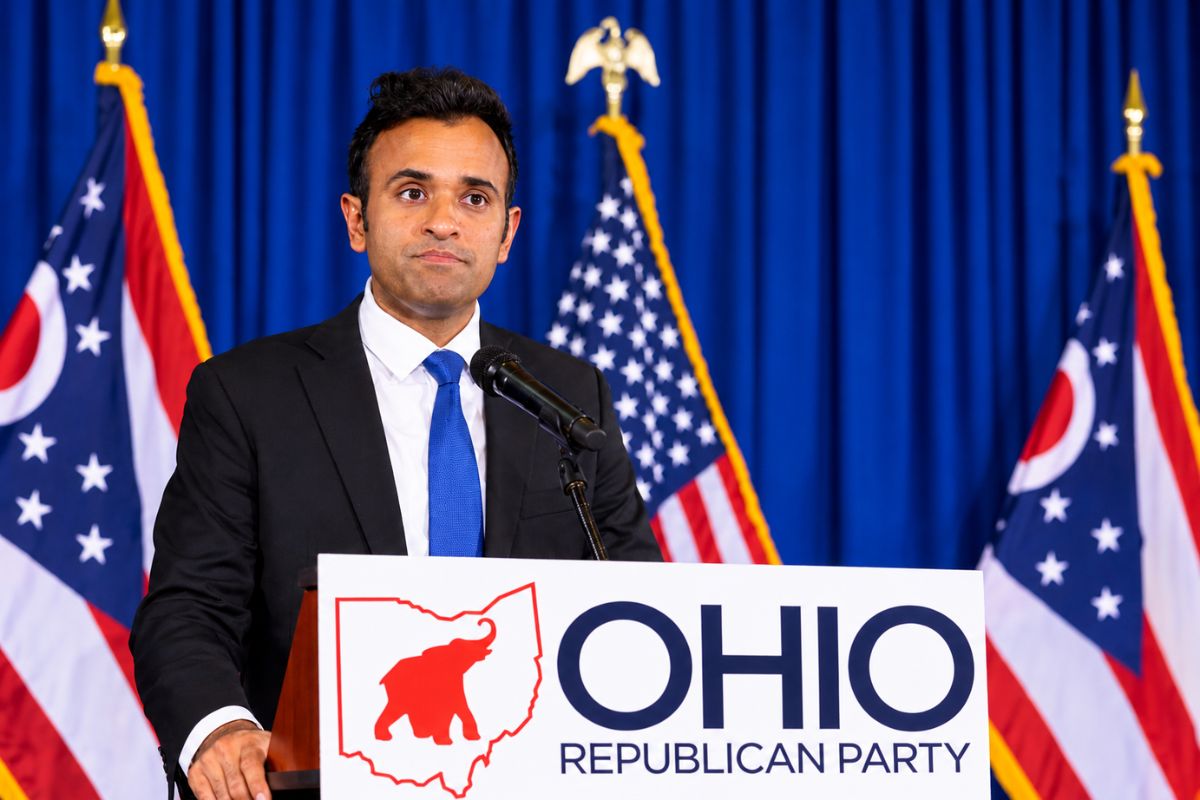
Amy Acton beat Vivek Ramaswamy in Ohio’s governor’s race, 51 per cent to 45.7 per cent, becoming the first woman elected governor of Ohio and the first Democrat to win the office in 20 years.
Amy Acton defeated Vivek Ramaswamy in Ohio’s race for governor, and the Associated Press called it at 3:49 a.m. on Wednesday, 4 November 2026, with the former state health director on about 51 per cent of the vote against 45.7 per cent for the Republican. Acton, a 60-year-old physician, becomes Ohio’s 71st governor, the first woman ever elected to the job, and the first Democrat to win it in 20 years. With 87 per cent of precincts counted, the tally stood near 2.14 million votes for Acton and 1.91 million for Ramaswamy, with Libertarian Don Kissick at roughly 3 per cent.
What the Numbers Actually Show
The margin surprised people who had watched Ohio drift steadily red. Donald Trump carried the state by 11 points in 2024, and Democrats had spent two decades losing ground in what used to be the country’s most reliable swing state. Ramaswamy entered the race with a Trump endorsement delivered the day he launched, a sitting vice president from Ohio campaigning beside him, and roughly $140 million in advertising from his campaign and allied groups, more than three times what Acton and her supporters put on air.
Elon Musk alone put at least $5 million into a pro-Ramaswamy political action committee. Against that, Acton was outspent by more than $100 million.
She still won, and the geography of the win matters. Early voting told the story before election night did. Acton took just over 61 per cent of the early vote across 71 of Ohio’s 88 counties, according to the secretary of state’s office. Turnout ran hot in the places Democrats needed: Franklin County sat near 52 per cent by late afternoon, and Cuyahoga County pushed past its 2022 midterm mark. Ramaswamy, as expected, dominated rural and small-town Ohio.
It was not enough once the Cleveland-to-Columbus corridor turned out in force. The last public polling before election day, a YouGov survey of likely voters taken between 26 and 29 October, had Acton at 52 per cent and Ramaswamy at 46, which many analysts discounted as an outlier in a state that had voted Republican so consistently. It turned out to be closer to the final result than the punditry was. Acton also enters office without ever having held elective office, a contrast with the 79-year-old DeWine, who is term-limited after half a century in public life.
The Advertisement That Broke The Campaign
If one decision defined the final month, it was a 60-second spot featuring Acton’s estranged mother, Donna Arthur, calling her daughter “a liar” and telling Ohioans not to vote for her. The ad surfaced online first, then Ramaswamy’s team claimed it and announced a $4 million buy. What followed was a rare thing in American politics: a bipartisan pile-on.
Five former Ohio governors, women’s groups, and several hundred alumni of Ramaswamy’s Catholic high school in Cincinnati condemned it. The context made it worse. Arthur had been separated from her daughter for roughly 50 years; she lost custody after her husband, Acton’s stepfather, was indicted for raping Acton as a child, then fled before trial.
Ramaswamy defended the spot as a legitimate attack on Acton’s honesty about her past, and both Trump and Vice President JD Vance backed him, with Trump saying he envied the opportunity to run such an ad himself. The campaign pulled it about a week before voting, having spent roughly a quarter of the announced buy. By then, the damage was structural, not tactical. Acton’s victory speech alluded to those last weeks without relitigating them. “The healing begins today,” she told a crowd chanting her name in Columbus.
The second problem was message discipline. Ramaswamy built his candidacy on a promise to phase out Ohio’s income tax over eight to ten years, starting with capital gains, plus a day-one executive order halting new data centres unless operators covered residents’ electricity bills. Those are real policy proposals, and in a different year they might have travelled.
But he kept returning to Acton’s COVID-era restrictions from 2020, an argument aimed at grievances voters had already processed. She talked about grocery bills, rent, hospital access, and a “Working Families Tax Cut.” When a billionaire tells a state about the cost of living and his opponent is the one describing a childhood spent partly homeless and one winter in a tent, the empathy gap writes itself.
There was an early warning sign too. In the Republican primary, a YouTube personality and vehicle designer named Casey “The Car Guy” Putsch spent $130,000 and pulled nearly 18 per cent against Ramaswamy, lobbing veiled attacks on his Hindu faith. Putsch later said he would vote for Acton.
Ohio Inside a Bigger Night
Acton’s win was not an isolated flicker. Democrats took control of the Senate, Sherrod Brown reclaimed an Ohio Senate seat by beating incumbent Jon Husted, and young voters shifted away from the GOP in the kind of numbers that unsettle down-ballot maps.
Ohio Republicans had cleared the field for Ramaswamy early, a move smoothed when Governor Mike DeWine sent Husted to the Senate and left the attorney general and state treasurer rearranging their plans. DeWine endorsed Ramaswamy and stuck with him even through the ad.
Acton now governs with a Republican legislature, which sets up immediate friction over tax reform, school funding and data-centre approvals. She has promised a conditional moratorium on new hyperscale facilities unless they cover 100 per cent of their utility costs, build with union labour and use brownfield sites instead of farmland. That position will be tested the moment the first major project lands on her desk.
Where Ramaswamy Goes From Here
His concession was gracious and pointed in equal measure. “It has been a tough and challenging night for Republicans across the country, and it’s a tough night for us here in Ohio,” he said, calling the race bitter “in both directions,” and adding that he hoped Acton’s leadership would “bring the state together.” He said his family would stay in the fight.
Losing a governor’s race does not end a national profile built on a presidential run, a best-selling book and a stint in government cost-cutting. It does complicate the next step. A 41-year-old who lost a state Trump won comfortably, after outspending his opponent several times over, now carries a result his rivals will quote for years. The path back runs through rebuilding trust with the suburban voters who abandoned him in the final weeks, not through another advertisement. Whether his donors stay patient is the open question.
FAQs
Did Ramaswamy concede?
Yes, on election night, congratulating Acton and calling for the state to come together.
How close was it?
Not close in the end: roughly five points, 51 to 45.7, with counting near completion.
What made the difference?
Turnout in Ohio’s urban counties, a cost-of-living message that landed, and a widely condemned attack ad that turned a five-point contest into a referendum on campaign conduct.
What does Acton inherit?
A Republican legislature, a state that voted Trump by 11 points, and pressure to deliver on affordability quickly.
Is Ramaswamy finished?
No. He remains one of the most recognisable figures in the party’s younger wing, though this loss narrows his options.
Sources:
- Democrat Amy Acton defeats Vivek Ramaswamy in Ohio governor’s race — main AP story on the win, her biography and first-woman milestone
- Democrat Amy Acton wins election for governor in Ohio — the race call itself, stamped 10:49 p.m. EST
- Ohio Governor Election 2026 Live Results: Vivek Ramaswamy vs. Amy Acton — vote totals and percentages
- Democrat Amy Acton wins Ohio’s race for governor — NBC projection, totals, Libertarian share
- Ohio Governor 2026: Live Election Results, Acton vs. Ramaswamy — county-level results board
- Ohio 2026 election results — running county map
- Ohio elects Amy Acton first woman governor — NPR member-station version of the AP call