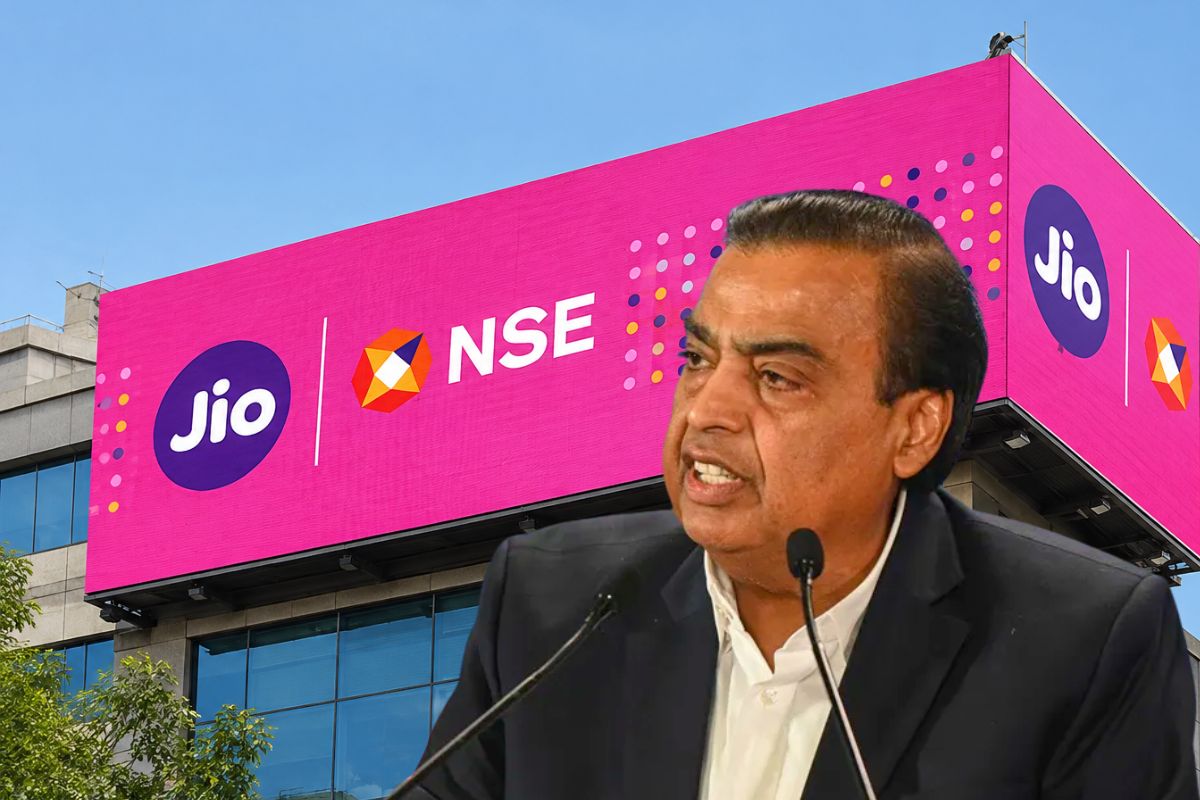
The Jio Platforms IPO made its stock market debut on 28 October 2026, listing on the NSE and BSE at ₹1,358 per share. That is a 21.36% premium to the ₹1,119 issue price, according to The Tribune. The issue raised about ₹30,213 crore.
- Jio Platforms listed on 28 October 2026 at ₹1,358, against an issue price of ₹1,119.
- The stock closed its first day at ₹1,419 on the NSE, about 27% above the issue price.
- The ₹30,213 crore issue is the largest in Indian IPO history.
- Final subscription was 22.19 times, driven by institutions.
- Most of the money raised is meant to pay down debt.
What Actually Happened On Listing Day
Shares opened at ₹1,358 on both exchanges. That put Jio’s market value at roughly ₹12.5 lakh crore, making it India’s second most valuable company, per The Tribune.
Anant Ambani told the listing ceremony, “Today Jio is shared with India.”
The stock then kept climbing. Kotak Neo’s live coverage shows it settling 4.49% higher on the NSE at ₹1,419. That is about 27% above the issue price. Market value at the close was ₹13.05 lakh crore.
Intraday figures in live blogs can shift, so treat the exchange data as the final word.
The Numbers At A Glance
| Detail | Figure |
|---|---|
| Price band | ₹1,065 to ₹1,119 |
| Issue price | ₹1,119 |
| Bidding window | 21 to 23 October 2026 |
| Issue size | About ₹30,213 crore |
| Listing price | ₹1,358 (+21.36%) |
| First-day close (NSE) | ₹1,419 |
| Overall subscription | 22.19 times |
| Institutional (QIB) subscription | 70.55 times |
| Retail subscription | 2.72 times |
Source: The Tribune, Kotak Neo, The Week
How The IPO Unfolded
It moved quickly once the paperwork was done.
Reliance filed its draft prospectus with SEBI on 19 June 2026. ETV Bharat later reported that the regulator had cleared the offer. Public bidding then ran from 21 to 23 October, with allotment on 26 October and listing two days later, according to The Tribune and The Week.
Why The Issue Shrank
If you followed the story from the start, the numbers may look odd. Early reports talked about ₹37,700 crore. The final issue was ₹30,213 crore.
Reliance has given no official reason. A TradingView news report says bankers had expected ₹36,000 to ₹38,000 crore. It adds that global funds reportedly pushed for a discount to Bharti Airtel during the roadshow.
The final price valued Jio at about ₹10.3 lakh crore. Talk had once reached $160 billion. Treat the reasons as reported, not confirmed.
Why Institutions Queued Up
The demand came mostly from big investors. Qualified institutional buyers bid 70.55 times their quota, while retail investors managed just 2.72 times, according to The Week. This pattern mirrors a broader shift in Indian markets, where India’s richest investors have increasingly driven demand for blockbuster listings.
The business explains the appetite. In its draft prospectus, Jio reported roughly ₹1.47 lakh crore of revenue and about ₹30,000 crore of profit after tax for FY2026. It also had 524.4 million subscribers in March 2026, The Week notes.
A Record-Sized Offer
This was a fresh issue of 27 crore shares. Nobody sold existing stock.
It is bigger than Hyundai Motor India’s ₹27,858.75 crore and LIC’s ₹20,557.23 crore, both of which were offers for sale, as JM Financial points out.
It was small relative to the company, though. Only about 2.9% of the post-issue equity was sold. That leaves a thin free float, which can make the share price jumpy.
Also Read: Your Money Is One Wrong Tap Away From Being Gone: UPI Safety Rules for 2026
Where The Money Goes
Up to ₹27,500 crore will repay debt at Reliance Jio Infocomm, which owed ₹71,529 crore in March 2026, per The Week. The rest covers general corporate purposes.
So this was not a fundraising for new ventures. It was largely a balance-sheet clean-up.
Reliance Industries held 66.43% before the issue, with Meta at 9.98% and Google at 7.73%, according to the same report. Reliance stays firmly in control.
Is The Valuation Stretched?
Brokerages were mostly positive. GoodReturns reports that six of them backed the issue. Deven Choksey Research put Jio at 33.3 times FY26 earnings, against 40.7 times for Bharti Airtel.
The same report lists the risks:
- Dependence on telecom licences and spectrum
- Heavy reliance on its subsidiary, Reliance Jio Infocomm
- Fast-changing technology, including satellite broadband
- Possible changes to net neutrality rules
One brokerage also noted that Airtel earns more per user. A cheaper multiple is not automatically a better business.
What If You Didn’t Get Shares?
Retail demand was only 2.72 times, so many applicants would have missed out. Allotment was due on 26 October.
You can check your status on the registrar’s website. Kotak Neo names KFin Technologies as the registrar. Money for unallotted bids goes back to your account.
You can still buy on the NSE or BSE like any listed stock. Just remember that the price now reflects the listing pop, not the ₹1,119 issue price.
What Listing Gains Do And Don’t Tell You
A strong debut is a good sign. It is not a promise.
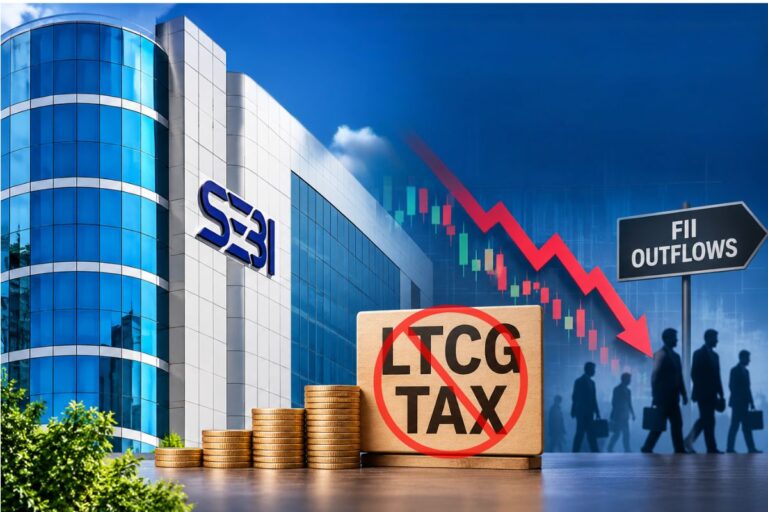
Listing gains are paper gains until you sell, and they ignore brokerage and tax. In fact, SEBI has separately proposed scrapping LTCG tax for foreign investors, a move that could change how much of listing-day gains foreign funds actually keep. The grey market premium, which hinted at a gain of about 23%, is unofficial, as The Week stresses.
What To Watch Next
Three things will shape how the stock behaves from here.
First, debt. Investors will want proof that the ₹27,500 crore repayment actually lowers borrowing costs.
Second, growth. Of Jio’s 524.4 million subscribers, 268.5 million were on its 5G network in March 2026, per The Week. Converting more users to 5G is a big part of the story. Satellite connectivity could be the next frontier, especially as providers like BSNL roll out satellite phone services to reach remote parts of the country.
Third, trading. With such a small slice of shares on offer, early price swings would not be surprising.
This article is information only, not investment advice.
Frequently Asked Questions
When Did Jio Platforms List On The Stock Market?
It listed on 28 October 2026 on both the NSE and BSE.
What Was The Jio Platforms IPO Price?
The issue price was ₹1,119, the top of the ₹1,065 to ₹1,119 band.
What Was The Listing Price Of Jio Platforms?
Shares listed at ₹1,358, a 21.36% premium to the issue price.
How Big Was The Jio Platforms IPO?
The issue was about ₹30,213 crore, the largest in Indian history.
How Many Times Was The Jio IPO Subscribed?
It was subscribed 22.19 times overall. Institutions bid 70.55 times, and retail investors 2.72 times.
Sources & References
- The Tribune — Jio Platforms Shares List at Rs 1,358 on BSE, NSE, 21.36% Above Issue Price.
- Kotak Neo — Jio Platforms IPO Listing Today: Shares List at a Premium on BSE and NSE in the Stock Market Debut.
- The Week — Jio Platforms IPO Listing Date: What Is the Latest GMP and How Much Listing Gain Can Investors Expect?.
- The Week — Jio Platforms IPO Values Firm Above $130 Billion: All You Need to Know.
- JM Financial — Jio Platforms Shares List at 21.36% Premium on NSE, BSE.
- ETV Bharat — Jio Platforms Gets Sebi Nod to Launch Country’s Biggest-Ever IPO.
- TradingView News — Jio Cuts IPO Size to Rs 30,000 Crore.
- GoodReturns — Jio IPO Opens: 6 Brokerages Say Subscribe, Key Risks and Pros.
Disclaimer: This article is provided for informational and educational purposes only and does not constitute financial, investment, or promotional advice. The information presented herein is subject to change without prior notice. Readers are advised to verify all relevant facts, conduct independent research, and consult with a certified financial advisor before making any investment decisions.