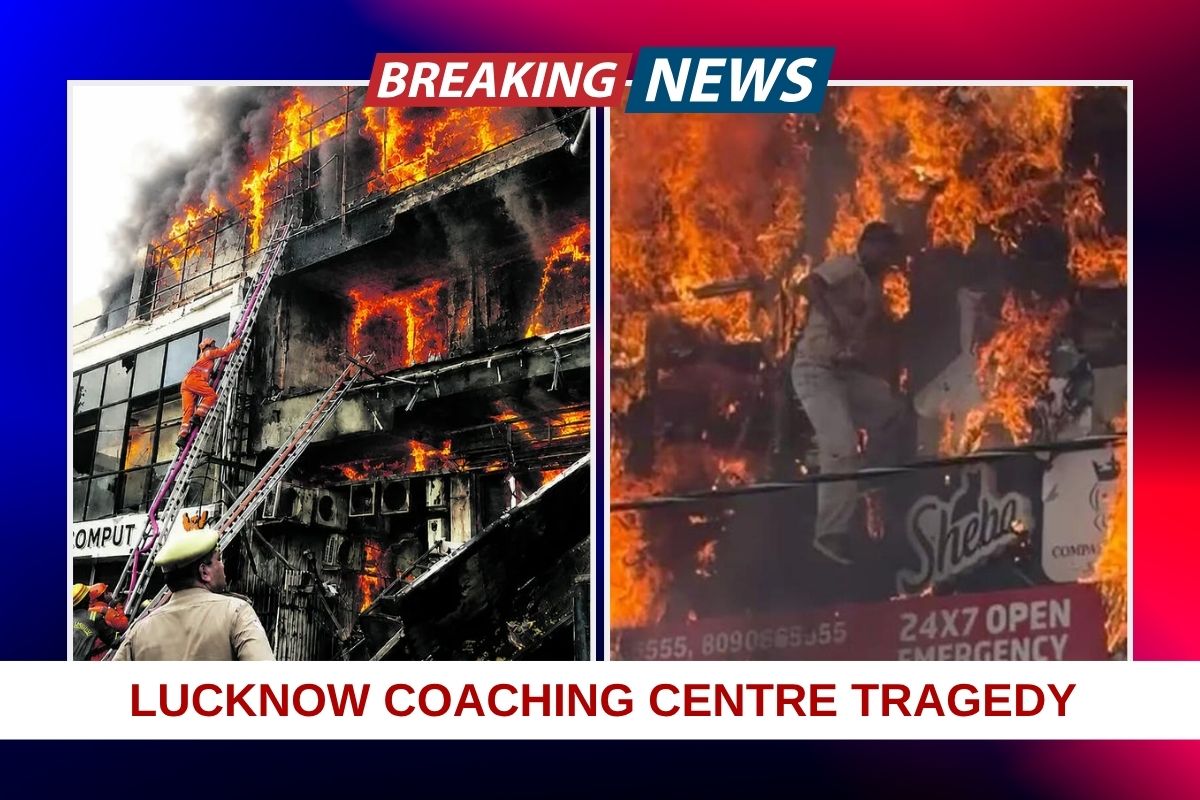
On a scorching Monday afternoon in Lucknow’s Aliganj area, an ordinary day turned into a nightmare. The street was busy, as usual. Shops were open, and people were going about their routines. Then, just after 3:00 PM on June 22, 2026, a fire erupted inside a three-storey building on Usha Mehta Marg. Within minutes, thick black smoke swallowed the structure. What had been a normal commercial complex suddenly became a deadly trap.
The building housed an animation coaching centre, a gaming zone, and a pet clinic. Young students filled the premises. Most were between 16 and 25 years old. They were there to learn, build careers, and chase big dreams. By evening, everything had changed. Eighteen people had lost their lives. Families were shattered. The city was left grieving and asking a painful question. How was such a tragedy allowed to happen?
How The Tragedy Unfolded
The disaster appears to have started with an electrical spark. Investigators believe a faulty installation may have triggered it. The building lacked proper ventilation. Because of that, toxic smoke spread at an alarming speed. The animation institute occupied the upper floors. Those rooms were filled with smoke before many students understood the danger. By then, panic had already taken hold.
The building itself offered almost no way out. There was only one entrance and exit. No emergency doors existed. There were no fire escapes either. Alternative escape routes simply weren’t there. When flames cut off the main staircase, students rushed toward the windows and the rooftop. Many screamed for help. Others searched desperately for any possible escape.
Outside, people gathered quickly. Neighbours and passersby watched in shock. It was heartbreaking, honestly. Trapped students faced impossible choices. Several jumped from windows and the terrace to escape the choking smoke. Some survived the fall. Many suffered severe fractures and critical injuries. It was a desperate attempt to stay alive, and sadly, not everyone made it.
The Race Against Time
Local residents reacted first. They rushed toward the building without hesitation. Some tried catching students who jumped. Others helped pull people away from danger near the lower floors. Soon after, emergency teams arrived. More than 14 fire tenders reached the scene. A heavy hydraulic platform vehicle was also deployed. Firefighters immediately began battling the massive blaze.
Conditions inside were brutal. Heat and toxic gases filled the building. Firefighters could not enter through the main entrance. They had to think fast. Rescue teams climbed onto the roof of a neighbouring building. Using heavy drilling equipment, they broke large openings through concrete walls. It was an unusual approach, but there weren’t many options left. Those openings became emergency pathways for rescuers and stretchers.
Inside, the situation was grim. Firefighters searched every room they could reach. They checked classrooms, libraries, washrooms, and corners where frightened students had taken shelter. Twelve people were rescued alive. Sadly, many others could not be saved. Most victims died from suffocation caused by dense carbon monoxide. The flames were deadly, sure, but the smoke proved even worse. The fire also killed animals trapped inside the pet clinic on the ground floor. That detail added another painful layer to an already devastating tragedy.
Also Read: The Tragic Loss of Kumkum Bhagya Star Sanchita Ugale at 22
A Timeline Of Regulatory Failure
The investigation uncovered years of negligence. In some ways, it opened a Pandora’s box. Officials found a long trail of questionable decisions and missed warnings. This was not simply a random accident. Many people now believe it was a disaster waiting to happen.
- Property Allotment (July 1980): The plot in Sector D of the Aliganj Scheme was originally allotted for residential use. It was provided under a government hire-purchase program.
- Residential Approval (August 2014): New owners purchased the property. They later received approval for a residential building plan. The approval came through a self-certification process.
- Demolition Order Issued (May 2016): The Lucknow Development Authority (LDA) identified unauthorised commercial construction at the site. Officials ordered the structure to be demolished. At least on paper, action seemed likely.
- The Order Disappears (July 2016): Just two months later, things took an unexpected turn. The demolition order was withdrawn. Why it happened remains a major question. The decision allowed construction activities to continue.
- Commercial Tax Collection (2022): Oddly enough, the building still appeared as residential on official records. Yet businesses operated from the property. The Lucknow Municipal Corporation began collecting commercial taxes from those businesses. That contradiction has become a key focus of the investigation.
The Immediate Aftermath And Public Anger
As news of the rising death toll spread, anger swept across Uttar Pradesh. Public frustration grew quickly. Senior leaders rushed to the site. Deputy Chief Minister Brajesh Pathak became emotional while inspecting the damaged coaching centre. Witnesses said he broke down during the visit. Chief Minister Yogi Adityanath cut short an official trip and returned to Lucknow. He went directly to King George’s Medical University (KGMU) to meet injured students.
Political leaders from across the country expressed their condolences. Prime Minister Narendra Modi and President Droupadi Murmu both shared messages of grief. The government announced compensation for victims and their families. Families of those who died were promised ₹5 lakh each. Injured survivors were offered ₹50,000. Yet many parents waiting outside the morgue felt the same way. Money could not replace a lost child. It couldn’t even begin to ease that pain.
Public pressure mounted, and police responded swiftly. An FIR was registered. Authorities arrested building owners Virendra Shukla and Surendra Pratap Shukla. Managers of businesses operating inside were also taken into custody. Investigators allege they knowingly ran operations in an unsafe building. They now face charges of culpable homicide not amounting to murder.
Also Read: Here’s How to Apply for a Passport Online in India (2026)
The Cost Of Negligence
The Lucknow fire tragedy highlights an uncomfortable reality. In rapidly expanding cities, safety is sometimes pushed aside for profit. A building intended for residential use became packed with commercial activities. Showrooms operated there. A gaming zone functioned inside. A crowded coaching institute occupied the upper floors. Yet reports indicate there was no valid fire clearance certificate.
A two-member Special Investigation Team (SIT) has been assigned to examine the case. The team includes senior police and administrative officials. They have been given seven days to identify who ignored warnings, accepted favours, or failed to act. More than 16 current and former engineers linked to the Lucknow Development Authority are reportedly under investigation.
This tragedy serves as a serious warning. Across India, thousands of coaching centres operate in narrow buildings. Many have only one exit. Some function from basements or upper floors. Local zoning rules are often ignored. Let’s be real, that’s a dangerous combination. A building without emergency exits, smoke ventilation, or fire equipment is not truly safe. It becomes a risk waiting for the wrong moment. Unless safety regulations are enforced consistently, students will continue paying the price for cheap rent, shortcuts, and commercial greed.
Also Read: Nothing Phone 4b Teasers Suggest a Launch May Be Near
Sources & References
- The Hindu. Lucknow fire tragedy: Students trapped as building lacked emergency exits.
- NDTV. Lucknow coaching centre fire: Timeline of negligence and regulatory lapses.The
- Times of India. Lucknow blaze: FIR registered, building owners arrested after 18 deaths.
- Indian Express. Lucknow fire: SIT probe ordered into Aliganj building tragedy.
Disclaimer: This article is provided solely for informational and educational purposes. The content is based on publicly available reports and does not constitute legal, professional, or official advice. Any references to individuals, organisations, or events are intended for factual reporting and should not be interpreted as promotion, endorsement, or condemnation. Readers are encouraged to verify information through official sources and independent research.