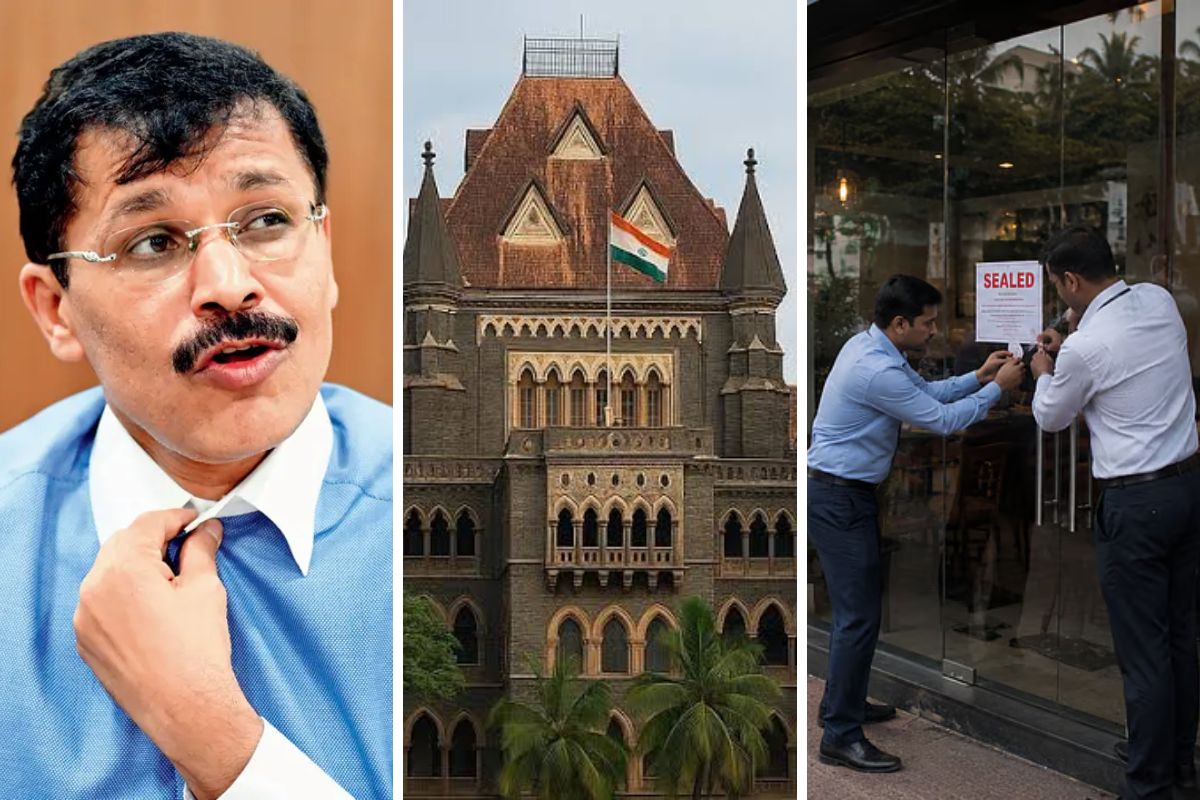
Quick Answer: For months, Maharashtra’s restaurant owners have been watching one name closely: Tukaram Mundhe. Since taking over as Commissioner of the state’s Food and Drug Administration (FDA) in May 2026, this 2005-batch IAS officer has turned routine hygiene checks into one of the most aggressive enforcement drives the state’s food industry has seen in years. Now, though, the Bombay High Court is stepping in — and repeatedly overturning some of the FDA’s own closure orders.
- Tukaram Mundhe’s FDA has run an aggressive, fast-moving crackdown. Since May 2026, his “Safe Food, Safe Maharashtra” drive has led to 360 raids, 235 FIRs, 350 arrests, and 274 sealed units in just the first month — hitting even high-profile names like K. Rustom & Co. and the Cricket Club of India.
- His career is defined by constant transfers, not just this drive. The FDA posting was his 25th transfer in 21 years, following a pattern of tightening enforcement and clashing with entrenched interests at nearly every previous posting.
- The Bombay High Court has flagged uneven enforcement. Judges questioned why private eateries faced instant closures while government canteens, including at Mantralaya, self-reported 93% compliance and escaped scrutiny — a claim an independent legal panel later contradicted, finding poor hygiene conditions on inspection.
- Courts have started reversing FDA orders. In the sharpest rebuke, the Bombay HC revoked a suspension against a Navi Mumbai restaurant that had already been certified 100% compliant weeks earlier, criticizing the department for sitting on the correction.
- The FDA may face financial costs over the delay. The court is considering imposing costs on the FDA to compensate the Navi Mumbai restaurant owner for losses suffered during the unjustified closure period.
- The court’s issue is process, not the crackdown itself. Judges have acknowledged Mundhe as a capable commissioner — their criticism centers on due process and consistency, not on food safety enforcement being wrong in principle.
Who Is Tukaram Mundhe, and Why Does His Name Alone Worry Restaurant Owners?
Mundhe isn’t new to controversy. Born in Tadsonna village in Beed district to a farming family, he studied at a Zilla Parishad school before earning degrees in History and Political Science in Aurangabad, then cracked the UPSC exam and joined the IAS in 2005.
What’s followed since has been unusual even by bureaucratic standards: 25 transfers in 21 years. He’s held charge as Nashik Municipal Commissioner, Nagpur Municipal Commissioner, PMPML chief in Pune, and Health Services Commissioner, among other postings, and at nearly every stop he’s picked the same fight — cancelling illegal constructions, refusing to bend procurement rules for politically connected contractors, and clashing with local leaders who found his rigidity inconvenient. Colleagues in Maharashtra’s bureaucracy have a half-joking rule about him: if you want something actually done, post Mundhe there; if you want him gone, just wait a few months.
His FDA posting in May 2026 was, by that pattern, his 25th shift — and also his second transfer in under two months. Within days of taking charge, he made clear this wouldn’t be a quiet tenure.
Also Read: The Real Timeline For RBI’s Polymer Notes Trial in India: Paper vs Plastic Currency
What Exactly Has the FDA Been Doing Since May 2026?
Under Mundhe, the FDA launched what it’s calling the “Safe Food, Safe Maharashtra” campaign — a sweeping check on food adulteration, unhygienic kitchens, and unlicensed operations across the state.
The numbers give a sense of scale. In roughly the first 30 days alone, the department carried out 360 raids, registered 235 FIRs, arrested 350 people accused of adulteration, and sealed 274 illegal units. The drive wasn’t limited to small players, either — the FDA suspended licences at prominent establishments including Mumbai’s well-known K. Rustom & Co., the Cricket Club of India, and the MIG Cricket Club over alleged hygiene and food safety violations.
Milk was a particular focus. Reports suggested nearly 79 percent of milk samples tested statewide failed purity checks, prompting Mundhe to bring dairies, transporters, distributors, wholesalers, and retailers under tighter scrutiny all at once. He’s been blunt about the stakes, describing milk as a nutritional lifeline for children, mothers, patients, and senior citizens rather than just another commodity, and warning that adulteration amounts to gambling with public health.
Why Did the Bombay High Court Get Involved?
The drive’s momentum eventually collided with due process. In late July, the FDA issued a “stop business” order against the Bombay Bar Association’s own canteen inside the High Court complex, saying it was operating without a valid FSSAI licence — a lapse that could otherwise draw a penalty of up to Rs 2 lakh.
That inspection came shortly after the High Court itself had asked a pointed question: if the FDA was cracking down hard on private restaurants and hotels, why did canteens inside government buildings — including Mantralaya, the state secretariat — appear to be getting a pass? A departmental report had claimed those canteens were 93 percent compliant, so no action was taken. The court wasn’t convinced, and a panel of four lawyers it appointed to independently inspect the Mantralaya canteens reportedly found insect infestations, damaged drainage, and open sewage lines — a very different picture from “93 percent compliant.”
Also Read: What Karan Aujla Actually Left Out When He Joked About His Legal Trouble on Samay Raina’s Show
What Happened With the Navi Mumbai Restaurant Case?
The sharpest rebuke so far came in the case of Hotel Pawan and Restaurant in Belapur, Navi Mumbai. The FDA had inspected the property on June 29, found it 63 percent compliant, and suspended its licence the very next day. The owner appealed, and a reinspection on July 14 certified the restaurant as fully compliant. Despite that certificate, the suspension order was never lifted.
The matter reached a division bench of Acting Chief Justice Ravindra Ghuge and Justice Gautam Ankhad, which didn’t hold back. The bench asked, pointedly, who would compensate the owner for the daily losses he’d suffered — noting that the FDA had “been sleeping all this while and has now woken up,” and that having a capable commissioner in Mundhe didn’t justify keeping a fully compliant business shut. The court revoked the suspension outright, directed the owner to file an affidavit detailing his financial losses since July 14, and signalled it was considering imposing costs on the FDA to compensate him.
Is This Just One Isolated Case, or a Pattern?
It’s shaping up to be a pattern. Legal commentary tracking the FDA’s enforcement drive has noted a string of similar reversals, with courts repeatedly finding that instant closures — sometimes acted on before an appeal was even heard — didn’t hold up against basic standards of fair process once challenged. The Navi Mumbai ruling followed closely on the heels of the High Court’s criticism over the Mantralaya canteens, suggesting judges are increasingly uneasy not just with individual orders but with how the drive is being applied — tough on private eateries, seemingly slower on public ones.
Also Read: Who Is India’s New Education Minister Pralhad Joshi? Full Profile, Career, and What Comes Next
What This Means for Mumbai’s Restaurant Industry
For restaurant and bar owners, the message from the courts is that a compliance certificate should mean something the moment it’s issued — not weeks later, after a legal challenge. For the FDA, the rulings are a check on how fast enforcement can move without due process catching up. And for Mundhe himself, whose entire career has been defined by clashes with the systems he’s asked to fix, this is simply the latest — and very public — round of that same story.
Quick Timeline
- May 2026 — Tukaram Mundhe appointed FDA Commissioner, his 25th transfer in 21 years.
- May 25, 2026 — “Safe Food, Safe Maharashtra” enforcement drive intensifies statewide.
- First 30 days — 360 raids, 235 FIRs, 350 arrests, 274 units sealed; licences suspended at high-profile establishments.
- June 29–30 — FDA inspects Hotel Pawan Bar and Restaurant (Belapur), finds 63% compliance, suspends licence next day.
- July 14 — Reinspection certifies the restaurant 100% compliant; suspension not lifted.
- Late July — Bombay HC questions why government canteens (Mantralaya) show high compliance while private eateries face swift action; court-appointed panel finds poor hygiene at Mantralaya canteens.
- Late July — FDA inspects and issues a stop-business order to the Bombay Bar Association’s own canteen inside the High Court, days after the court’s query.
- August 3–4, 2026 — Bombay HC revokes the Navi Mumbai restaurant’s suspension, criticises FDA’s delay, and considers imposing costs on the department.
Frequently Asked Questions
Who is Tukaram Mundhe?
He’s a 2005-batch IAS officer from Maharashtra known for a strict, uncompromising administrative style. He has been transferred 25 times in 21 years and took charge as the state’s FDA Commissioner in May 2026.
What is the FDA’s “Safe Food, Safe Maharashtra” drive?
It’s a statewide enforcement campaign against food adulteration, unhygienic eateries, and unlicensed food businesses, launched shortly after Mundhe became FDA Commissioner. It has involved hundreds of raids, arrests, and licence suspensions across the state.
Why is the Bombay High Court reversing FDA closure orders?
The court has found that in at least one major case, the FDA suspended a restaurant’s licence and failed to lift it even after a follow-up inspection certified the business as fully compliant — leaving it shut without justification.
What happened in the Hotel Pawan Bar and Restaurant case?
The Belapur restaurant was found 63% compliant in June 2026 and had its licence suspended. A July 14 reinspection certified it 100% compliant, but the suspension stayed in place until the Bombay High Court revoked it in early August, criticising the FDA’s delay.
Why did the FDA inspect a canteen inside the Bombay High Court itself?
The inspection came after the High Court questioned why the FDA appeared to act quickly against private restaurants while reporting high compliance for canteens inside government buildings like Mantralaya, without similar enforcement.
Is the Bombay High Court against the FDA’s crackdown overall?
Not entirely — the court has acknowledged Mundhe as a capable commissioner and hasn’t opposed food safety enforcement itself. Its criticism has focused on due process: acting too slowly to reverse suspensions once businesses are certified compliant, and applying scrutiny unevenly between private and government establishments.
Could the FDA have to pay compensation over these cases?
Yes — in the Navi Mumbai case, the Bombay High Court has indicated it is considering imposing costs on the FDA to compensate the restaurant owner for losses suffered during the extended, uncorrected suspension.
Source and Reference:
- Times of India – “‘Why only private eateries?’ After Bombay HC’s query, FDA team, Tukaram Mundhe, reaches canteens at HC”
- The Indian Express – “Why Bombay courts are reversing FDA’s Tukaram Mundhe instant restaurant closure orders”
- The Indian Express – “25 transfers in 20 years: Meet Tukaram Mundhe, the IAS officer Mumbai’s restaurants fear”
- The Better India – “This IAS Officer Led 360 Raids to Stop Fake Milk From Reaching Maharashtra Homes”