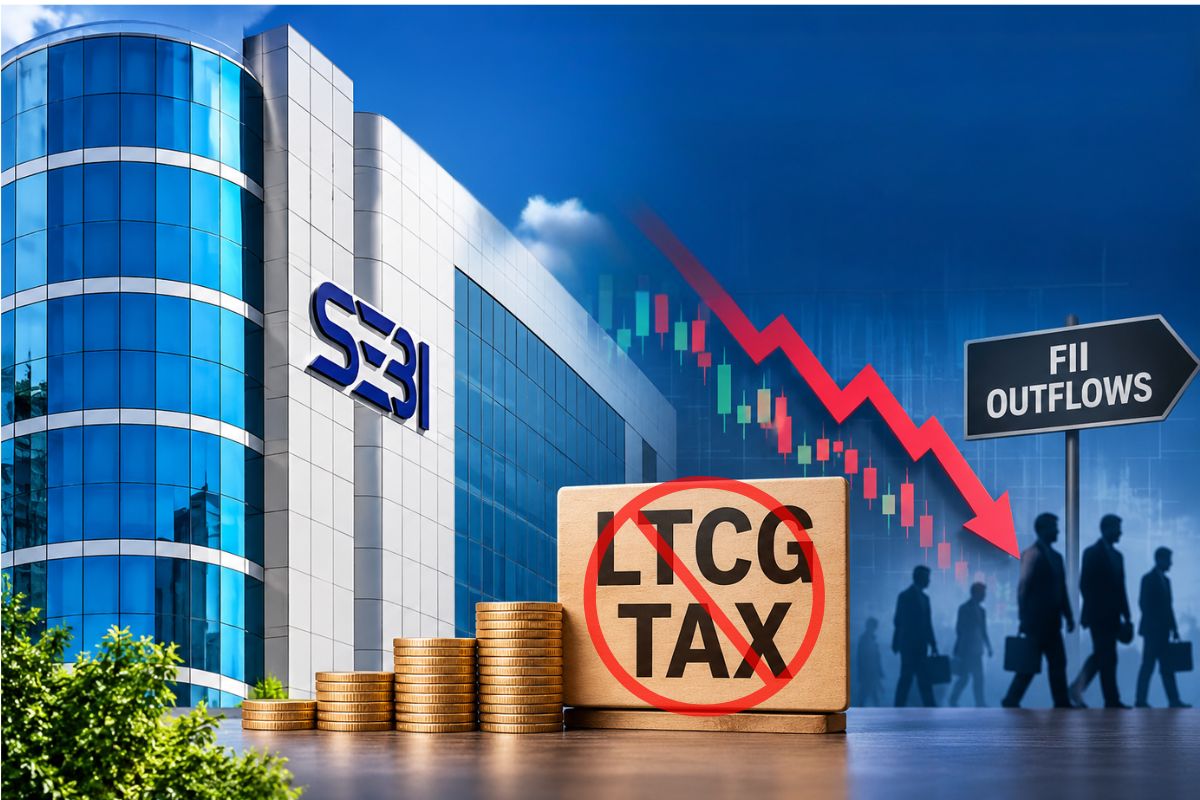
SEBI has proposed LTCG tax relief for foreign investors, but experts say it is unlikely to reverse FII outflows by itself. Lower tax lifts post-tax returns, yet earnings growth, valuations and rupee stability drive foreign money far more.
-
SEBI wants the 12.5% long-term capital gains tax scrapped for foreign portfolio investors.
-
The proposal is a pre-Budget recommendation. The government makes the final call.
-
Foreign investors have pulled out roughly ₹2.95 trillion from Indian equities in 2026 so far.
-
Experts say earnings, valuations and the rupee matter more than tax.
-
The Union Budget in February 2027 will show whether the idea goes anywhere.
What Exactly Has SEBI Proposed?
According to a Business Standard report citing Reuters on 2 November 2026, the regulator has made two suggestions ahead of the Budget.
The first is to scrap long-term capital gains tax on equity gains made by foreign portfolio investors (FPIs). The second is to let domestic mutual fund investors switch between schemes without an immediate tax bill, provided they have held the units for over a year.
These are recommendations, not law. As the report notes, the final decision rests with the Centre. SEBI reportedly arrived at them after about two years of meetings with overseas investors, many of whom named taxation as a key worry.
What Do Foreign Investors Pay Now?
Gains on listed shares held for more than 12 months are taxed at 12.5%, above an exemption of ₹1.25 lakh. Shorter holdings attract 20%. The long-term rate was raised from 10% in the 2024 Budget, effective 23 July 2024, Business Standard reports.
Foreign investors pay the same rates as locals. Tax treaty routes that once softened the bill were largely closed from April 2019. Add securities transaction tax, withholding tax on dividends and trading costs, and SEBI describes the total burden as among the highest globally.
How Bad Have the FII Outflows Been?
Quite bad. The same report, using CDSL data, shows September 2026 saw net selling of ₹35,861 crore and October another ₹34,843 crore. Even as the broader market saw this selling pressure, domestic listings such as the Jio Platforms IPO stock market debut managed to draw strong investor interest. For 2026 so far, the net outflow stands at about ₹2.95 trillion.
Here is how recent years compare:
| Year | Net FPI flow in Indian equities |
|---|---|
| 2022 | −₹1.21 trillion |
| 2023 | +₹1.71 trillion |
| 2024 | about +₹427 crore |
| 2025 | −₹1.66 trillion |
| 2026 (to end-October) | −₹2.95 trillion |
Source: CDSL data, as reported by Business Standard, 2 November 2026.
There was a small bright spot. Foreign investors bought about ₹6,300 crore in the last week of October. Market experts quoted by PTI called it encouraging, but not necessarily a lasting turnaround.
Would a Tax Cut (LTCG Tax Relief) Help?
On paper, yes. Brokerage IIFL estimates that removing capital gains tax could add about 2.3 percentage points to foreign investors’ returns. Some analysts note that other tariff-related dollar inflows expected over the coming months could do more for the rupee than a tax tweak alone. Jefferies says a cut could improve sentiment, bring back inflows and support the rupee.
That is the optimistic reading. The cautious one comes from people who manage money.
Nirav Karkera of W by Groww told Business Standard that tax efficiency alone will not bring foreign capital back. In his words, the bigger drivers remain earnings growth, valuations, currency stability and how India compares with other emerging markets.
The same view surfaced earlier. At a Business Standard summit in March 2025, Kotak Mahindra AMC’s Nilesh Shah said a lower tax raises post-tax returns, but “only a reduction in taxes does not guarantee returns.” Helios Capital’s Samir Arora took a different angle. He argued that most countries don’t tax foreign investors’ stock gains, and that tax paid in rupees is eroded further by currency losses.
What is Really Driving the Selling?
The report points to several things:
-
Elevated crude oil prices
-
Global rate worries and higher US bond yields
-
An uncertain earnings outlook at home
-
Better-looking opportunities in other markets
Tax is on the list of complaints, but it isn’t at the top. Domestically, RBI’s deposit interest rate changes are also reshaping where investors park their money, adding another variable beyond capital gains tax. A tax cut cannot fix expensive valuations or a weak rupee. It only makes the return you do get a little bigger.
What About the Government’s Side?
Every rupee of relief is a rupee of lost revenue. Jefferies puts equity LTCG collections at ₹1.3 trillion in FY25, so the Finance Ministry will want to be sure the trade-off is worth it. Part of that tax comes from domestic investors, and a foreign-only exemption would affect just one slice of it. Nobody has published a clean estimate of the cost yet.
What to Watch Next
The Union Budget in February 2027 is the real test. Until then, watch monthly FPI flow data, the rupee and crude prices. If foreign money returns before any tax change, that alone will tell you how much tax really mattered.
ALSO READ: New UPI Charges On Payment Explained: Rules, Limits And MDR Rate (2026)
Frequently Asked Questions
Has SEBI actually scrapped LTCG tax for foreign investors?
No. It has only recommended it. The government decides, and any change would come through the Budget.
What is the current LTCG tax rate on shares?
It is 12.5% on gains above ₹1.25 lakh for holdings over 12 months. Shorter holdings are taxed at 20%.
How much have foreign investors pulled out in 2026?
About ₹2.95 trillion by the end of October, according to CDSL data reported by Business Standard.
Will this affect ordinary Indian investors?
Not directly. The tax-free mutual fund switch, though, would help domestic investors who rebalance between schemes.
When will we know the outcome?
Most likely in the Union Budget in February 2027.
Disclaimer: This article is published for informational purposes only and is not intended as a promotion or financial endorsement of any specific investment or policy. Readers are advised to independently verify all financial facts, market data, and regulatory updates, and to seek professional financial advice before making any investment decisions.