Quick Answer: Vivo hadn’t touched the S-series badge in India since 2019. That changed on August 6, 2026, when the company launched the Vivo S2 at a starting price of Rs 39,999—and built almost the entire pitch around a single spec: a 7,050 mAh battery packed into a phone that still wants to look like it belongs somewhere near the flagship shelf, not the budget one.
That’s really the whole tension of this launch. Big batteries usually mean a thick, heavy, forgettable design. Vivo is trying to argue that doesn’t have to be true anymore.
Quick Answer: Vivo S2 Price, Specs and Sale Date
If you just want the numbers first:
- Price: Rs 39,999 (8GB + 128GB) and Rs 49,999 (8GB + 256GB)
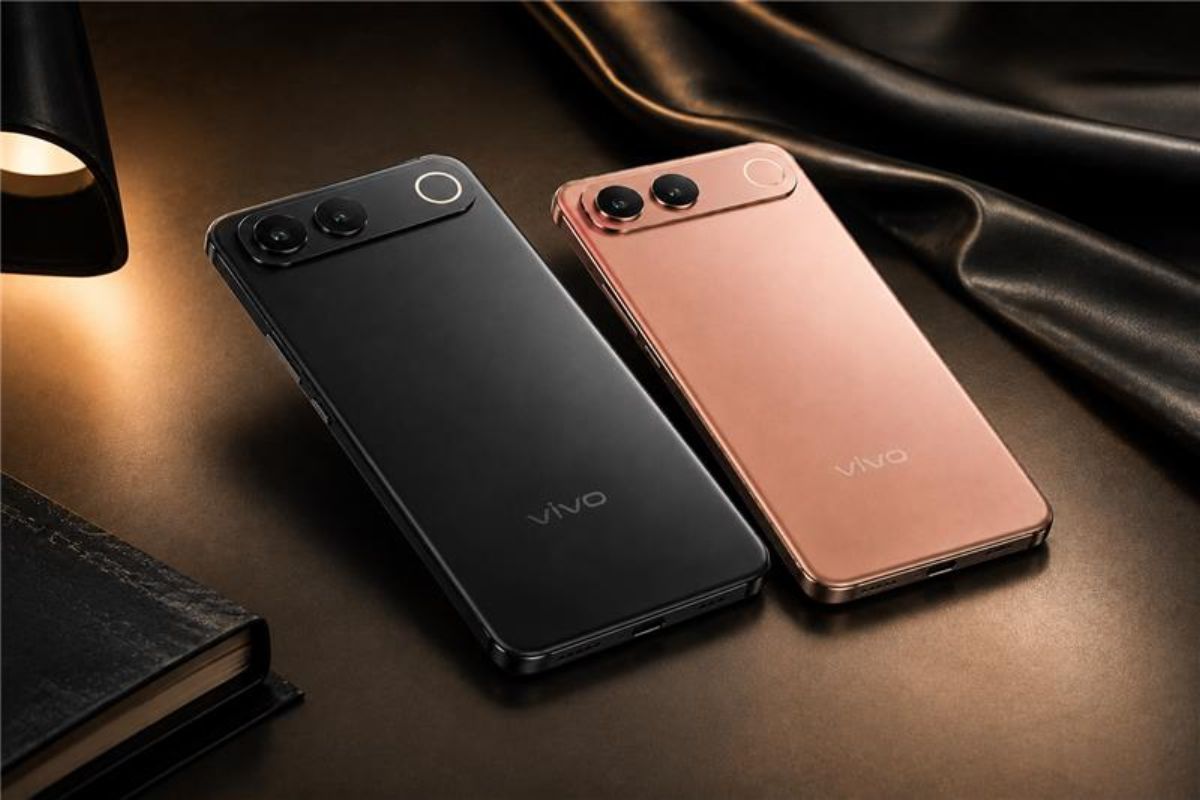
- Colours: Sapphire Blue, Regal Bronze, Silk White
- Display: 6.83-inch, 3D curved AMOLED, 1.5K resolution, 120Hz, up to 3,000 nits peak brightness
- Chipset: MediaTek Dimensity 7360-Turbo (4nm)
- Battery: 7,050mAh with 44W fast charging
- Cameras: 50MP Sony main sensor + 2MP secondary rear, 32MP front camera, 4K video on both
- Software: OriginOS 6 on Android 16, 3 years of OS upgrades, 5 years of security patches
- Durability: IP68 and IP69 rated
- On sale from: August 11, 2026, via Vivo India, Flipkart, Amazon and retail partners
There’s more worth knowing than just the spec sheet, though.
Why Bringing Back the S-Series Is the Actual News Here
The last S-series phone Vivo sold in India was the S1, back in 2019. For six years after that, the company more or less abandoned the name here and put its mid-range weight behind the V-series instead—even while S-series phones kept selling in China. Reviving a line that’s been dormant for that long isn’t a small decision, and it usually says something about how a company reads the market it’s walking back into.
At the launch, Geetaj Channana, who leads corporate communications for Vivo India, put it in fairly direct terms: young buyers now want phones that feel premium but don’t cost flagship money, and they want the cameras and software to actually support how they use the phone — which, for a lot of them, means shooting and posting content, not just taking the occasional photo.
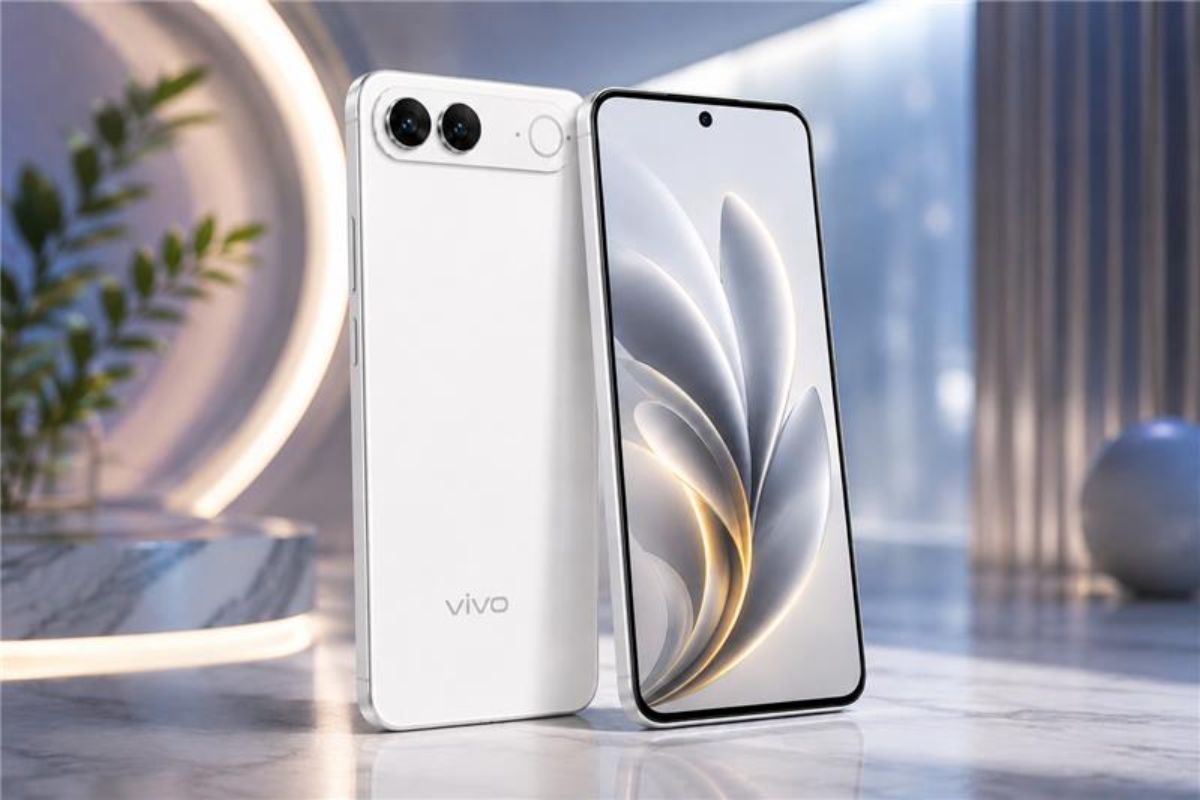
That explains a design choice that would otherwise seem odd for a mid-range phone. Vivo pulled styling cues from the X300 FE, one of its higher-end devices, and brought that down into the S2. You end up with a pill-shaped camera housing, two rings around the lenses, and a ring-light element that more than a few people online have already compared to the camera bump on Apple’s iPhone Air. Take that comparison however you want, but it wasn’t accidental—this phone is meant to be looked at, not just used.
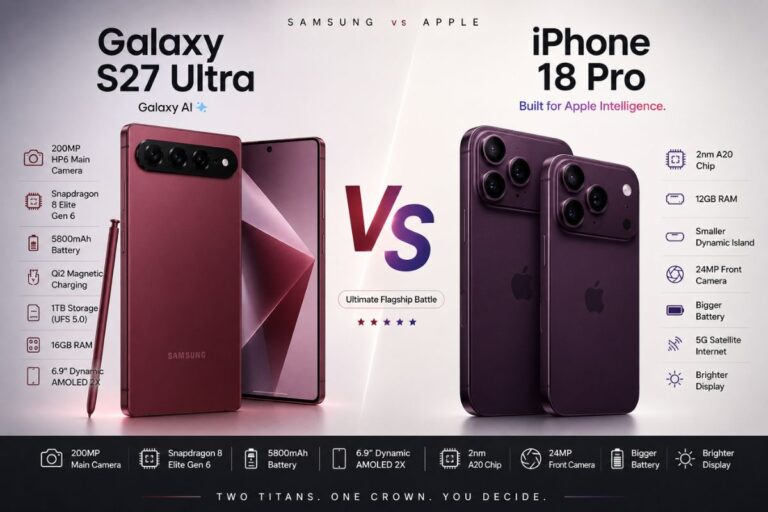
Also Read: Next Flagship Face-Off: iPhone 18 Pro vs Samsung Galaxy S27
The Battery Is Carrying the Whole Launch
Here’s the honest version of Vivo’s pitch: most people don’t run out of day before they run out of battery—it’s the other way around—and Vivo wants to fix that without turning the phone into a slab you carry around like a brick.
The 7,050mAh cell (Vivo’s calling it a “BlueVolt” battery, for whatever that’s worth) is rated for around 33 hours of video playback, close to 44 hours of local music, roughly 49 hours of 5G calling, and a bit over 12 hours of Free Fire, according to Vivo’s own lab testing. Worth saying plainly: these are company numbers, not independent ones, and actual results will shift depending on brightness, signal strength, and whatever’s running in the background. Even accounting for that gap between lab and real life, though, a battery this size should get most people through a full day without much anxiety, and probably further for lighter users.
Charging speed is where the phone’s mid-range roots show. 44W is fine, not fast—plenty of phones in this price range now do 65W or 80W. Vivo’s Staking people would rather charge less often than charge faster, which is a defensible bet, but it only works if you’re the kind of person who plans charging around convenience rather than being in a rush.
Two extras round this out. Bypass Charging routes power straight to the phone while you’re gaming or streaming, which keeps the battery itself from heating up as much during heavy use. Battery Life Extender is more of an emergency measure—Vivo says that with Super Battery Saver on, the phone can eke out about four extra minutes at 1 percent charge. Enough for one call, maybe a UPI payment, if you time it right.
The Screen: Curved Glass Where You Don’t Usually Get It
The 6.83-inch AMOLED panel curves at the edges, which is a design touch you’d normally expect on something costing a lot more than Rs 40,000. It’s 1.5K resolution (2,800 × 1,260 pixels), 120Hz refresh, HDR10+, and Vivo says it hits 3,000 nits peak brightness—bright enough, in theory, to stay usable outdoors in Indian summer sun. There are also SGS certifications thrown in for low blue light and low flicker, plus a five-star sunlight-readability rating, and the screen-to-body ratio comes in just under 94 percent.
One thing worth flagging that Vivo’s marketing understandably skips over: curved screens crack more easily than flat ones. The edges take more of the impact in a drop. If you’ve broken a curved-glass phone before, you already know this isn’t theoretical—it’s probably worth budgeting for a case from day one rather than treating it as optional.
Also Read: Nothing Phone 4b Teasers Suggest a Launch May Be Near
Cameras: This Is a Phone for People Who Post
The rear camera hardware is honestly not that impressive on paper — a 50MP Sony IMX852 main sensor with a 2MP sensor alongside it for depth data. No ultrawide lens at all, which is a real gap if you shoot landscapes, buildings, or group shots often. Vivo clearly decided to put its camera budget somewhere else.
That somewhere else is video. Both the front camera (32MP) and the rear setup shoot 4K, and there’s a Dual-View mode that records from both cameras at once—handy if you do reaction videos, interviews, or anything where you want your face and the scene captured together without juggling two phones. AI Erase 2.0 removes unwanted objects from the background, Aura Light Portrait fakes studio-style lighting for portraits, and Live Photo grabs a short motion clip around your still shot, not unlike what Apple’s been doing on iPhone for years.
So this isn’t really a camera system for someone chasing detailed daylight photography or strong low-light shots—it’s built for people making short-form video, full stop. That’s a fine choice if that’s your use case. If it isn’t, this camera setup will feel oddly narrow for the price.
Performance: Solid, Not Flashy
Under the hood is MediaTek’s Dimensity 7360-Turbo, a 4nm chip with four performance cores and four efficiency cores, topping out at 2.5GHz. Vivo quotes an AnTuTu score around 970,000 for the 8GB+256GB model, run on AnTuTu V11 in-house. That’s a reasonable number for this segment—smooth enough for everyday use, most games at medium settings, and a couple of years of runway before it feels dated—but nowhere near what you’d get from a Snapdragon 8-series or Dimensity 9-series flagship chip, and it’s not really trying to compete there.
Vivo’s cooling setup includes a roughly 3,800mm² vapor chamber with over 23,000mm² of total cooling area, and the company claims it can hold 90 FPS in BGMI for up to three hours at 30°C—again, a claim from Vivo’s own testing that hasn’t been independently checked yet. Storage is UFS 3.1 rather than the newer, faster UFS 4.0 some competitors have moved to, and RAM is LPDDR4X. Both are quiet signs of where Vivo trimmed cost to keep the price down—areas most buyers won’t notice unless they go looking.
Also Read: Can ChatGPT Replace Google Search? The Gap is Shrinking
Build Quality: IP68 and IP69, With Some Fine Print Worth Reading
Vivo rates the S2 for both IP68 and IP69, tested to IEC 60529-2013. IP68 means it survives static freshwater submersion up to 1.5 meters. IP69 is the less common one—it covers high-pressure, high-temperature water jets, a rating you’d more typically see on factory equipment than a phone. Vivo also says it passed five MIL-STD-810H tests, including drops from one meter onto seven different surfaces: steel plate, laminate, wood, grass, rubber, granite, and ceramic tile.
To Vivo’s credit, the fine print here is fairly upfront: water resistance wears down over time, liquid damage isn’t covered under warranty, and the company specifically warns against charging the phone while it’s wet. An IP rating describes what happened in a lab test—not a guarantee that holds forever.
Software: A Longer Update Window Than Most Phones This Price
The S2 runs OriginOS 6 on top of Android 16, and Vivo’s committing to three years of OS upgrades plus five years of security patches—longer than what a lot of phones at this price point typically get and genuinely worth weighing if you tend to hold onto a phone for a while.
There’s also a stack of AI features bundled in: AI Creation for writing and summarizing, AI Captions for live transcription and translation, an AI Smart Call Assistant (Vivo says this one’s launching only in India and Pakistan to start), Circle to Search with Google, and Gemini support baked in. Origin Island handles the dynamic notification stuff, and the Vivo Office Kit adds cross-device tricks like screen mirroring, file transfer, and clipboard sync with a connected PC. A number of these need internet access or an account login to actually work — nothing unusual there, just worth knowing before you assume everything works offline.
Vivo S2 vs Redmi Note 17 5G: The Comparison Everyone’s Making
The timing here isn’t a coincidence. Xiaomi’s Redmi Note 17 5G — marketed under the “mAhster Edition” name for its own battery push — went official just days before the S2 launched. Both phones are going after the same buyer, but they’re not making the same argument.
Also Read: Oppo is Giving Competition To Samsung With Its Find X9 Ultra
Redmi Note 17 5G vs Vivo S2 Comparison
| Category | Redmi Note 17 5G | Vivo S2 |
| Battery | 8,000mAh | 7,050mAh |
| Display | 6.7-inch flat AMOLED, 120Hz, Gorilla Glass 7i | 6.83-inch 3D curved AMOLED, 1.5K, 120Hz |
| Chipset | Snapdragon 4 Gen 4 | Dimensity 7360-Turbo |
| Rear Camera | 50MP with AI enhancements | 50MP Sony sensor, 4K video |
| Front Camera | Not detailed | 32MP, 4K video |
| Build | Flat frame, tougher glass | Curved glass, premium styling |
Redmi wins on sheer battery size and probably on drop resistance too, thanks to the flatter, tougher glass. Vivo wins on how the screen looks and feels, likely edges ahead on gaming given the newer chip, and clearly built its camera system for video-first creators rather than casual shooters. Neither phone is simply “better” — it depends on whether raw endurance and toughness matter more to you than a premium feel and creator-focused tools.
Who This Phone Actually Makes Sense For
Based on what Vivo’s shown so far, three types of buyers get the most out of the S2:
- People who dread midday charging—students, commuters, anyone whose schedule doesn’t leave room for a lunchtime top-up.
- Creators who shoot mostly video—the dual 4K setup and Dual-View mode aren’t just spec-sheet filler; they’re genuinely useful if that’s what you do.
- Buyers who want a flagship look without a flagship bill—the curved screen and X300 FE-inspired design punch above the price on first impression.
It’s a weaker choice if you’re chasing top gaming performance, need an ultrawide lens for landscapes or group shots, or want the fastest charging you can get. All three of those needs are better served elsewhere in this price range.
Also Read: Claude Opus 4.8: Anthropic Refines the Idea of ‘Honest’ AI
Frequently Asked Questions
What is the price of the Vivo S2 in India?
Rs 39,999 for the 8GB + 128GB variant and Rs 49,999 for the 8GB + 256GB variant.
When does the Vivo S2 go on sale?
August 11, 2026, through Vivo’s website, Flipkart, Amazon India, and offline retail partners.
What chipset does the Vivo S2 use?
MediaTek’s Dimensity 7360-Turbo is a 4nm octa-core chip clocked up to 2.5GHz.
Does the Vivo S2 support fast charging?
Yes—44W wired charging, plus Bypass Charging and a Battery Life Extender feature for emergency use near 0 percent.
Is the Vivo S2 waterproof?
It’s IP68 and IP69 rated, meaning it can handle static freshwater submersion and high-pressure water jets under lab conditions. It shouldn’t be charged while wet, and liquid damage isn’t covered by warranty.
How long will the Vivo S2 get software updates?
Three years of Android OS upgrades and five years of security patches.
Does the Vivo S2 have an ultrawide camera?
No — the rear setup is a 50MP main sensor plus a 2MP depth sensor, with no ultrawide lens.
Sources & References
- The Gadgeteer — “Vivo S2: 7,050mAh Battery, Curved AMOLED Display” (August 6, 2026)
- 91mobiles — “Vivo S2 Launched in India: Price, Specifications”
- FoneArena — “Vivo S2 Price in India, Specifications”
- Vivo India Newsroom (Official Press Release) — “Vivo Launches the All-New Vivo S2 in India, Redefining Premium Mid-Range Smartphones with Flagship-Inspired Design and Intelligent Imaging Experience”
- TelecomTalk — “Vivo S2 5G Launched in India: Price”
- TechGenyz — “Redmi Note 17 5G vs Vivo S2” (comparison piece)